
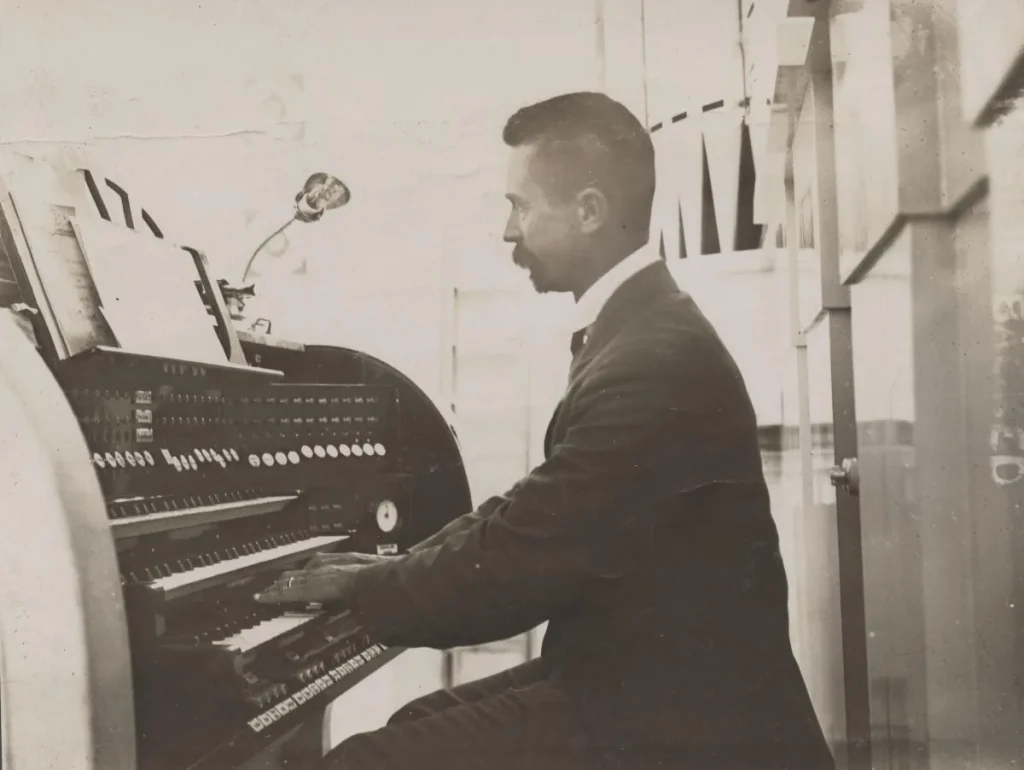
Johann Pachelbel lived at the heart of an era rich in liturgical and instrumental traditions. Born in Nuremberg in 1653, he remained active until 1706. He held positions in several important cities, from Vienna to Nuremberg, where he published notable works.
This guide offers a clear overview of his youth and education, the stages of his career, the instruments and ensembles he wrote for, and his catalogue and the fame of the Canon. It also explores the court networks and places that shaped his path.
It explains why his music remains essential: rigorous counterpoint and lucid melody in the service of worship. Drawing on documented dates, places, positions and publications, the text places the composer in his historical context.
Finally, readers will find a guide to exploring his works and listening suggestions suited to the period.
Essential biographical landmarks and the German Baroque context
To understand the musician, we must first place his life within the city and the era that shaped him.
Baptized on September 1, 1653 in Nuremberg, he returned there and died on March 3, 1706. The free imperial city was a Lutheran center where the chorale shaped musical life and church teaching.
His father, a wine merchant, belonged to an urban middle class that helped him gain access to education and artistic circles. These connections explain his early contact with teachers influenced by Italy, such as Kerll.
His career alternated between positions as an organist at court and in church: Vienna (1673), Eisenach (1677), Erfurt (1678), Stuttgart (1690), Gotha (1692) and Nuremberg (1695-1706). These moves brought German traditions into contact with Italian influences.
In instrumental music, violins often complemented the organ, enriching the texture of sonatas and sacred pieces. This combination enhanced the reputations of some composers and confirms Pachelbel’s place in German classical music of his era.
Youth and education: from Nuremberg to Regensburg and Vienna
The years 1669–1673 marked his training and his introduction to Italian influences. He began studying with Heinrich Schwemmer, a key figure in the Nuremberg school.
A connection with Georg Caspar Wecker remains plausible and illustrates the local tradition inherited from Kindermann and Staden. These teachers laid the foundations of his contrapuntal style.
On June 29, 1669, he enrolled at the University of Altdorf as a student and organist at St. Lawrence’s Church. His father’s financial difficulties forced him to leave soon afterward.
In 1670, he received a scholarship to the Gymnasium Poeticum in Regensburg. There he studied with Kaspar Prentz, a pupil of Kerll who conveyed Italian influences.
These lessons shaped his interest in Catholic church music and Italian vocal writing. In 1673, he moved to Vienna, where the stylistic influence of Georg Caspar Kerll became apparent.
This period of study gave him an essential professional network. The key years from 1669 to 1673 and the reference to an August remarriage remain chronological markers for the rest of his story.

Career as an organist and composer: positions, cities and responsibilities
From Vienna to Nuremberg, every appointment brought specific duties and artistic demands.
Vienna (St. Stephen’s Cathedral, 1673)
His first appointment at St. Stephen’s Cathedral in 1673 immersed him in the Italian style favored at court. The position called for refined singing, careful accompaniment and diligent liturgical service.
Eisenach (1677) and Erfurt (1678-1690)
In Eisenach, under Daniel Eberlin, he grew close to the Bach family and taught Johann Christoph Bach, among others.
His Erfurt contract required him to compose chorale preludes each year, perform a thirty-minute public examination and maintain the instrument. He also had to produce a major work annually.
Stuttgart (1690) and Gotha (1692)
Service at the Stuttgart court brought him prestige and resources. The Nine Years’ War prompted his move to Gotha in 1692, showing how political events could disrupt a musician’s career.
St. Sebald’s Church, Nuremberg (1695-1706)
Finally, his appointment at St. Sebald’s strengthened his position in musical leadership and his reputation as a teacher. In this city, he trained several pupils and produced a substantial part of his catalogue during his final years.
Instruments, ensembles and practices: organ, violins and basso continuo
The relationship between organ, strings and bass gives his works their sonic structure.
In large churches, the organ plays a central role. German organ building favored a rich range of stops. At Erfurt’s Predigerkirche, chorale preludes fulfilled his contractual duties.
In Gotha, the Margarethenkirche had an organ case made by Johann Moritz Weiss. Stops such as Prinzipal, Quintadena, Mixtur and Posaune provide varied colors for the chorale and its verses.

Violins and viols in the sonatas
Musicalische Ergötzung contains sonatas for two violins and basso continuo. The strings converse with each other and with the bass.
These textures serve both sacred and secular pieces. The sound of the violins complements that of the organ in sacred concerts.
Basso continuo and liturgical practice
The basso continuo provides the harmonic foundation. It clarifies the counterpoint and supports the Lutheran vocal line.
In alternatim practice, organ and singing answer one another. The bass then works with the organ to give each verse its structure.
| Place | Main instruments | Role | Example |
|---|---|---|---|
| Erfurt (Predigerkirche) | Organ, basso continuo | Chorale preludes for worship | Annual chorale prelude |
| Gotha (Margarethenkirche) | Organ (principal stops, reeds, Mixtur) | Liturgical colors and verses | Weiss organ case, varied stops |
| Concerts and services | Violins, basso continuo, organ | Sonatas and trios, alternatim | Musicalische Ergötzung (sonatas) |
Works and genres: chorales, Magnificat, toccatas, chaconnes, suites and fugues
His scores show an economy of expression that keeps song at the center, even in virtuoso passages. The chorale has pride of place: cantus firmus settings, partitas and preludes designed for clarity in church worship.
The Magnificat cycles include numerous verses in the eight church modes. These pieces range from preludes to fugues and serve as interludes in worship.
The toccatas and chaconnes display measured virtuosity. The bass and basso continuo structure the variations and support rigorous counterpoint.
The keyboard suites and gigues extend the organ aesthetic: song infuses the dances, and the movements retain a consistent melodic clarity.
Notable publications include Musicalische Sterbens-Gedancken (1683), Musicalische Ergötzung (1691) and Hexachordum Apollinis (1699). These collections show a mature style centered on the organ and on chamber music with violins and basso continuo.

To explore his works further, consult this overview of his major works and critical editions, which clarify the liturgical and instrumental uses of each piece.
Portrait of Johann Pachelbel: the life of a Baroque organist and his “Canon”
The piece for three violins and basso continuo combines contrapuntal rigor with dancing energy. Three violins weave canonic entries above a repeating bass. This simple ensemble creates a clear, warm imitative texture.

Structure and the role of the bass
The canon is built on a repeated basso continuo line. The ostinato provides a stable harmonic foundation and carries the melody. The gigue that follows sustains the rhythmic momentum and adds a lively cadence.
Legacy and arrangements
Since the 1970s, the work has been arranged for orchestra, string quartet and keyboard. These versions have brought Pachelbel’s canon to a wide audience in popular culture.
- Original ensemble: three violins and basso continuo.
- Technique: canonic entries over an ostinato.
- Appeal: an easily recognizable melody and bass line.
The simplicity of the ostinato and the use of basso continuo help explain why this piece still connects early instrumental practice with modern uses.
Networks, teachers and legacy: Nuremberg, the Bach family and later influence
Nuremberg’s musical networks shaped his teaching and influence for years to come. Family ties and professional relationships allowed ideas to pass between teachers and pupils.
From Kerll to the Bach family: stylistic models came from Italy through Kerll. These principles enriched local teaching.
Teaching and relationships
He was a friend of Johann Ambrosius Bach and taught Johann Christoph Bach. Johann Christoph later taught the young Johann Sebastian Bach, creating a direct line of musical instruction.
Family and legacy
The family included several musician sons, Wilhelm Hieronymus and Charles Theodore, as well as an artist daughter, Amalia. Their work in the city extended the family’s influence.
- Contribution to fugues and organ works: teaching models for central Germany.
- The role of composition and teaching in spreading his influence through the church and the city.
- Modern tribute: asteroid (4972) Pachelbel, a sign of his cultural and scientific legacy.
Listening to Pachelbel today: starting points, performance styles and recordings
Starting with preludes and chorales makes his musical language easier to discover. These short pieces reveal his melodic clarity and contrapuntal skill. They remain ideal introductions for a general audience.
Works to choose: begin with organ chorales and preludes, then listen to chaconnes and variations, keyboard suites, and motets or Magnificat settings for their vocal character.
Performances and recommended recordings
For organ music, listen to Antoine Bouchard (L’Œuvre pour orgue), Erik Feller (toccatas) and Simone Stella (complete keyboard works). Their recordings reveal a range of timbres, registrations and fugues on historical instruments.
For chamber music, London Baroque offers an exemplary interpretation of Musicalische Ergötzung. The basso continuo shapes the balance between the violins and bass.
| Recording | Type | Strengths |
|---|---|---|
| Antoine Bouchard (Dorian) | Organ (complete works) | Colors, registrations, variety of organs |
| Erik Feller (Arion) | Toccatas (organ) | Rhythmic clarity, crisp fugue entries |
| Simone Stella (Brilliant) | Complete keyboard works | Articulation, detailed suites and variations |
| London Baroque (Harmonia Mundi) | Chamber music | Balance between violins and basso continuo, warmth of phrasing |
Listening tips: look for programs pairing violins with basso continuo, or violins with bass, to hear the flow of the phrasing. Also listen to performances of Pachelbel’s canon on harpsichord and organ to understand the ostinato and voice leading.
Conclusion
This overview highlights his musical legacy and the coherence of a body of work devoted to worship and instrumental performance. His music for organ and chorale combines contrapuntal rigor with singing melody in the service of the liturgy.
The basso continuo and bass support the violins and voices and structure the suites, gigue and variations. His preludes and fugues reflect his studies, lessons and the publications that marked his working years.
His ties to the Bach family through Johann Christoph and the teaching passed on to Johann Sebastian Bach show the importance of musical instruction across court, city and church. To read more about the historical setting, see this page on Baroque culture and liturgical use: Baroque context and practices.