
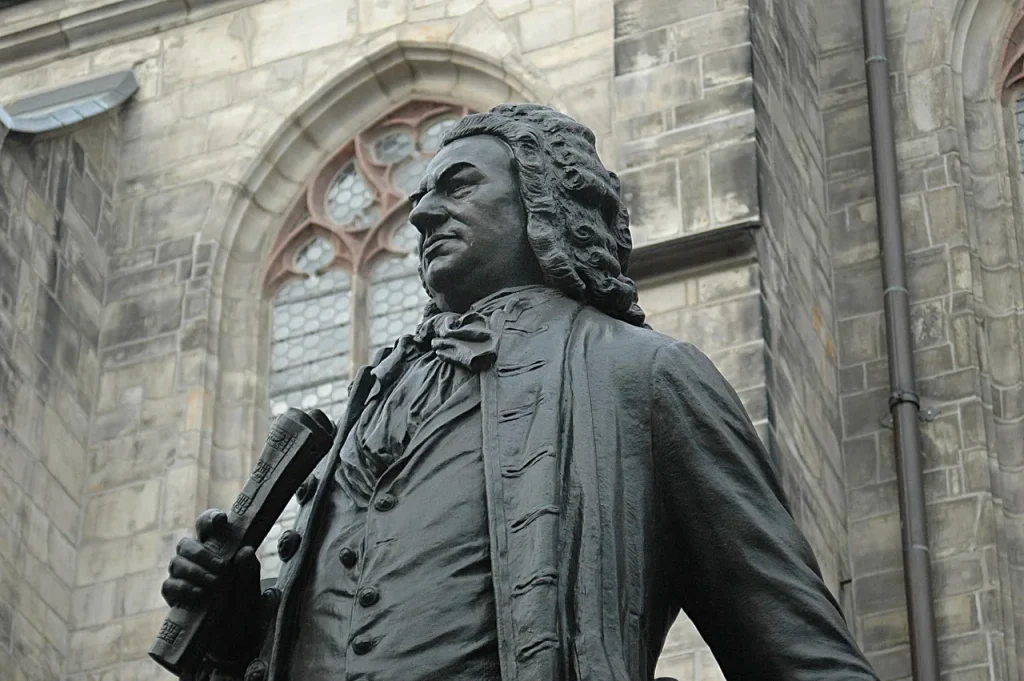
Johann Sebastian Bach was an 18th-century German composer, considered one of the greatest geniuses of Baroque music. Born in 1685 in Eisenach, Bach came from a renowned family of musicians. Orphaned at a young age, he was raised by his older brother Johann Christoph Bach, who taught him music. Bach was a passionate self-taught musician and spent many hours studying and copying the works of his predecessors and contemporaries. His exceptional talent enabled him to become a renowned organist, harpsichordist, and composer.
His musical career unfolded mainly in central Germany, where he held various positions, including in Weimar, Arnstadt, Mühlhausen, Köthen, and Leipzig. Bach composed in every musical genre of his time except opera. His most famous works include the Brandenburg Concertos, the St John and St Matthew Passions, the Goldberg Variations, The Art of Fugue, and The Well-Tempered Clavier.
Bach’s music is characterized by a balance between counterpoint and harmony. He is considered a master of the fugue. His music combines technical complexity with emotional depth. It is renowned for its melodic beauty, contrapuntal development, harmonic sophistication, and lyricism.
Although Bach did not achieve widespread fame during his lifetime and was relatively forgotten after his death, he was rediscovered in the 19th century and is now considered one of the greatest composers of all time. His influence on Western music is undeniable, and his music continues to be enjoyed and performed by many musicians and music lovers.
Biography of Johann Sebastian Bach
Born in 1685 in Eisenach, Bach came from a renowned family of musicians and left an indelible mark on music history. Orphaned at a young age, he was raised by his older brother Johann Christoph Bach, who taught him music. Passionate and self-taught, Bach spent many hours studying and copying the works of his predecessors and contemporaries, developing a thorough knowledge of the music of his time.
His musical career unfolded mainly in central Germany, where he held various positions as an organist, harpsichordist, and composer. He worked in Weimar, Arnstadt, Mühlhausen, Köthen, and Leipzig. Bach composed in every musical genre of his time except opera, and his best-known works are still performed and enjoyed today.
Bach’s music is characterized by a balance between counterpoint and harmony. He is considered a master of the fugue. His music combines technical complexity with emotional depth. It is renowned for its melodic beauty, contrapuntal development, harmonic sophistication, and lyricism. Bach pushed the boundaries of his era and influenced many composers who followed him.
Summary of Section 2:
- Johann Sebastian Bach was born in 1685 in Eisenach and was raised by his older brother Johann Christoph Bach.
- He was passionate about music and spent many hours studying and copying the works of his predecessors.
- Bach held various positions as an organist, harpsichordist, and composer in central Germany.
- His most famous works reflect his distinctive balance between counterpoint and harmony.
- Bach is considered a master of the fugue, and his music continues to influence composition.
The richness and diversity of Bach’s musical legacy are still celebrated today and attest to his genius and his standing as a master of Baroque music. His impact on Western music cannot be overstated. The biography of Johann Sebastian Bach is the compelling story of a man who devoted his life to music and left a timeless musical legacy.
The Landmark Works of Johann Sebastian Bach
Bach composed in every musical genre of his time, creating landmark works that continue to fascinate listeners today. Among his most famous compositions are the Brandenburg Concertos, considered masterpieces of the genre. These concertos showcase Bach’s instrumental virtuosity and command of counterpoint, with lively, joyful movements contrasting with slower, more introspective ones.
The St John and St Matthew Passions are also major works by Bach. They explore biblical narratives with remarkable emotional depth and expressiveness. These compositions perfectly illustrate Bach’s mastery of choral composition and orchestral writing.
The Goldberg Variations, meanwhile, demonstrate Bach’s virtuosity at the harpsichord. Composed for keyboard, these variations are a technical and artistic tour de force that testifies to Bach’s boundless imagination and creativity. The Art of Fugue and The Well-Tempered Clavier are also landmark works that illustrate Bach’s mastery of counterpoint and harmony.
The landmark works of Johann Sebastian Bach:
| Work | Genre | Year of composition |
|---|---|---|
| The Brandenburg Concertos | Concerto | 1711-1721 |
| The St John and St Matthew Passions | Passion | 1724, 1727 |
| The Goldberg Variations | Keyboard | 1741 |
| The Art of Fugue | Keyboard | 1750 |
| The Well-Tempered Clavier | Keyboard | 1722, 1742 |
Bach’s influence on Western music is undeniable. His ability to combine harmony, melody, and counterpoint in compositions of great beauty shaped Baroque music and continues to fascinate musicians and listeners today. Bach’s works are a musical treasure whose richness and diversity testify to his creative genius.
Beyond his technical mastery, Bach was able to convey profound emotions through his music and touch the hearts of those who listen. His music is a spiritual journey, a universal language that transcends eras and borders. Johann Sebastian Bach’s legacy is unparalleled in music history, and his works remain a source of inspiration and admiration for many composers and performers.
Johann Sebastian Bach’s Musical Style
Bach’s music is characterized by a balance between counterpoint and harmony. Bach is considered a master of the fugue. His distinctive musical style combines technical skill with emotion. His music is renowned for its melodic beauty, contrapuntal development, harmonic sophistication, and lyricism.
Counterpoint is a central element of Bach’s music. It is the art of interweaving several distinct melodic lines to create complex polyphony. Bach excelled at this technique and composed works in which each voice intertwines harmoniously with the others, forming a rich and captivating musical texture.
Alongside counterpoint, Bach also mastered harmony. He knew how to use chords and harmonic progressions to create tension and resolution, giving his music emotional depth. His harmonies were often bold and innovative, going beyond the conventions of his time.
The fugue is a musical form particularly characteristic of Bach’s style. A fugue is a composition based on a principal theme, called the subject, which is developed in turn by different voices. Bach was a true virtuoso of the fugue. He created works in which the subject appeared in different forms, with complex rhythmic, melodic, and harmonic variations. His fugues exemplify structural perfection and mastery of counterpoint.
| Counterpoint | Harmony | Fugue |
|---|---|---|
| Bach was a master of counterpoint and created compositions in which several voices intertwine harmoniously. | He used chords and harmonic progressions boldly to create tension and emotional resolution. | His fugues exemplified structural perfection and mastery of counterpoint. |
Bach’s music is a treasure of Western music. His distinctive musical style, combining counterpoint, harmony, and fugue, influenced many later composers. His music continues to be enjoyed and performed by musicians and music lovers around the world.
Although Bach did not achieve widespread fame during his lifetime, he is now considered one of the greatest composers of all time, and his musical legacy endures. His music profoundly influenced Western music, and his distinctive Baroque style opened new paths in composition.
The richness of Bach’s legacy can be found in his vast body of work. His compositions, from the Brandenburg Concertos and the St John and St Matthew Passions to the Goldberg Variations, The Art of Fugue, and The Well-Tempered Clavier, reflect his technical mastery and emotional depth. Each expresses his unique musical vision by combining melodic beauty, contrapuntal development, harmonic sophistication, and lyricism.
Bach’s influence can be seen in the work of many later composers, such as Mozart, Beethoven, and Brahms, all of whom admired his music and drew inspiration from his genius. His contrapuntal technique and mastery of the fugue also influenced the subsequent development of classical music. Today, Bach’s music continues to be enjoyed and performed by musicians around the world who seek to capture the essence of his invaluable musical legacy.
| Composers influenced by Johann Sebastian Bach | Famous works by Johann Sebastian Bach |
|---|---|
| Mozart | Brandenburg Concertos |
| Beethoven | St John and St Matthew Passions |
| Brahms | Goldberg Variations |
| Mendelssohn | The Art of Fugue |
| Stravinsky | The Well-Tempered Clavier |
Thus, Johann Sebastian Bach’s legacy is evident both in the recognition of his unique contribution to Baroque music and in his influence on later generations of composers. His music has stood the test of time and continues to captivate and inspire audiences around the world. It will forever be a source of fascination and admiration.
In conclusion, Johann Sebastian Bach remains an essential figure in Baroque music whose influence continues to resonate across the centuries. An 18th-century German composer, Bach was considered one of the greatest geniuses of his era. Born in 1685 in Eisenach, he came from a renowned family of musicians and was raised by his older brother. Passionate and self-taught, he devoted his life to music, becoming a renowned organist, harpsichordist, and composer.
His exceptional talent enabled him to compose in every musical genre of his time and create masterpieces such as the Brandenburg Concertos, the St John and St Matthew Passions, the Goldberg Variations, The Art of Fugue, and The Well-Tempered Clavier. His music is distinguished by its balance between counterpoint and harmony, mastery of the fugue, and technical and emotional complexity.
Although Bach did not achieve widespread fame during his lifetime and was relatively forgotten after his death, he was rediscovered in the 19th century. Today, he is considered one of the greatest composers of all time. His legacy in Western music is undeniable, and his music is still enjoyed and performed by many musicians and music lovers. Johann Sebastian Bach will forever remain an icon of Baroque music whose beauty and influence transcend eras.
FAQ
Who was Johann Sebastian Bach?
Johann Sebastian Bach was an 18th-century German composer, considered one of the greatest geniuses of Baroque music.
Where and when was Johann Sebastian Bach born?
Johann Sebastian Bach was born in 1685 in Eisenach, Germany.
What was Johann Sebastian Bach’s musical career?
Bach held various positions in central Germany, including in Weimar, Arnstadt, Mühlhausen, Köthen, and Leipzig. He was a renowned organist, harpsichordist, and composer.
What are Johann Sebastian Bach’s most famous works?
Bach’s most famous works include the Brandenburg Concertos, the St John and St Matthew Passions, the Goldberg Variations, The Art of Fugue, and The Well-Tempered Clavier.
How would you describe Johann Sebastian Bach’s musical style?
Bach’s musical style is characterized by a balance between counterpoint and harmony. He is considered a master of the fugue, and his music combines technical complexity with emotional depth.
What is Johann Sebastian Bach’s musical legacy?
Although Bach did not achieve widespread fame during his lifetime, he was rediscovered in the 19th century and is now considered one of the greatest composers of all time. His influence on Western music is undeniable, and his music continues to be enjoyed and performed by many musicians and music lovers.