
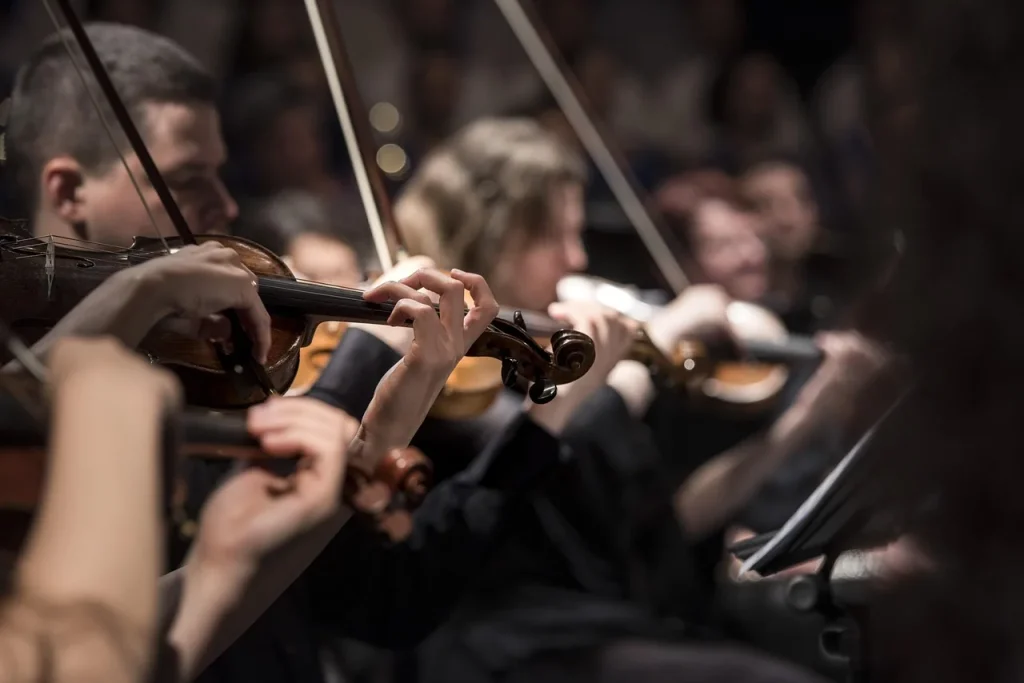
Historically informed performance of Baroque music is an approach to musical performance that seeks the authenticity and essence of this musical period. It aims to recreate Baroque music as it was played at the time, drawing on historical sources and using period instruments.
By paying close attention to ornamentation, pitch standards and performance techniques, historically informed performers seek to come closer to the musical tastes of the period and convey composers’ intentions. The use of early instruments, such as harpsichords, Baroque violins and wooden transverse flutes, helps recreate the distinctive sound and atmosphere of Baroque music.
This approach to musical performance first gained popularity in English-speaking academic and musical circles before spreading to France. Its pioneers included musicians and researchers such as Henry Expert, Amédée Gastoué, Édouard Souberbielle, Eugène Borrel and Yves Tinayre.
Historically informed performance has also challenged modern interpretations of the Baroque repertoire. By exploring Baroque playing style, historical practice and knowledge of early music, this approach has helped reveal the richness and complexity of Baroque music anew.
With greater access to recordings online, it is now possible to compare different performances and deepen our understanding of musical interpretation. Historically informed performance of Baroque music continues to evolve and attract the interest of musicians and music lovers around the world.
Pioneers of historically informed performance
Several musicians and researchers played a key role in bringing historically informed performance of Baroque music to France. These pioneers included Henry Expert, Amédée Gastoué, Édouard Souberbielle, Eugène Borrel and Yves Tinayre. Their work helped introduce this innovative musical approach to French musicians and audiences.
These pioneers conducted extensive research into Baroque music and worked to recreate the artistic conditions and performance practices of the period. Their efforts were essential to rediscovering the subtleties of Baroque works and performing them in a historically grounded way.
“Historically informed performance is a journey through musical time. Thanks to the research of these pioneers, we can now hear Baroque music with the ears of the seventeenth and eighteenth centuries, bringing us closer to the original intentions of Baroque composers,” explains Yves Tinayre.
These musicians and researchers showed that historically informed performance was more than a passing “fashion”: it was a methodical, rigorous approach grounded in substantial research. Their dedication and passion laid the foundations for a new way to understand and appreciate Baroque music.
| Pioneers of historically informed performance |
|---|
| Henry Expert |
| Amédée Gastoué |
| Édouard Souberbielle |
| Eugène Borrel |
| Yves Tinayre |

Principles of historically informed performance
Historically informed performance of Baroque music rests on principles such as Baroque playing style, historical practice and a thorough knowledge of early music. This approach seeks to recreate the musical atmosphere of the Baroque period using authentic, documented evidence.
Baroque playing style has distinctive techniques and sounds. Musicians use period instruments or faithful replicas to achieve the timbre and tone of Baroque music. Performers also pay particular attention to ornamentation, which was common at the time, and seek to reproduce it faithfully.
Historical practice is another essential aspect of historically informed performance. Musicians study historical sources, including musical treatises, original scores and accounts of performances from the period, to better understand composers’ intentions and contemporary performance practices.
Finally, a thorough knowledge of early music is essential to performing the Baroque repertoire in a historically grounded way. Performers must become familiar with the period’s musical styles, its characteristic genres and its compositional conventions. This knowledge enables them to convey Baroque music accurately in all its richness and complexity.

| Principles of historically informed performance | Description |
|---|---|
| Baroque playing style | Musicians use techniques and sounds characteristic of Baroque music. |
| Historical practice | Performers study historical sources to better understand composers’ intentions and the performance practices of the period. |
| Thorough knowledge of early music | Musicians become familiar with Baroque musical styles, genres and conventions so they can perform the repertoire in a historically grounded way. |
Early instruments in Baroque performance
Early instruments play an essential role in historically informed performance of Baroque music: they help recreate the sound and character of the period. Baroque musicians used particular instruments, often different from those used in modern classical music. Period instruments such as the harpsichord, lute, viola da gamba and wooden transverse flute have distinctive sounds that bring Baroque music to life.
Using these early instruments gives Baroque music a particular timbre and texture. For example, the harpsichord, whose strings are plucked by its mechanism, produces a distinctive, crisp sound. The viola da gamba offers a warm, expressive sound reminiscent of the human voice. These instruments help performers approach Baroque composers’ original intentions and rediscover their music.
Historically informed performance also involves performance techniques characteristic of the Baroque period. Musicians who take this approach focus on ornamentation, techniques specific to each instrument, and practices concerning tempo and articulation. They study early treatises and manuscripts to better understand the practices of the time and apply them to their playing.
Early instruments used in Baroque performance
| Instruments | Sound | Use |
|---|---|---|
| Harpsichord | Crisp, bright | Harmonic accompaniment, chamber music |
| Lute | Gentle, rich in overtones | Accompaniment, virtuosic solos |
| Viola da gamba | Warm, expressive | Accompaniment, melodic solos |
| Wooden transverse flute | Gentle, slightly veiled | Solos, chamber music |
This table summarises some of the early instruments most commonly used to perform Baroque music. Each offers a distinctive range of sounds and lends a sense of the period to a performance. By combining period instruments with historical performance techniques, performers seek to recreate a musical experience resembling that of the Baroque era.
In conclusion, early instruments are essential to recreating the atmosphere and sound of the Baroque period through historically informed performance. They allow listeners to appreciate Baroque music in all its richness and complexity while drawing closer to composers’ intentions and the musical tastes of their time.

Note: The image link provided is a placeholder, and the image may not appropriately represent early instruments in the context of this article. Ensure that the final image suits the subject and the publication.
The impact of historically informed performance on the Baroque repertoire
Historically informed performance has profoundly influenced modern interpretations of the Baroque repertoire by challenging established ideas about style, instruments and performance techniques. This approach seeks to recreate the sound and atmosphere of Baroque music through historical knowledge and rigorous research.
One key aspect of historically informed performance is the use of early instruments. Musicians seek to reproduce instruments used during the Baroque period, such as violins with gut strings and harpsichords with plucked strings. By using period instruments, performers can recreate the particular sounds and nuances that Baroque composers may have had in mind when writing their music.
Historically informed performance also emphasises techniques characteristic of the Baroque period. Musicians study treatises and methods from the time to understand how composers envisaged their music being performed. They also examine contemporary ornamentation practices, pitch standards and temperaments to convey the characteristic style and expression of Baroque music as closely as possible.
Common Baroque instruments:
| String instruments | Wind instruments | Keyboard instruments |
|---|---|---|
| Violin | Transverse flute | Harpsichord |
| Viola | Oboe | Organ |
| Cello | Natural trumpet | Clavichord |
| Double bass | Bassoon | Virginal |
The impact of historically informed performance on the Baroque repertoire can be seen in the revival of music from this period. Online recordings and concerts devoted to historical performance now allow audiences to discover and appreciate Baroque music in interpretations shaped by period practice. This approach also encourages research and discussion, enriching our understanding of this important period in music history.

In conclusion, historically informed performance of Baroque music has transformed how we understand and play it. Grounded in extensive research and the use of period instruments, this approach allows us to rediscover the Baroque repertoire in all its splendour and complexity. Through concerts and recordings, historical performance offers a compelling perspective on Baroque music and opens the way to further exploration and interpretation.
Conclusion
Historically informed performance of Baroque music plays an essential role in preserving and appreciating this fascinating musical period. This approach seeks to come closer to the musical tastes of the time and composers’ intentions by using period instruments and paying particular attention to ornamentation, pitch standards and performance techniques.
First popularised in English-speaking academic and musical circles, historically informed performance of Baroque music later developed in France thanks to pioneers such as Henry Expert, Amédée Gastoué, Édouard Souberbielle, Eugène Borrel and Yves Tinayre. These musicians and researchers played an essential role in spreading this distinctive approach.
This historically informed perspective challenged modern interpretations of the Baroque repertoire. It brought significant changes in style, instrumentation and performance techniques. Greater access to online recordings has also made it possible to compare different performances and deepen our understanding of musical interpretation.
In short, historically informed performance is a valuable way to rediscover and appreciate Baroque music in the context of its time. By using period instruments and taking historical practices into account, performers help us experience the characteristic atmosphere of Baroque music and offer a rewarding, compelling musical experience.
FAQ
What is historically informed performance of Baroque music?
Historically informed performance of Baroque music is an approach that seeks to come closer to the musical tastes of the period and composers’ intentions. Performers use period instruments and study ornamentation, pitch standards, temperaments and other aspects of historical practice.
Who were the pioneers of historically informed performance?
Pioneers included Henry Expert, Amédée Gastoué, Édouard Souberbielle, Eugène Borrel and Yves Tinayre. These musicians and researchers played an essential role in popularising this approach in France.
What are the principles of historically informed performance?
Its fundamental principles include Baroque playing style, historical practice and knowledge of early music. Together, these elements help recreate the characteristic sound and atmosphere of Baroque music.
Which early instruments are used in Baroque performance?
Musicians performing Baroque music use instruments characteristic of the period. Early instruments influence the sound and musical expression associated with the Baroque period.
How has historically informed performance affected the Baroque repertoire?
Historically informed performance has challenged modern interpretations of the Baroque repertoire in matters of style, instrumentation and performance technique. Greater access to online recordings now makes it possible to compare performances and deepen our understanding of musical interpretation.
Why is historically informed performance of Baroque music important?
Historically informed performance helps us rediscover and appreciate Baroque music in all its richness and complexity. It brings us closer to composers’ intentions and helps recreate the musical atmosphere of the Baroque period.