
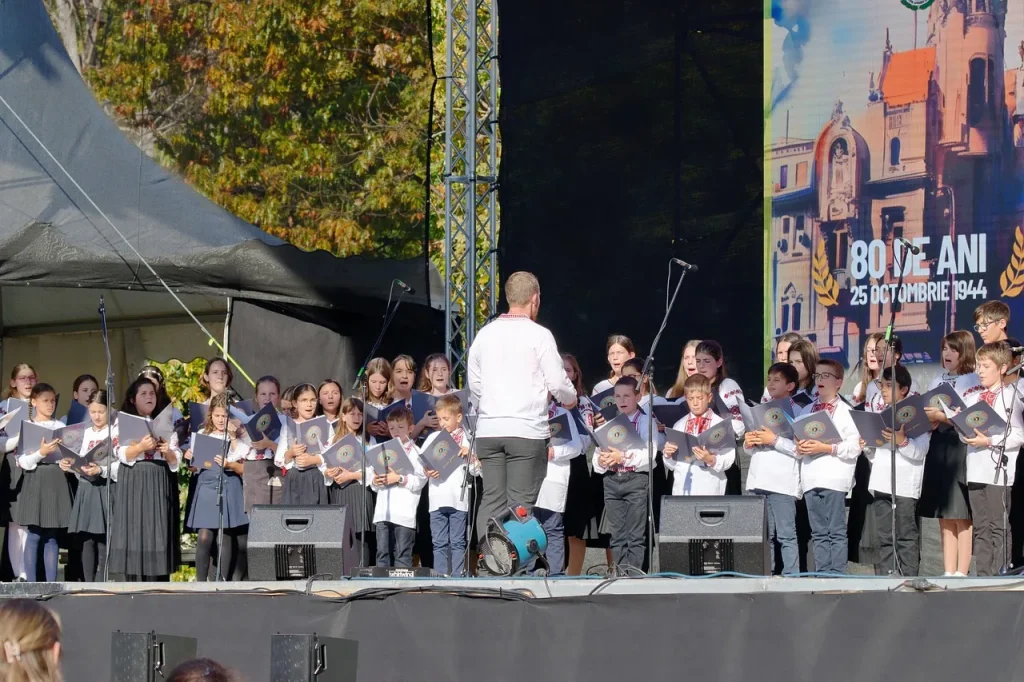
The ultimate guide to exploring a radiant Magnificat and placing this vocal work at the heart of the repertoire for choir and organ.
This article offers clear musical analyses and useful listening pointers, whether at a concert or at home. It recalls the stature of this Nuremberg-born composer, a leading musician and organist in southern Germany.
Here you will find the liturgical context, a description of the vocal colors — a brilliant choir, lively violins, supple basso continuo — and the place of keyboard and organ in Pachelbel’s musical language.
The discussion moves from the general to the particular: chorale preludes, fugues, Gloria Patri and Amen, rhetoric and affetti, followed by performance choices and a case study of listening in a particular venue.
To learn more about the composer’s life, consult this biographical account: biography and context.
Why Pachelbel’s Magnificat deserves a comprehensive guide today
His reputation needs rebalancing: the fame of the Canon in D has overshadowed a vast catalogue of sacred and instrumental music. For many musicians and music lovers, Johann Pachelbel is known for just one hit, although his choral and organ works deserve informed listening.
The chorales and preludes helped shape a Lutheran aesthetic suited both to worship and to music at home. The organ holds a central place: it shapes the vocal writing and the movement of the basso continuo.
A guide brings together performance pointers: choices in conducting, the balance between choir, trumpets and violins, keyboard playing, and acoustic challenges in a concert. It also illuminates the form: concise fugues, restrained variations and an economy that avoids ostentatious virtuosity.
- Bring renewed attention to the securely identified core of the repertoire amid questions of attribution.
- Encourage active listening to the timbres of organ, trumpets and violins, and to the keyboard as a creative foundation.
- Identify, section by section, what distinguishes the piece from the composer’s other works.
Johann Pachelbel, organist and composer: essential biographical landmarks
Born in Nuremberg in 1653, he pursued an organist’s career at the crossroads of several traditions. Trained by Heinrich Schwemmer, he spent time in Altdorf, Regensburg and Vienna, where a taste for the concertato style influenced his writing.
Career: appointed in Eisenach in 1677, then at Erfurt’s Predigerkirche from 1678 to 1690, where his contract required prepared chorale preludes and an annual public examination.
The following years took him to Stuttgart from 1690 to 1692, then to Gotha from 1692 to 1695. In 1695, he returned to Nuremberg’s Sebalduskirche and remained there until his death in 1706.

Family connections and teaching influence
He maintained ties with the Bach family in Eisenach and taught Johann Christoph Bach. This connection helped spread his contrapuntal style.
His family life included two marriages and several sons who became musicians, among them Wilhelm Hieronymus and Charles Theodore, who carried on his artistic legacy at the keyboard and organ.
- Key landmarks: training, appointments and Erfurt’s requirements.
- Musical practices: chorales, preludes and keyboard fugues.
- Notes: some attributions remain disputed, but the chronology helps date the works.
Johann Pachelbel’s Magnificat: analysis and listening
The Lutheran evening service provides a setting in which choir, organ and basso continuo interact. This context encourages writing that combines liturgical gravity with concertante brilliance.
The Lutheran liturgical setting and the appeal of the Italian concertato style
The blend of Lutheran and Italian styles brings trumpets, violins and sometimes oboes together with the chorale. Organ preludes prepare each verse; the basso continuo provides the line and rhythmic foundation.
A “little musical garden” of varied forms: breadth, grace and restraint
Here we find contrapuntal miniatures, bright syllabic episodes and short fugues. The violins articulate the emotions while the supple bass supports the vocal line.
As you listen, notice the choir’s entries, the organ interjections and the exchanges between instruments and voices. A tenor or another soloist sometimes takes a verse to give the text greater emphasis.
| Element | Role | Musical example |
|---|---|---|
| Organ | Prelude, interjections, harmonic support | Introductions to verses; filling out the ritornellos |
| Choir | Collective declamation, short fugues | Five-part entries; syllabic passages |
| Violins and basso continuo | Color, rhythmic support, expression | Instrumental ritornellos; vocal accompaniment |
Form, movements and musical rhetoric in the Magnificat
A clear sequence of sections guides listeners from the opening chorale to the concluding Amen.
Typical sections
Sections, Gloria Patri and Amen: contrast and continuity
Choral introductions often open each verse. They establish its character and shape.
Solo episodes follow, highlighting the tenor or alto. The Gloria Patri forms a high point; the Amen brings the work to a measured close.
Fugal passages and syllabic writing
Short fugues and syllabic lines
The fugues are generally short and imaginative. They thicken the texture without obscuring the text.
The syllabic sections favor clear articulation by the choir. The basso continuo breathes with and supports the movement of the phrases.
Affetti and the character of the text
From expressive detail to connecting motifs
Et misericordia takes on restrained hues; Esurientes becomes lighter; Et exultavit is jubilant.
The organ supports the inner voices, renews momentum at cadences and connects sections through small variations of motifs. A violin can converse with the voice in G major or G minor without drawing attention away from the text.

| Section | Function | Characteristics | Example |
|---|---|---|---|
| Choral introduction | Framework | Clear entry, distinct cadence | Chorale prelude followed by the choir |
| Solo episode | Contrast | Expressive, syllabic phrasing | Tenor solo on a verse |
| Fugal passage | Greater density | Freely shaped subject, concise texture | Short fugue before the Gloria Patri |
| Final Amen | Conclusion | Repetitions, renewed momentum from the organ | Collective cadence with basso continuo |
Keys, performing forces and timbres: voices, trumpets, strings and basso continuo
Depending on the performers, the same work can sound like a celebration in G major or a more inward meditation in G minor.
Common ensembles pair a SATB or SSATB choir with a quartet of soloists. They may also include two violins, violas, a bassoon, one or two oboes and an organ that unites the whole ensemble.
The organ and basso continuo provide the foundation. The bass guides the cadences, maintains rhythmic articulation and connects the harmonic layers.
The trumpets add brilliance; the violins bring out changes in color. The bassoon and violas enrich the texture without covering the voices.
- Balance: the conductor must preserve the intelligibility of the text.
- Listening pointer: follow the basso continuo like a guiding thread.
- Role of the violins and basso continuo: connect the bass line to the melodic gestures.

| Element | Function | Sound | Example of use |
|---|---|---|---|
| Choir (SATB or SSATB) | Declamation, density | Clarity or fullness | Collective text setting, short fugues |
| Basso continuo | Harmonic foundation | Stability, momentum | Guiding cadences, rhythmic support |
| Violins and strings | Color, accompaniment | Brightness in G major, subtlety in G minor | Ritornellos, exchanges with soloists |
| Trumpets and oboes | Announcement, timbre | Brilliance, character | Solemn entries, fanfares |
Fugue, chorale and variations: Pachelbel’s musical language in the service of the Magnificat
Formal coherence rests on short fugues, clear preludes and restrained variations. This musical language favors expression that is straightforward yet carefully crafted.
The Magnificat Fugues — 94 according to the figure cited — illustrate thematic freedom and concision. A fugue often prepares a vocal entry and informs the work’s inventiveness.
The chorale remains the backbone. A decorated keyboard setting enriches it without weighing it down. Keyboard ornaments extend the vocal line while preserving liturgical clarity.
The preludes establish the key, set the expressive tone and provide rhythmic impetus. They lead into singing or meditative episodes in G minor.
Variation is used sparingly: a few repeated gestures, a modulation, then a return to a cheerful key. Even suggestions of a gavotte retain a restrained character.

| Element | Function | Audible effect |
|---|---|---|
| Fugue | Formal focus | Brief density, preparation for the chorale |
| Chorale | Structure | Clarity of text, melodic support |
| Prelude and keyboard | Framework and momentum | Establishing the key, motifs taken up by the voices |
| Variations | Color | Subtlety, expressive economy |
- Listening suggestions: follow the organ to hear subtle echoes.
- Principle: favor intelligibility of the text over virtuosity.
Listening case study: Vézelay, Basilica of Sainte-Marie-Madeleine, August 4, 2006
The resonance of the Vézelay basilica extends every attack, changing the conditions of any concert.
Le Concert de l’Hostel Dieu, conducted by Franck-Emmanuel Comte
Le Concert de l’Hostel Dieu (Lyon) offers precise direction. Franck-Emmanuel Comte anticipates delays caused by reverberation. The program brings together three major sacred works, performed in August before an attentive audience.
Soloists and choir in the acoustic space: articulation, fugal passages and controlled slowness
The soloists — Marina Venant, Léticia Giuffredi, Paulin Bündgen, Howard Crook and Benoît Arnould — achieve a fine balance. The sopranos form a well-matched duo; the alto and tenor bring color and clarity.
The basso continuo maintains rhythmic cohesion. It supports the lower voices and anchors the phrasing. The organ accompanies tactfully to preserve clarity in the fugal passages.
The violins shine; the trumpets cut through without excess. A minor oboe mishap remains incidental and does not detract from the performance.
| Element | Observation | Impact |
|---|---|---|
| Acoustics | Highly reverberant | Extends attacks, calls for slower tempos |
| Basso continuo | Rhythmic cohesion | Supports phrasing and controls breathing |
| Voices and soloists | Well-matched sopranos, striking tenor | Clarity of text despite the reverberation |
| Instruments | Clear violins, brilliant trumpets | Add color and definition to the program |
Listening tip: follow the basso continuo and the organ’s attacks to sense the ensemble breathing together in this August setting.
Versions, attributions and periods: placing the Magnificats within Pachelbel’s work
Several versions coexist: performing forces range from a small SSATB choir to an ensemble with trumpets and timpani. Violins or bassoon modify the color according to the parts chosen.
The posts Pachelbel held often explain these choices. In Erfurt, the emphasis falls on chorales and organ preludes. In Nuremberg, the writing becomes more concertante, reflecting different periods in Johann Pachelbel’s output.
The surviving sources reveal disputed attributions. These are assessed through style, manuscripts and local context. The character of the keyboard writing and the nature of the prelude provide clues to attribution.
The basso continuo consistently connects voices and instruments. Even when the text is set syllabically, fugues and variations modeled on the Magnificat remain an audible foundation.
For comparative listening, choose the same work first in G major, then in G minor. Note the density of the choir, the role of the violins and the presence of a basso continuo with violins when assessing authenticity.
Practical conclusion: attribution rests on a combination of clues — the treatment of the chorale, the prelude and the keyboard style — that also guide concert programming and the choice of ensemble.
| Criterion | Indication | Impact |
|---|---|---|
| Prelude and keyboard | Presence and style | Points toward Erfurt or Nuremberg |
| Treatment of the chorale | Decorated or simple | Clue to attribution |
| Basso continuo | Driving role | Liturgical or concertante purpose |
Connect the Magnificat with Pachelbel’s other works to hear it more clearly
The chaconnes and suites offer a key to understanding how the musical line breathes. The chaconnes show a strong preference for restrained variations and a sustained bass line that carries the music forward.
Hexachordum Apollinis illustrates the balance between invention and restraint. Its variation sets make audible the way ornamentation can serve vocal diction.
The fantasias and keyboard preludes establish a harmonic syntax that the chorale later takes up. These pieces shed light on accompaniment choices and the breathing of phrases.
Musicalische Ergötzung, for two violins and basso continuo, anticipates the instrumental balance of the large motet. The dance-like suites provide a rhythmic workshop for clear attacks.
Comparing G major (brightness) with G minor (intimacy) helps reveal the affetti. The basso continuo remains the reference point: it connects keyboard, voices and instruments.
Finally, the Bach family recognized these techniques: the connection between musician, keyboard and voice can be traced in Pachelbel’s legacy and sometimes informs questions of attribution.
Listening and performance advice for music lovers and musicians
Identifying attacks and listening to the sustained bass line guides listening in the concert hall. It helps audiences and musicians hear the balance between organ, basso continuo and choir.
Choosing recordings and venues: brilliant trumpets, organ and basso continuo
Favor recordings or concerts that preserve the clarity of the choir and the balance between trumpets and strings, especially in reverberant spaces.
- Listen for the stability of the basso continuo: precise attacks, sustained cadences and shared breathing with the organ.
- Consider the treatment of preludes and chorales: intonation, phrasing and vocal articulation.
- Check the clarity of the violins and the support provided by the violins and basso continuo alongside the projecting choir.
- Note the oboe’s role: expressive color and dialogue with the sopranos.
“In large naves, resonance extends each attack: adjust tempos and dynamics.”
Compare August concerts in historic venues. Vézelay shows how strongly a nave affects fugal passages and slow tempos.
| Criterion | Observation | Practical impact |
|---|---|---|
| Acoustics | Reverberant or controlled | Slower tempos in a nave; fast fugal passages better suited to a dry hall |
| Trumpets | Natural, in tune | Controlled brilliance without covering the choir |
| Basso continuo | Precision of attacks | Rhythmic foundation, reference point for the voices |
- Use books and a few musical analyses to understand stylistic choices.
- Consult classified listings and specialist announcements to find scores and concerts.
- Favor recordings in which the choir remains clear despite the organ and other instruments.
Conclusion
Refined simplicity reveals an art that connects voices, violins and basso continuo. The organ provides its framework; the bass guides every prelude and fugue with clarity.
This work brings out the contrast between G major and G minor to express different emotions. The variations remain restrained: whether gavotte or episode, everything serves the text.
Pachelbel’s life ended in Nuremberg in 1706, but his influence continued. His sons, the southern German school and his pupils carried on the organist’s legacy.
Questions of attribution remain, but they do not prevent us from appreciating the stylistic coherence. In concert, follow the choir, violins and bass to enjoy the structure.
To explore further: consult the sources, compare recordings and return to the scores to understand more fully the connection between keyboard and voice.