
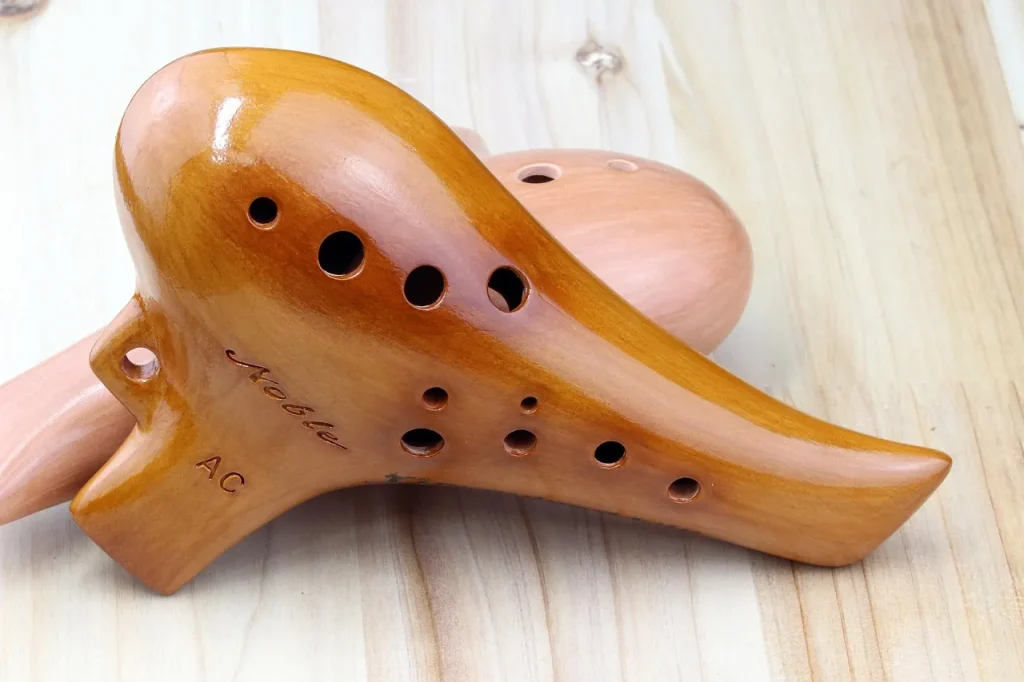
The ocarina is a fascinating wind instrument that has captivated many musicians. Its popularity has soared, particularly because of its place in popular culture, including the famous video game The Legend of Zelda. This instrument stands out for its enchanting sound and its ability to produce a variety of notes.
There are three main registers that shape the playing experience: alto, soprano and bass. Each has unique sound characteristics that influence a musician’s choice. The number of holes and the quality of construction are also essential factors to consider when buying an ocarina.
In this article, we will explore the different registers and how they affect tone and playing comfort. We will help you make an informed choice, whether you are a beginner or an experienced musician.
Introduction to the ocarina: history, origins and popularity
This wind instrument has a rich and fascinating history. The ocarina’s origins go back more than 12,000 years and are rooted in pre-Columbian cultures. The Maya and Aztecs used the instrument for music and sacred rituals.
The earliest archaeological evidence reveals hand-shaped terracotta models. Often shaped like birds or eggs, these models foreshadowed modern ocarinas.
The ocarina’s pre-Columbian origins
- An exploration of the pre-Columbian origins of the ocarina, a wind instrument more than 12,000 years old, used by the Maya and Aztecs in sacred rituals and for communication.
- A description of the earliest archaeological evidence, which reveals hand-shaped terracotta models, often in the shape of a bird or an egg.
Giuseppe Donati’s modernization of the instrument in the 19th century
In 1860, Giuseppe Donati revolutionized the instrument by standardizing its transverse, 10-hole shape. He thereby turned the ocarina into a fully developed musical instrument capable of playing a wider variety of notes and melodies.
Modern growth thanks to Zelda and a worldwide community
The ocarina’s popularity today soared after its appearance in the video game The Legend of Zelda. This phenomenon created a worldwide community of enthusiasts and has tripled sales since 2015.
Ocarinas come in various forms: globular, transverse and pendant. Each type offers distinctive notes and tones suited to different styles of music.
Knowing the history of this instrument helps you appreciate its richness. It also helps you make an informed choice when buying an ocarina.
Different types of ocarinas by number of holes
Ocarinas come in several designs, each suited to a particular skill level. The number of holes affects both how easy the instrument is to play and the range of notes it can produce.
4-hole and 6-hole ocarinas: simplicity for beginners
4-hole and 6-hole ocarinas are ideal choices for children and beginners. These compact models are easy to handle because they have fewer holes to cover. With a range of 7 to 17 notes, they let players explore the basics of music without too much difficulty.
John Taylor popularized 4-hole models in the 1960s, making the instrument accessible to a wider audience. Although a 6-hole ocarina has half as many holes as a 12-hole model, it can play up to 17 notes, offering a surprising range for its size.
12-hole ocarinas: versatility and a recommended starting point
The 12-hole ocarina is often recommended for beginners. It covers about 21 notes across an octave and a half, making it a versatile instrument. Its logical fingerings make learning easier and help musicians progress quickly.
This model is well suited to anyone who wants to explore a wider variety of music without being overwhelmed by complexity.
Multichamber ocarinas: doubles, triples and beyond for advanced musicians
Multichamber ocarinas, whether double, triple or quadruple, are designed for advanced musicians. These instruments extend the range to 2 to 3 octaves, allowing players to perform complex pieces and advanced harmonies.
Asian fingering is the most common system on these models because it maximizes the number of playable notes. Pacchioni fingering, meanwhile, improves sound quality and ease of play. With this system, the last two notes of one chamber correspond to the first two of the next, making the transition between chambers almost imperceptible.
Beginners are advised to start with a 12-hole ocarina before moving to multichamber models. This gives them time to learn the basics and fully enjoy playing.
Alto, soprano or bass ocarina: what are the differences?
Each ocarina register has distinct sound characteristics. These affect both the choice of instrument and the overall musical experience. Understanding these differences is essential for musicians of all levels.
Soprano register: characteristics and high notes
Compact and light, soprano ocarinas produce clear, high notes ranging from C6 to F7. They are especially suited to cheerful, lively tunes. Without good breath control, however, they can sound shrill.
These models, about 4 inches long, are often the most affordable, attracting many young musicians. They are ideal for anyone who wants to explore lively melodies.
Alto register: versatility and playing comfort
The alto register, extending from C4 to F6, is often considered the best compromise. It offers a good balance of low and high notes, making learning more accessible to beginners.
This model is particularly recommended for anyone who wants to explore a variety of musical repertoires. Its versatility makes it a popular choice among musicians.
Bass register: low notes and depth of sound
Bass ocarinas, meanwhile, produce low notes ranging from C3 to F5. Their warm, soothing tone recalls Native American flutes and lends itself to solemn melodies.
These instruments are generally larger and more expensive because they require more material to make. They suit musicians who want to add depth to their playing.
Ultimately, your choice of register depends on the sounds you prefer and your skill level. Listen to audio or video demonstrations to compare tones and choose according to your tastes.
How the ocarina produces sound
This wind instrument works through fascinating acoustic principles. The musician’s breath is essential: it sets the air vibrating inside a hollow chamber, producing melodious notes. Understanding how this works can enrich the musical experience and make learning easier.
The role of breath and breath control
Breath control is crucial for producing accurate, expressive notes. Diaphragm control helps stabilize the sound while maintaining appropriate dynamics. Airflow directly affects sound quality.
The sound chamber and its effect on tone
The shape and volume of the sound chamber play a decisive role in tone color. Globular models offer a round, warm sound, while transverse models produce a clearer, more projected sound. Musicians can therefore choose an instrument suited to their musical style.
How the holes affect range and pitch
Covering or uncovering each hole in the instrument changes the length of the air column. This allows different notes to be played across a range of up to an octave and a half. The technique of overblowing can add another 3 to 4 notes to the standard range.
- Good breath control is essential for producing stable, expressive notes.
- The instrument’s build quality affects its acoustics: poorly drilled holes can compromise intonation.
- Low-quality ocarinas with faulty tuning can make learning frustrating for beginners.
- Blowing harder produces higher notes, while blowing more gently produces lower sounds.
Understanding how this instrument produces sound helps you choose a model and progress more quickly as you learn. To learn more about ocarina ranges and types, see this article on the range of a standard ocarina.
Materials and their effect on sound
An instrument’s sound quality depends greatly on the materials used to make it. Each material has characteristics that affect the tone and harmonic richness of the notes produced. Let’s explore the materials used to make ocarinas and their effect on the musical experience.
Ceramic and porcelain: harmonic richness and fragility
Ceramic is the traditional material for ocarinas. It offers exceptional harmonic richness and a warm, clear, precise tone. Handmade models from renowned makers such as STL Ocarina and Musique de Terre stand out for their uniquely colored glazes, which add visual appeal to their sound.
However, ceramic instruments must be handled carefully. They are fragile and can break easily during transport or storage. Treating them with care is essential to preserve their sound quality.
Plastic: durability and convenience
Plastic is a modern alternative for ocarinas. Durable, light and practical, it suits beginners, children and musicians on the move. The plastic Night by Noble model is particularly well known for its sound quality, which is surprisingly close to that of ceramic ocarinas.
Plastic instruments are also generally less expensive, making them accessible to a wide audience. They suit anyone who wants to explore music without worrying about a fragile instrument.
Wood: warm sound and special care
Wood is a prized and uncommon material that produces a warm, organic sound with beautiful natural resonance. Ocarinas made by Hind Ocarina illustrate this sound quality. Wooden instruments, however, need special care. Applying wax or oil regularly is recommended to preserve their sound quality and prevent cracks.
Each material has advantages and disadvantages. To make an informed choice, consider sound quality, durability, price and ease of maintenance. For a first purchase, a quality plastic ocarina can offer a good balance of affordability and durability before you invest in a ceramic model.
Ocarina tuning and pitch range
When choosing an instrument, tuning is a fundamental consideration. Each ocarina is tuned to a root note, which affects the range of notes it can produce. The most common tunings are C, G, F, D and B-flat.
Root notes: C, G, F and B-flat
For example, a C tuning allows you to play the full scale: C, D, E, F, G, A, B, C. This makes it an ideal choice for most pieces of music. A G tuning produces a slightly different scale: G, A, B, C, D, E, F-sharp, G. B-flat tuning, meanwhile, introduces flats into the scale, which can broaden your musical repertoire.
It is essential to understand that the register determines whether an ocarina sounds high or low, while its tuning determines the specific notes available. Your choice of tuning can therefore directly affect which pieces you can play.
How tuning affects musical possibilities
Some pieces require a particular tuning to be played correctly. For example, if you want to play with other instruments, choosing a compatible tuning is crucial. This makes playing in harmony with an ensemble easier.
Recommendations for beginners: why C major?
Beginners are strongly advised to start with an ocarina tuned to C major. This choice lets you play the complete scale without accidentals and makes learning easier. Naming conventions also vary by country: for example, Asian makers use “Alto C” or “AC,” while Europeans use “C3” to describe an ocarina in C.
Finally, check the tuning with a chromatic tuner when your new instrument arrives. This will let you make sure the ocarina is in tune and ready to play. As one expert puts it: “A good start begins with a well-tuned instrument.”
How to choose an ocarina for your skill level and budget
For aspiring musicians, choosing a suitable instrument is crucial to making progress. Whether you are a beginner or an advanced player, it is important to consider your skill level and budget when buying.
Beginners: recommended models and essential criteria
Beginners are advised to choose a 12-hole ocarina in C major. This model is considered the most versatile choice. Its price ranges from €40 to €80, making it accessible.
The Dinda Alto C, priced at just €35, is an excellent choice for a limited budget. Handmade by Sarawut Bugkhuntod in Thailand, it offers a quality sound.
Plastic models are also recommended for their durability. They are suitable for first-time handling because they are less likely to break.
Intermediate and advanced players: multichamber models and materials
Intermediate musicians can consider multichamber models. Instruments such as the Gosselink Triple C3 offer a range of 2 to 3 octaves. STL models are also highly regarded.
Prices range from €80 to more than €300 for high-end models such as the Spencer Ocarina.
Budget: what price range suits each type of ocarina?
Here is a summary of price ranges by model:
| Model | Type | Price (€) |
|---|---|---|
| Dinda Alto C | Beginner | 35 |
| 12-hole ocarina in C major | Beginner | 40 to 80 |
| STL Dragon | Intermediate | 80 to 120 |
| Gosselink Triple C3 | Advanced | Over 300 |
| Spencer Ocarina | Advanced | Over 300 |
Investing in a quality instrument from the start helps avoid the frustration of poorly tuned, low-end models. Remember that practicing regularly for 15 to 30 minutes a day is the key to progress, whatever your level or budget.
To get off to a good start, consider buying a set that includes a protective case and a learning method. Avoid cheap ocarinas sold on general marketplaces: they are often poorly tuned and can discourage beginners.

Tips for caring for your ocarina and making it last
Regular care is essential to the longevity of your instrument. Whether your ocarina is made of ceramic, wood or plastic, each material needs specific care to preserve its sound quality.
Regular cleaning and moisture prevention
After each practice session, gently blow through the instrument to clear accumulated moisture. Then wipe the mouthpiece with a clean, dry cloth. For a more thorough cleaning, use a flexible pipe cleaner to reach inside the sound chamber without damaging the glaze on ceramic models.
Storage: protecting fragile models
Ceramic ocarinas should be kept in a padded case to protect them from knocks and changes in temperature. Let them air-dry before storing them. Wooden models need controlled humidity and regular oil treatment to prevent cracks.
Periodic maintenance and possible repairs
Check the holes and mouthpiece every three months for blockages or damage that could affect tuning. Avoid harsh products that could damage the glaze of ceramic ocarinas or the finish of wooden models.
Remember that handmade ocarinas need particular attention because each piece is fragile and has artisanal value. Good care allows you to enjoy one for years and helps preserve its tuning over time.
Where to buy a quality ocarina: specialist shops and reliable brands
To get a quality instrument, you need to know where to look. Whether you are a beginner or an experienced musician, your choice of seller can affect your musical experience.
Advantages of specialist shops over general marketplaces
Specialist shops offer several advantages:
- Personalized technical advice: experts can guide you toward the model that best meets your needs.
- Trying instruments: you can test several models before making your choice.
General marketplaces, by comparison, offer a wide selection at often lower prices, but without a guarantee of quality.
Recommended brands: STL Ocarina, Musique de Terre, Dinda, Spencer and others
Here are some brands known for their quality:
- STL Ocarina: a US-based global leader offering a wide range of ocarinas, including the Zelda model.
- Musique de Terre: a French maker of handmade ocarinas known for its beautiful glazes and exceptional sound.
- Dinda Ocarina: offers handmade ocarinas starting at €35, known for their excellent value.
- Spencer Ocarina: a brand known for its impeccably finished, high-end models priced between $199 and $299.
Other brands, such as Songbird Ocarina, Stein/Focalink and Noble Ocarina, are also recommended for their consistent quality.
What to avoid: tuning and the quality of low-end models
When buying an instrument, pay attention to the following:
- Tuning: 87% of ocarinas sold on AliExpress are poorly tuned. Always check the tuning certificate.
- Quality: avoid clearance models and unknown brands without certification.
To buy online with confidence, read customer reviews and watch demonstration videos. Also check the seller’s returns policy.
Finally, remember that a quality instrument is an investment in a rewarding and lasting musical experience.
Different fingering systems and their effect on playing
Mastering fingerings is essential to improving your playing experience on this instrument. There are two main fingering systems for multichamber ocarinas, each distributing notes differently between the chambers.
Asian fingering: maximizing the number of notes
Asian fingering is the most common system for multichamber ocarinas. In this system, the second chamber directly extends the first. This maximizes the number of available notes.
With this fingering, a double ocarina can cover 2 full octaves. It is an economical and practical solution for many musicians.
Pacchioni fingering: consistent sound and ease of play
Pacchioni fingering, invented by Giorgio Pacchioni, prioritizes the sound quality of each chamber and ease of play. In this system, the last two notes of one chamber are also the first two notes of the next chamber, creating a logical overlap.
One major advantage of this fingering is that the difference in tone between chambers is almost imperceptible. The transition between registers is therefore smooth and natural.
To play across 2 octaves with Pacchioni fingering, you need a triple ocarina because each chamber covers a slightly smaller range of notes.
When comparing the two fingering systems, consider sound quality, the number of accessible notes and playing comfort. Some musicians like being able to play a note on one chamber or another depending on the piece, describing it as “really enjoyable.”
If possible, try both fingering systems before investing in a multichamber ocarina. This choice has a considerable effect on the playing experience.
| Fingering | Characteristics | Advantages |
|---|---|---|
| Asian | Maximizes the number of notes | Economical and practical for playing across 2 octaves |
| Pacchioni | Consistent sound, overlapping notes | Smooth transitions and comfortable playing |
Learning resources to help you improve on the ocarina
To improve on this instrument, it helps to explore different learning resources. Whether you are a beginner or an advanced musician, several tools can help you improve your technique and expand your repertoire.
Recommended YouTube channels and tutorials
Here are some YouTube channels to explore:
- OCTalk: offers detailed tutorials for all levels.
- Gina Luciani: known for her musical expertise and practical advice.
- Tristan Laurens: offers advice in French for musicians.
The STL Ocarina channel also has more than 300 videos covering every aspect of playing, from the basics to advanced techniques.
Tablature creation tools: introducing Part’Ocarina
Part’Ocarina is a free online tool designed to make creating tablature easier. By clicking the keys of a virtual piano, you can generate visual scores showing which holes to cover for each note.
Its features include:
- Saving tablature
- Printing and audio playback
- Moving and deleting notes
- Access to a library of community-created tablature
Regular practice and tips to improve your playing
Practicing regularly for 15 to 30 minutes a day is enough to master the basics in a few weeks. Here are some tips for making progress:
- Practice scales to improve finger dexterity.
- Work on breath control to keep notes in tune.
- Use a tuner to check your accuracy.
A structured 30-day program with progressive exercises can also help you strengthen the basics and broaden your musical repertoire.
Finally, consider joining the worldwide community of ocarina enthusiasts. Sharing your progress and discovering new pieces can be a valuable source of inspiration. Remember that patience and perseverance are keys to learning any wind instrument.
Conclusion
This captivating wind instrument offers many musical possibilities. Choosing a model suited to your needs is essential. For beginners, a 12-hole model in C major is recommended because it combines accessibility with sound quality.
Specialist shops such as STL Ocarina, Musique de Terre and Dinda Ocarina offer quality instruments. Remember that regular practice and tools such as Part’Ocarina can make learning much easier.
Explore the musical possibilities of this unique instrument, whether you want to play traditional melodies or modern themes. Every musician can find a suitable model and enjoy the beauty of ocarina music.
Thank you for following this guide. Share your experiences and discoveries with the community of enthusiasts of this fascinating instrument.