
Johann Pachelbel holds a key place in the history of seventeenth-century music.
An organist and composer of the Baroque period, he left a vast keyboard catalogue, from fugues to chaconnes.
This article maps his choices of instruments: organ, harpsichord, chamber string ensembles and continuo.
We will explain how polyphonic clarity and a gentle style guide the choice of registrations and ensemble sizes.
Our aim: to connect his aesthetic, organist appointments and liturgical commissions with instrumental practice.
Finally, we will see how modern performances on piano and in arrangements change our perception of the original ensembles.
Mapping Pachelbel’s instruments: organ, harpsichord, violins and basso continuo
The composer’s instrumental palette reflects his dual work as a church organist and a chamber music composer. The organ is central: an instrument for worship, a laboratory for counterpoint and a vehicle for chorales and fugues. This writing favours clear individual voices and a functional style suited to worship.
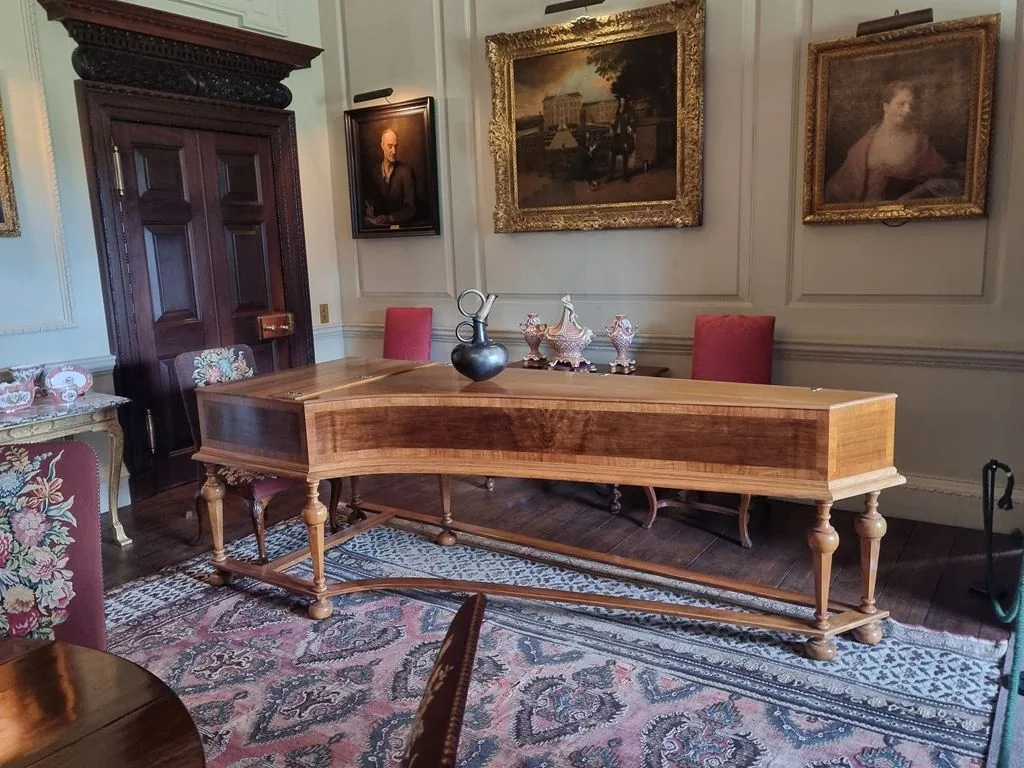
The tradition of Hausmusik helps explain the flexibility between organ and harpsichord. Some of his keyboard works can be played on either instrument. The harpsichord extends devotional music into the home and encourages an articulated touch without spectacular effects.
In chamber music, strings and continuo provide the foundation. The Canon and Gigue in D major illustrates the typical ensemble of three violins and basso continuo, with the latter anchoring the harmony.
The collections of duos show the use of scordatura, timbral contrasts and variation techniques. Inherited from Austro-Bavarian circles, these Baroque practices enrich chaconnes and varied airs while remaining true to a restrained, expressive aesthetic served by small ensembles.
- Liturgy: organ.
- Music at home: harpsichord.
- Entertainment: strings and basso continuo.
The organ at the heart of the South German school
Organist appointments, the liturgical repertoire and the teaching of counterpoint make the organ a central instrument.
The harpsichord and Hausmusik
At home, the harpsichord takes up church repertoire and confirms the flexibility of choosing between the two instruments.
Violins and basso continuo
Chamber ensembles explore canons, ostinatos and variations over a stable bass line.
Johann Pachelbel: Typical Instrumentation and Ensembles in His Keyboard Works
His keyboard output meets two needs: liturgical service and teaching. Clarity of the individual voices comes first, and the writing favours distinct musical layers.
Chorales and Magnificat Fugues: Solo Organ and Teaching
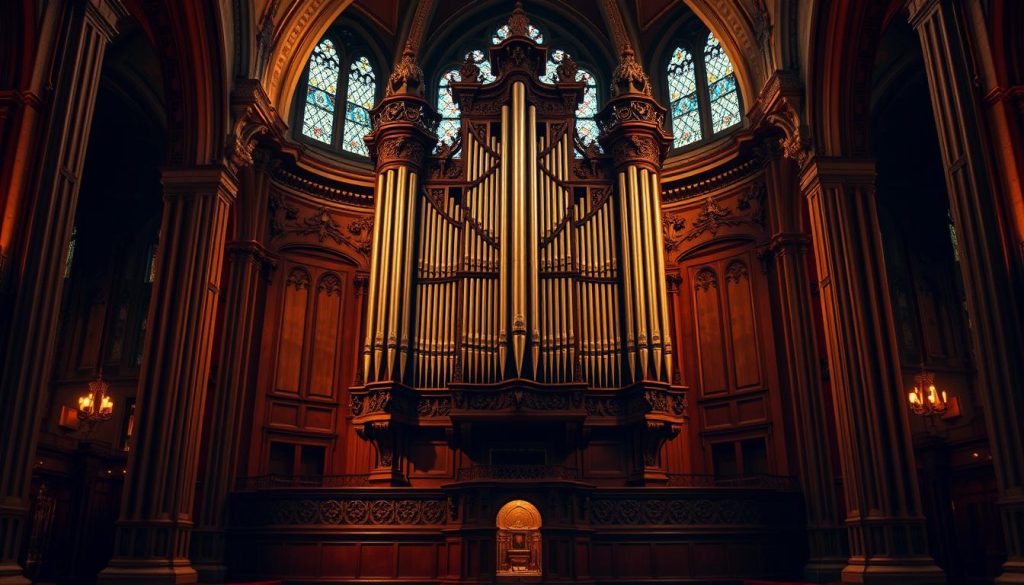
The organ is the main instrument for embellished, varied or fugal chorales. The pedal bass supports the cantus firmus, while the inner voices receive gentle figurations.
The Magnificat fugues — 94 in all — form a laboratory for contrapuntal writing. These short miniatures were conceived for liturgical use and teaching.
Toccatas, preludes and fantasias: measured freedom
The toccatas, preludes and fantasias (16, 7 and 6 respectively) display a restrained style. The style avoids excess; registration remains moderate to preserve polyphonic clarity.
“Their restrained intensity and skilful modulations give these pieces their poetry.”
Chaconnes and the Hexachordum Apollinis collection: the art of variation
The chaconnes use an ostinato as the basis for expressive variations. The cycles in F major and F minor reveal melodic and rhythmic inventiveness.
The Hexachordum Apollinis collection (1699) brings together six varied airs prized by harpsichordists. Many of these pieces can be adapted to the organ, harpsichord or even piano, depending on the setting.
- Liturgical use: solo organ.
- Domestic use: harpsichord or piano.
- Teaching purpose: developing contrapuntal writing within the annual obligations of his Erfurt appointment.
Chamber Music and the Famous Canon: Strings Supported by Basso Continuo
The chamber works rely on balanced voices and a flexible continuo to create clear, lyrical textures.
Canon and Gigue in D major: structure and reinventions
The Canon and Gigue is written for three violins playing in imitation over a repeated harmonic progression supported by basso continuo.
This mechanism produces melodic interweaving that is both accessible and sophisticated. Its harmonic stability provides an ideal framework for variations in texture, tempo and character.
Its rediscovery in the twentieth century, particularly after Jean-François Paillard’s 1969 recording, made the famous canon a source of reinvention.
Musicalische Ergötzung: duos, scordatura and entertainment
The six partitas for two violins and continuo were conceived for the home and salon.
Scordatura creates distinctive colours; the writing remains clear, lively and well suited to chamber playing.
Modern reception: transcriptions and uses
This work has inspired hundreds of adaptations: piano transcriptions (for teaching or concerts), choral versions, ventures into jazz, rock and hip-hop, and uses in films and anime.
From salons to ceremonies, the canon crosses genres and holds a place in classical music and beyond.
“The repeated bass provides a foundation that frees the upper voices to invent.”
- Original ensemble: three violins and basso continuo.
- Strengths: a stable harmonic structure with many possibilities for variation.
- Social uses: weddings, concerts, recordings and anime.
| Work | Ensemble | Characteristic | Common adaptations |
|---|---|---|---|
| Canon and Gigue | Three violins and basso continuo | Canon over a harmonic ostinato | Piano, choir, jazz, rock, anime |
| Musicalische Ergötzung | Two violins and continuo | Playful duos, scordatura | Chamber concerts, transcriptions |
| Chaconnes and variations | Strings and continuo | Ostinato supporting cycles of variations | Piano, chamber ensembles |
Basso continuo remains central: it provides harmonic coherence and frees the violins to ornament their parts.
Personal and stylistic ties with the Bach family helped spread this chamber music style. In short, the famous canon has introduced Pachelbel’s chamber music to audiences worldwide, despite his chamber catalogue being smaller than his keyboard output.
Biographical and Professional Context Shaping His Ensembles
Born in Nuremberg in 1653, he pursued his career in Vienna, Eisenach, Erfurt, Stuttgart and Gotha before taking up an appointment at St. Sebald’s in 1695.
His studies with Heinrich Schwemmer and Georg Caspar Wecker, followed by Kaspar Prentz, gave him a solid technical foundation. These years shaped a clear, practical style.
From Vienna to Nuremberg: appointments and demands
In 1678, his Erfurt contract required him to compose a piece “each year” that surpassed the previous one. This obligation encouraged a steady output of works for organ, choir and continuo.
Networks and transmission
His time in Eisenach brought him close to the Bach family network. He taught Johann Christoph, among others, passing on techniques and repertoire.
- Career: an itinerant German organist who later held a permanent appointment.
- Impact: the availability of an organ and continuo shaped his ensembles.
- Legacy: a return to Nuremberg, publication in 1699 and dissemination through family and pupils.
| Period | Place | Effect on his output |
|---|---|---|
| 1673-1677 | Vienna and Eisenach | Deeper mastery of organ playing |
| 1678 | Erfurt | Contract requiring a new work “each year” |
| 1695-1706 | Nuremberg, St. Sebald’s | Stability, publications and wider recognition |
“The combination of his appointment and established network explains his preference for organ, harpsichord and small string ensembles.”
Sound and Instrumentation: Gentleness, Grace and Polyphonic Clarity
The composer’s sound is marked by a gentleness that favours clarity among the voices.
This writing encourages singing lines in which every voice remains distinct. Registrations are restrained, and the textures suit small ensembles.
The style values balance over display. The toccatas remain brief and intimate; the chaconnes reveal a real talent for variation and contemplation.
“gentleness, grace and modesty”
Melodic grace comes from a fine balance of suspensions and modulations. For the musician and teacher, it offers a model: focus on hearing each voice more than on virtuosity.
The reach of this aesthetic can be seen in its influence on the Bach family and in the ease with which the music lends itself to modern transcriptions. This economy of means keeps the works alive and makes them adaptable to today’s music.
Conclusion
His keyboard pieces and chamber works reveal an aesthetic of economy and grace. Johann Pachelbel remains a composer whose work as an organist guided his choices for the organ and harpsichord.
The fugues, chorales, chaconnes and Hexachordum Apollinis collection show a clear style grounded in restraint, melody and mastery of variation.
The famous canon raised the composer’s profile in classical music, while the Magnificat fugues and Hexachordum Apollinis collection show his contrapuntal art in miniature.
Year after year, this talent produced compositions that have endured for centuries. Listen to a chorale, a fugue, a chaconne and the famous canon side by side to hear the unity of music born in the seventeenth century and still alive in the twenty-first.