
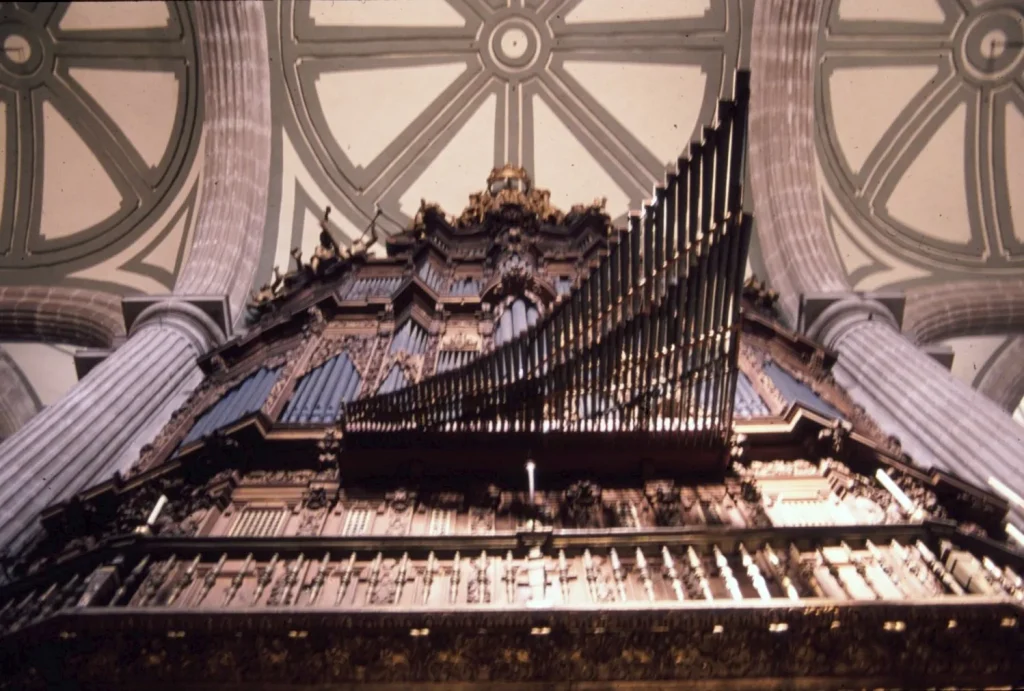
In brief: this organ piece holds a distinctive place in German Baroque music. It is built on an eight-measure theme and a series of variations over an ostinato bass.
Why listen? The balance between structural rigor and expressiveness makes the work compelling for music lovers and prospective buyers in 2025.
Modern appreciation of the work draws on reliable editions and recordings, including Simone Stella’s complete collection. A public-domain score is available on IMSLP for following the structure while listening.
What to listen for: the organ registration, recording quality and acoustics shape the experience. This article offers a buying guide to help you choose between historic and modern instruments, and between CD and streaming, using criteria such as bass depth.
For more musicological context and references, consult the detailed entry.
Why discover Pachelbel’s Chaconne in F Minor today?
The work’s appeal today lies in its ostinato-based form, which combines harmonic rigor with decorative invention.
The piece is built on a repeated eight-measure bass and presents sixteen variations. This continuing repetition creates harmonic stability.
Against that foundation, the texture evolves: countermelodies, dynamics and figurations trace a dramatic path that is easy to hear.
Stylistic connections and context
The boundary between chaconne and passacaglia remains fluid: early sources often use the two terms interchangeably, depending on the meter or the ostinato pattern.
Some techniques—keyboard figurations and altered reprises—anticipate features found in Johann Sebastian Bach, particularly in BWV 582.
- The persistence of the ostinato highlights the variety of figures above it.
- The precise date remains debated; its copy in the Andreas Bach Book places the work around 1707–1713.
- The revival of the period organ and recent recordings make listening especially revealing.
Recommended listening conditions: a realistic volume, ample reverberation and contrasting registrations help reveal the polyphonic phrasing and the shape of the variations.
Buying and listening guide to Johann Pachelbel’s Chaconne in F Minor
A convincing listening experience depends above all on the instrument, the recording and the edition you choose.

Which versions to choose
Period organ: choose these recordings for the instrument’s authentic tone and the breathing of its bellows.
Well-recorded modern instruments, meanwhile, can make the individual voices clearer. Harpsichord or piano transcriptions are useful supplements. They illuminate the structure, although the absence of a pedalboard changes the effect of the bass.
Audio and acoustic criteria
- Well-controlled church reverberation: a reverberant tail that does not obscure detail.
- Microphones placed at a measured distance to preserve dynamics.
- Clear bass reproduction that conveys the ostinato without muddiness.
Editions and scores
A useful reference: the Leduc edition, published in French on November 9, 2005, has 5 pages and carries ISBN 9790046278174. The rights are managed by the publisher; check them before buying.
To compare sources, also consult the free score on IMSLP, particularly for the Chaconne in D Minor.
Formats, platforms and budget
CD suits hi-fi listening, streaming lets you compare several performers, and legal downloads provide access to lossless files. To place the work in context, Simone Stella’s Complete Keyboard Music collection (Brilliant Classics, 2019) offers excellent value for money.
Final advice
Consult the publishers’ booklets for details about registrations, organ builders and the recording venue. These reference points make it easier to choose and assess a purchase.
Our selection of the best recordings and scores to explore
To guide your choice, we present essential recordings and scores.
Recommended complete collection: Simone Stella’s Complete Keyboard Music series (Brilliant Classics, 13 CDs, 2019) provides a clear overview. The playing remains articulate and the tempos balanced, bringing out the ostinato without stiffness.
A practical score for study
For organ study, the Leduc edition, published on November 9, 2005, is ideal. Number of pages: 5. ISBN: 979‑0046278174.
Recordings and acoustics to favor
Favor recordings made on historic organs in Germany or Austria. They enhance the modal color and liturgical character.
- Look for technical notes identifying the instrument, registration and temperament.
- Choose a sound balance in which manuals and pedalboard respond to each other, allowing the ostinato bass to carry the musical argument.
- Compare acoustics—a reverberant nave or a dry chapel—according to the effect you want.
| Reference | Format | Main advantage |
|---|---|---|
| Complete Keyboard Music (Simone Stella) | 13 CDs, Brilliant Classics (2019) | Coherent overview; tempos and articulation |
| Leduc editions (organ, F minor) | Score, 5 pages (2005) | Practical for study and liturgical use |
| Recordings on historic instruments (Germany/Austria) | CD/streaming | Modal color and liturgical character |
To learn more, consult specialist discussions of the German Baroque organ. Create a comparison playlist to hear differences in registration and phrasing.
Conclusion
In summary, the Chaconne in F Minor combines an ostinato-based framework with rich variations. This formal tension makes for listening that is both clear and moving.
If you are considering a purchase, favor editions and recordings with booklets specifying the date, rights, organ and venue. These details make technical comparisons easier.
Start with a reliable complete collection, then listen to the chaconne on its own to compare registrations and acoustics. Also check the Leduc score (ISBN 979‑0046278174) and consult the accompanying booklet for practical comparisons.
Historical value: the work, connected to Johann Sebastian Bach through its tradition and writing, deserves to be explored in technically accomplished performances.