A major figure of the German Baroque, Johann Pachelbel was born in Nuremberg in 1653. His career as an organist and composer took him to Vienna, Eisenach, Erfurt, Stuttgart and Gotha before he returned to Nuremberg.
This page summarizes his life, his writing and the significance of his works in classical music. His output includes Magnificat fugues, toccatas, preludes, chorales and keyboard suites, as well as cantatas and motets.
Beyond the famous Canon, his organ and keyboard music reveals a rich contrapuntal range and great melodic warmth. His Canon in D major, probably composed around 1680, was rediscovered in the twentieth century and popularized by Jean‑François Paillard.
Explore: key events in his life, his career, major works, influences, especially on the Bach family, and the continuing appeal of his music.
For scores and an overview of his catalogue, see this dedicated page.
Biographical milestones: from Nuremberg (1653) to an emerging composer and organist
His early life traces the path of an organist trained in Nuremberg’s musical community.
Birth in Nuremberg, baptism and a musical childhood
He was probably born in August 1653 and was baptized on 1 September 1653. The city offered a rich musical setting: choirs, organs and church services gave him early access to music.
Studies and teachers: foundations and Italian influences
He received his first lessons from Heinrich Schwemmer and Georg Caspar Wecker. These teachers laid the foundations for his command of counterpoint and accompaniment.
He later studied at Altdorf, then in Regensburg with Kaspar Prentz. His education at the Gymnasiumpoeticum in Regensburg completed this training.
“Studying with respected teachers helped him secure his first professional appointments.”
- Family: his father was a wine merchant who provided social and financial support.
- Teachers: Kerll introduced him to Italian models, including Frescobaldi and Gabrieli.
- Outcome: practical organ improvisation skills and a lasting melodic sensibility.
During the 1660s and 1670s, he became a musician ready to begin a career in church music and compose accomplished works.
Career and posts across Europe: from Vienna to St. Sebald’s Church in Nuremberg
From Vienna’s cathedral to the organ lofts of Nuremberg, his appointments chart a steady rise.
Vienna (1673) and Italian influences
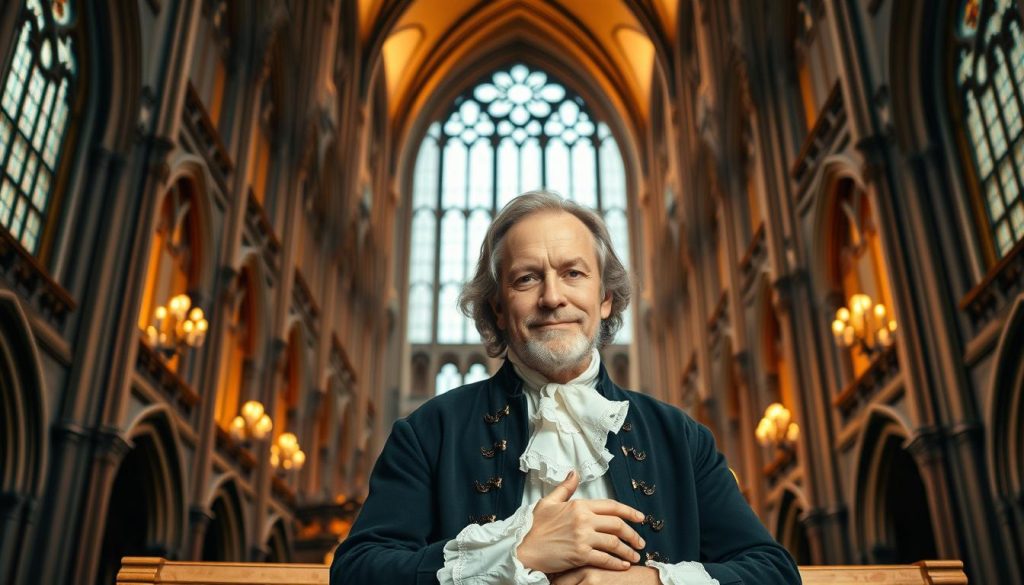
In 1673, he became an organist at St. Stephen’s Cathedral. This prestigious post brought him into direct contact with Italian models.
Eisenach and Erfurt: teaching and composition
In 1677, he moved to Eisenach, formed ties with the Bach family and became Johann Christoph’s teacher.
In Erfurt (1678), a demanding contract required him to compose a new work each year. This obligation spurred his organ output, particularly his toccatas and fugues.
Stuttgart, Gotha and the return to Nuremberg (1695–1706)
His posts in Stuttgart (1690) and then Gotha (1692) reflected his growing recognition at court.
In 1695, he took up his post at St. Sebald’s Church in Nuremberg and remained there until 1706, a period of professional maturity.
“Church appointments, teaching and composition were at the heart of his career.”
- Role: organist and composer in the service of worship.
- Teaching: an influential teacher of Bach’s elder brother.
- Influence: Italian and German traditions meet in his work.
| Years | City | Post | Effect on his work |
|---|---|---|---|
| 1673 | Vienna | Organist (St. Stephen’s Cathedral) | Adoption of Italian inflections |
| 1677‑1678 | Eisenach / Erfurt | Teacher, organist | Ties with the Bach family; increased output for worship |
| 1690‑1695 | Stuttgart, Gotha | Organist | Recognition at court |
| 1695‑1706 | Nuremberg | Organist (St. Sebald’s) | Maturity and creative stability |
Major works: from the Canon in D major to Hexachordum Apollinis
This section explores the major compositions that have endured through the centuries, from a work for violins to keyboard variations.
Canon and Gigue in D major: origins and form
The Canon and Gigue in D major, probably composed around 1680 in Erfurt, may have been intended for wedding ceremonies. The work combines a canon for three violins with an ostinato bass played by the continuo.
The canon layers imitative lines, while its repeating harmonic progression provides a clear foundation. This progression makes the melody immediately memorable.
Chamber, keyboard, organ and sacred music
Pachelbel published Musicalische Ergötzung (1691) for two violins and continuo, followed by Hexachordum Apollinis (1699) for harpsichord: six brilliant sets of variations.
His organ works include nearly 94 Magnificat verses, as well as toccatas, preludes and suites. His sacred output includes cantatas, motets and masses, evidence of a substantial body of music for worship.
“Contrapuntal elegance and melodic warmth give this music its unity.”
- Modern legacy: a twentieth-century revival and countless arrangements.
- Aesthetic unity: rigorous counterpoint and melodic appeal.
For an overview of his catalogue and scores, see this catalogue of scores.
Style and writing: Pachelbel’s melodic warmth, counterpoint and innovations
Pachelbel’s writing combines contrapuntal clarity with melodic warmth. The result is music that is both approachable and rigorous, in his chamber works as well as his organ pieces.

Canon or chaconne? Ostinato bass and romanesca
The famous Canon and Gigue combines imitation with a chaconne. The voices enter in succession over a repeating ostinato bass.
This bass, related to the romanesca, underpins the harmonic progression. The continuo, played on harpsichord or organ, holds the ensemble together.
A Baroque signature: chorales, fugues and variations
Chorales and fugues provide opportunities to explore themes. Toccatas and preludes showcase structured improvisation.
His writing favours clear entrances, controlled diminutions and a singing melody over showy virtuosity.
Organ and keyboard techniques: Hexachordum Apollinis (1699)
Hexachordum Apollinis shows the richness of these forms. Its variations explore a range of textures, keys and moods.
“Grace and rigour characterize this restrained, expressive composition.”
| Aspect | Function | Example |
|---|---|---|
| Dual character | Imitation and ostinato | Canon and Gigue |
| Harmonic pattern | Melodic anchor | Romanesca |
| Instrument | Harmonic support | Harpsichord / organ (continuo) |
| Keyboard | Variations and ornamentation | Hexachordum Apollinis (1699) |
Who Was Johann Pachelbel? Life, Style and Legacy
The passing on of his teaching shaped the musical tradition of Thuringia and beyond.
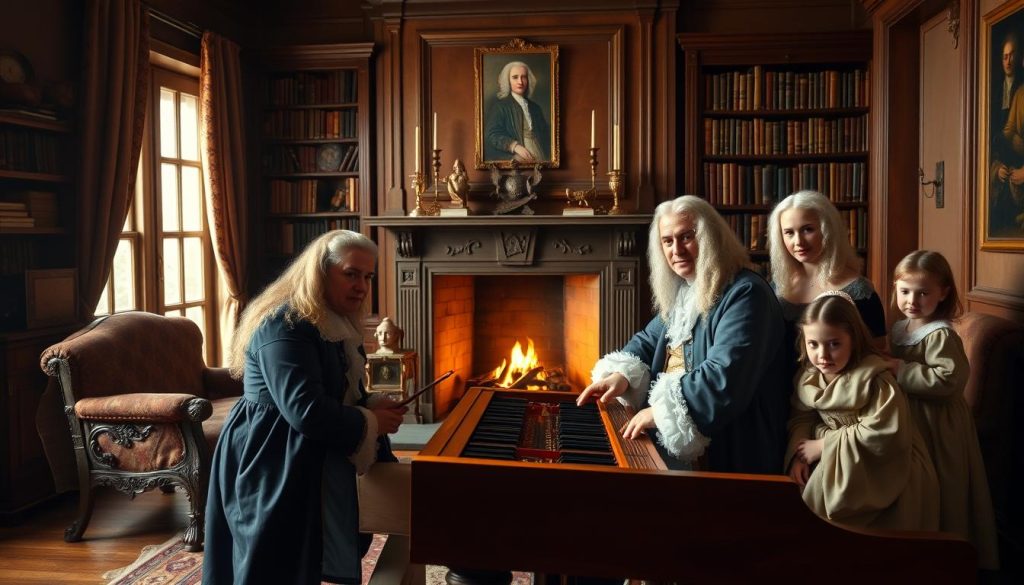
A chain of teaching: in Eisenach and then Erfurt, he took Johann Christoph as a pupil and became godfather to one of J. S. Bach’s elder sisters. This family connection helped spread organ practices and choral repertory.
Influence: his organ repertory, masses and motets inspired several generations of musicians. His teaching remains discernible in the region’s organ schools.
Twentieth-century rediscoveries
After a long period of neglect, performers and musicologists revived interest in his works. Wolfgang Rübsam, Gustav Leonhardt and Fernando De Luca published, performed and recorded major pieces.
The famous Canon reached a wide audience through Jean‑François Paillard’s recording in the 1960s. It shows how the simple harmonic progression of the Canon and Gigue for three violins and bass can cross genres.
“A melody and a repeating bass provided a structure adaptable to modern arrangements.”
| Aspect | Role | Example |
|---|---|---|
| Teaching | Passing on local traditions | Johann Christoph |
| Repertory | Use in worship | Masses, motets, organ pieces |
| Rediscovery | Modern recognition | Jean‑François Paillard, recordings |
| Influence | Popular borrowing | Songs inspired by the harmonic progression |
His musicological legacy lives on in editions of his works and the interest of Baroque ensembles. Asteroid 4972 now bears his name, an unexpected sign of his reach.
Conclusion
Johann Pachelbel remains a composer and organist whose combination of clear counterpoint and expressive melody left its mark on German Baroque music.
Born in Nuremberg in 1653 and deceased in 1706, he served urban institutions and assembled a catalogue centred on the organ, keyboard, sacred music and chamber music.
The Canon and Gigue in D major made his name widely known without diminishing the importance of his other works. The passing on of his art through the Bach family and organ schools carried his influence into the twentieth century.
To explore further, discover the Magnificat verses, Hexachordum Apollinis and instrumental suites. Resources on great organ composers offer a useful starting point.