
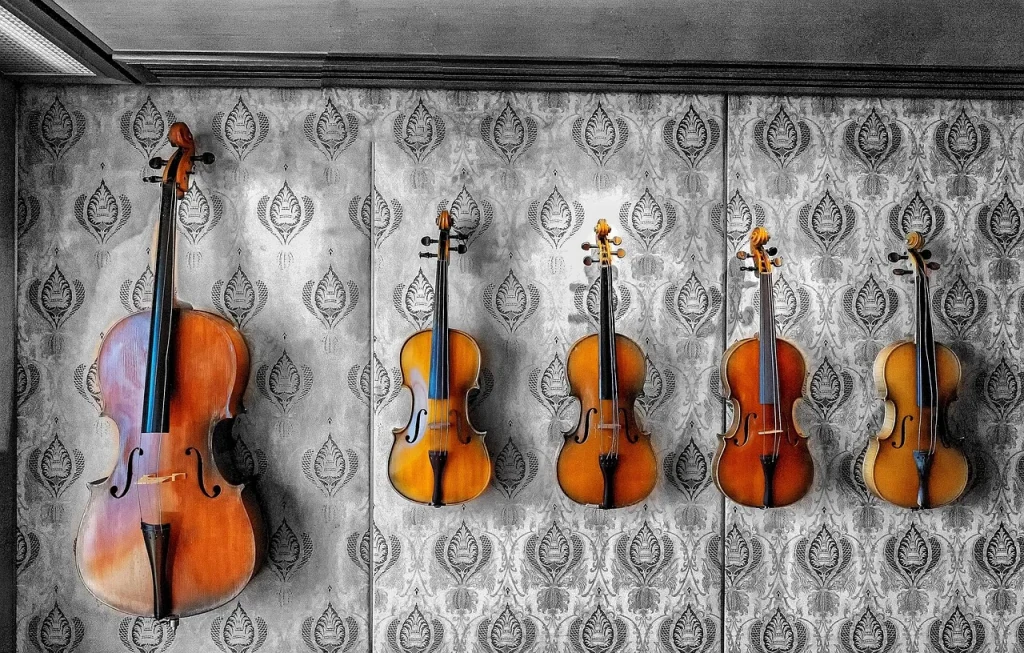
Introduction. This article sets the scene for a journey that begins with a Baroque piece and follows its path into modern use. It explains why this work has fascinated audiences for years and become a fixture of the repertoire.
Objective: to show how Pachelbel’s Canon works and how its simple form has spread through culture, from ceremonies to the charts.
We will discuss the work’s full title, contrapuntal structure and reception in each era. Readers will find a chronological thread and a five-part outline.
The discussion will highlight the harmonic language, key performers and notable adaptations that have sustained the piece’s success.
To explore the historical context and modern uses further, consult a selection of concerts in Prague and famous piano pieces through these references: classical concert listings and piano repertoire.
The origins of Pachelbel’s Canon: era, composer and instrumentation
To understand its roots, let us return to the composer’s life and the circumstances in which the piece emerged. Johann Pachelbel (1653–1706) was an organist and teacher active in southern Germany. His career connects a late Baroque aesthetic with local chamber music practices.
Johann Pachelbel: an organist close to the Bach family
After a stay in Eisenach, he formed ties with the Bach family. He lodged with a member of the family and taught Johann Christoph. These relationships helped spread and teach his musical language.
Circa 1680: structure and ensemble
Dated to around 1680 and probably conceived in Erfurt, this piece is written for three violins supported by basso continuo. The balance between the violins and continuo creates a clear, lyrical texture.
Canon, gigue and performance context
The pairing of the canon and gigue in D major combines contrapuntal writing with a brief closing gigue. Conceived as chamber music, it was also used at weddings and social events.
- Instrumentation: three violins and basso continuo.
- Purpose: chamber music and ceremonies.
From Pachelbel to today: the canon’s legacy
Its power lies in the interplay between staggered polyphony and an unchanging bass line. The technique uses three overlapping entries, with each phrase answering the previous one after a delay. The regular division into two-bar segments provides a firm rhythmic foundation and helps listeners follow the form.
Canon or chaconne? Polyphony and ground bass
The ground bass repeats a fixed sequence reminiscent of a chaconne. Here, the basso continuo supports the harmony and guides the ear while allowing the polyphony to trace shifting patterns.
The harmonic progression: Romanesca and serenity
The harmonic progression draws on the sixteenth-century Romanesca. This bass sequence provides an immediate point of reference and a sense of calm.
“A simple pattern that invites recollection”
Three violins and the quality of their voices
The writing for three violins favors balance and a shared sound. The clear, transparent counterpoint retains considerable expressive power, even in a dense texture.
- Repetitive structure = easier memorization.
- A formal model that has inspired dozens of adaptations over time.
- Closing gigue: a short, effective way to end the work.
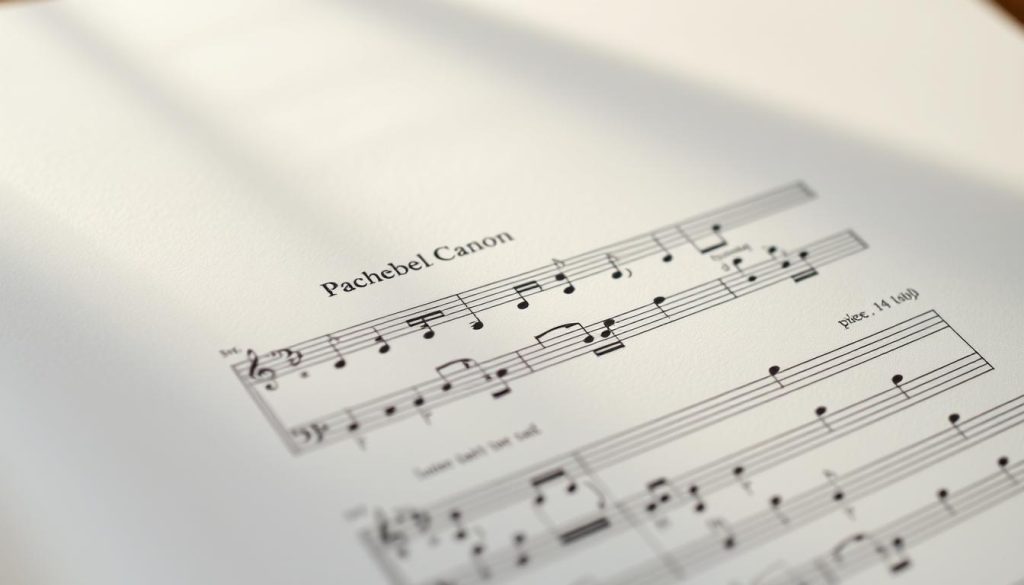
To understand how such crossovers shape today’s music scene, see also encounters between urban music and classical music.
Adaptations, rediscovery and performances: from pop studios to orchestras
From chamber concerts to stadiums, the same chord sequence has taken on countless forms.
The 1960s: Jean-François Paillard and his chamber orchestra revived interest in this piece. Their recording brought it back to wider attention and paved the way for more adaptations.
Rain and Tears (1968) and its Baroque lineage
In 1968, Aphrodite’s Child released Rain and Tears. Vangelis borrowed the harmonic progression of Pachelbel’s Canon and added a harpsichord as a nod to the Baroque era.
Go West: a bass line transformed into an anthem
Later, Go West transformed the insistent bass line into a unifying disco rhythm. The Village People song, covered by the Pet Shop Boys, has even echoed through stadiums such as the Parc des Princes.
Memories (2019): personal and collective
Maroon 5 uses the same harmonic progression in Memories. The song expresses grief and shows the pattern’s emotional flexibility.
Historically informed Baroque performance
Akademie für alte Musik Berlin has performed Kanon & Gigue für 3 Violinen & B. C. with period instruments. Its lively tempos and the quality of the violins restore the work’s original vitality.
“A simple progression capable of expressing very different emotions.”
| Performance | Period | Characteristic | Impact |
|---|---|---|---|
| Jean-François Paillard (orchestra) | 1960s | Rediscovery in classical music | Revived concert-hall interest in the work |
| Aphrodite’s Child | 1968 | Harmonic progression and harpsichord | A bridge between pop and Baroque music |
| Village People / Pet Shop Boys | 1980s–1990s | An anthem-like bass line | Heard in stadiums |
| Maroon 5 | 2019 | An intimate use of the harmonic progression | Radio and streaming success |
This history shows how a Baroque pattern flows through modern music, from orchestral recordings to pop hits. To discover performances and archives, consult the concert listings and performance records.
Conclusion
Conclusion
To close, consider the strength of a simple idea: a ground bass beneath voices in canon. This meeting of clear polyphony and a harmonic progression has shaped the piece’s history since its creation.
The sturdy form of the canon and gigue in D major, its regular two-bar segments and the basso continuo explain its impact in both chamber music and large orchestral settings.
Three violins and a bass line create a range of sounds whose quality depends on the musicians and their interpretive choices. Dozens of adaptations, from classical music to popular culture, attest to a universal musical language.
To keep listening, explore period-instrument performances and recent adaptations. See also the link to Johann Sebastian Bach to understand the family connections that helped pass on this repertoire.