
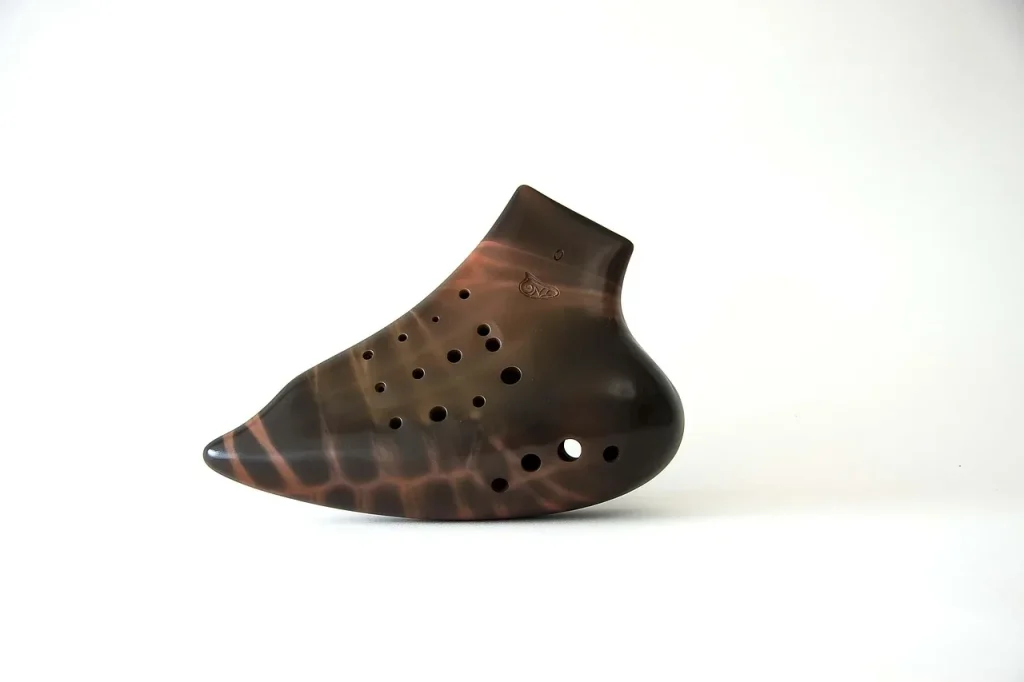
The ocarina is a captivating wind instrument that has won over many musicians. Its popularity has soared, with sales increasing by 300% since 2015. This is largely due to its appearance in iconic video games such as The Legend of Zelda.
The two-chamber version offers a wider range, allowing players to explore more notes. Based on the principle of the Helmholtz resonator, this instrument produces melodious sounds as air vibrates inside its cavities. Learning to play an instrument that combines tradition and modernity is a real pleasure.
In this article, we will explore the double ocarina’s distinctive features. You will learn how to control your breath and coordinate your movements to make full use of both chambers. Get ready to enter a fascinating musical world, where every note brings you closer to mastering this instrument.
Introduction to the double-chamber ocarina: origins and background
This musical instrument has roots in ancient cultures. The ocarina’s origins go back more than 12,000 years. The Maya and Aztecs used it in sacred rituals and to communicate between communities. This deep connection with spirituality and community shaped its use through the ages.
A major transformation took place in the nineteenth century. Giuseppe Donati modernized the instrument in 1860. He standardized the transverse shape we know today. This development brought the instrument worldwide recognition and made it accessible to more musicians.
A major breakthrough for the double model came in 1987. Pacchioni combined Italian craftsmanship with Asian influences. This innovation greatly expanded its range, giving musicians new harmonic possibilities.
The instrument’s popularity today has soared thanks to cultural works such as The Legend of Zelda. This influence has led to a 300% increase in sales since 2015. Today, the instrument is played in a variety of musical settings, from traditional festivals to contemporary concerts.
| Period | Key event | Impact |
|---|---|---|
| Prehistory | Use by the Maya and Aztecs | Sacred rituals and communication |
| Nineteenth century | Modernization by Giuseppe Donati | Standardization of its shape |
| 1987 | Invention of the double model by Pacchioni | Expanded range |
| 2015 | Impact of The Legend of Zelda | 300% increase in sales |
This instrument has endured through the centuries. Its ability to produce enchanting melodies continues to inspire musicians around the world. The ocarina is more than a musical instrument: it reflects a rich musical history.
Types of ocarinas: a closer look at the double-chamber model
Ocarinas come in many forms. Each type has features that shape the playing experience. Two-chamber models stand out for their wider range.
Single- and multiple-chamber models
Simple ocarinas, such as four- or six-hole models, suit children and beginners. They can play between 7 and 17 notes and offer a straightforward range. Other models, such as 12-hole ocarinas, open up broader musical possibilities.
The 12-hole model is often recommended for beginners because it can play about 21 to 22 notes across an octave and a half. Its logical fingerings make it easier to learn your first pieces.
Multiple-chamber versions, such as the double ocarina, extend the range across several octaves. A double ocarina can play two full octaves, while a triple model offers three. This gives experienced musicians exceptional harmonic variety.
How the number of holes affects the range
The number of holes on an ocarina directly affects the notes it can play. A four-hole ocarina, for example, is compact and simple, while a 12-hole model offers greater musical flexibility. This configuration lets you explore more complex melodies.
Each model has advantages depending on the player’s level. It is often advisable to master a simple 12-hole ocarina before moving to a more advanced model. This builds a foundation in breath control and fingering and makes the transition to more complex instruments easier.
The Pacchioni system and other fingering systems
The Pacchioni system, used on multiple-chamber models, is a major innovation. Compared with traditional Asian fingering, it improves the accuracy of high notes and reduces wrong notes. It allows notes to overlap between chambers, making transitions smoother.
Each chamber of a double ocarina acts as an independent resonator and covers a distinct part of the range. This lets you move from low to high notes without interruption. Airflow between the chambers also affects the continuity of the sound, which is essential for an even tone.
How a double-chamber ocarina produces sound
The acoustics of this wind instrument rely on a fascinating phenomenon. Air vibrates inside a hollow chamber, creating musical notes according to the principle of the Helmholtz resonator. Each chamber of a double ocarina has its own body of air, allowing each resonator to work independently.
Air vibration and Helmholtz resonators
When you blow into the ocarina, air flows through its cavities. This vibration produces sounds that vary with the shape and volume of each chamber. Globular models, for example, produce a round, warm sound, while more elongated shapes offer a clearer tone.
How the two chambers extend the range and maintain continuity
The ocarina’s two chambers play a crucial role in its range. The first usually produces the low notes, while the second takes over for the high notes. This division allows a smooth transition between registers.
How the holes and breath control affect the sound
The instrument’s holes change the effective size of its resonating cavity. Covering or uncovering a hole changes the pitch, giving the player greater flexibility. Breath control is also essential: good diaphragmatic control helps produce accurate, expressive notes.
Overblowing, which involves increasing air pressure, can add three to four notes to the standard range. It further expands the melodic possibilities for experienced musicians.
Finally, the quality of an ocarina’s construction directly affects its acoustics. Poorly drilled holes or an improperly calibrated chamber can compromise intonation. Choosing a well-made instrument is therefore essential to enjoying its full sound potential.

Playing techniques for the double-chamber ocarina
Mastering this instrument requires specific playing techniques. Finger placement and breath control are essential for producing accurate, harmonious notes.
Finger placement and an embouchure spanning both mouthpieces
Learn to position your fingers precisely over your ocarina’s holes. Use your fingertips rather than your nails to seal them completely. This prevents air leaks that can affect intonation.
The embouchure spanning both mouthpieces is specific to two-chamber models. Place your lips gently between the two mouthpieces and keep their movement to a minimum. This makes quick transitions between registers easier.
Breathing and coordination between breath and fingers
Develop effective diaphragmatic breathing. Bear in mind that a more complex model uses 30% more air. Good breath control is therefore crucial.
Adjust the angle of your embouchure to 45° to help the air vibrate inside the chambers. This will produce a clear, well-projected sound throughout the range.
Practical exercises for smooth transitions between chambers
Practice holding long notes in each chamber to steady your breath. Then alternate slowly between the chambers with a metronome to develop reliable muscle memory.
Practice scales in eighth notes to refine the transition between low and high registers. Focus on coordinating your fingers and breath as you switch chambers.
Use light tongue articulation after each switch between chambers. This makes the start of each note clearer and prevents blurred sounds during quick transitions.
Record yourself regularly during practice. Listening back will help you hear your playing more objectively and spot any intonation problems.
Finally, spend time each day on the notes where the chambers’ ranges meet. These are the points where coordination between your hands and breath is most demanding.
Double-chamber ocarina: how it works and tips for beginners
For aspiring musicians, choosing a suitable instrument is crucial. A 12-hole ocarina in C major is an excellent first step. It lets you learn the basics before moving on to more complex models. An ideal weight is between 200 and 300 grams, making the instrument comfortable to play.
Choosing a beginner-friendly model
Choose an instrument that makes learning easier. A 12-hole ocarina is recommended for beginners. It lets you play a variety of notes without immediately facing the technical complexity of a two-chamber model.
Tuning options also deserve attention. Standard tuning at 440 Hz is versatile. Tuning at 432 Hz is another option for a warmer sound.
Step-by-step practice plans
To make steady progress, follow a practice plan. Practicing for 15 minutes a day for one month can provide a solid foundation. Consistency is essential to mastering this instrument.
Educational resources, such as the OCTalk and Gina Luciani YouTube channels, offer useful tutorials. Part’Ocarina can also generate tablature suited to your level.
Making your first steps effective and enjoyable
When learning, the instrument’s build quality matters greatly. A well-tuned model helps you stay motivated and progress. Avoid three-chamber models for your first purchase, as their complexity can be discouraging.
Budget 40 to 80 euros for your first quality ocarina. Take regular breaks during practice, too. This helps prevent hand fatigue and maintain a steady breath.
- Choose a beginner-friendly model for your first ocarina.
- Start with a 12-hole ocarina before moving to a two-chamber model.
- Practice for 15 minutes a day.
- Familiarize yourself with tuning options: 440 Hz or 432 Hz.
- Use educational resources such as YouTube channels and Part’Ocarina.
- Invest in a complete set that includes a protective case.
- Avoid three-chamber models for your first purchase.
- Pay close attention to the instrument’s build quality.
- Budget 40 to 80 euros for a quality ocarina.
- Take regular breaks during practice.
| Criterion | Recommendation |
|---|---|
| Model | 12-hole ocarina in C major |
| Weight | 200 to 300 grams |
| Tuning | 440 Hz or 432 Hz |
| Practice time | 15 minutes a day |
| Budget | 40 to 80 euros |
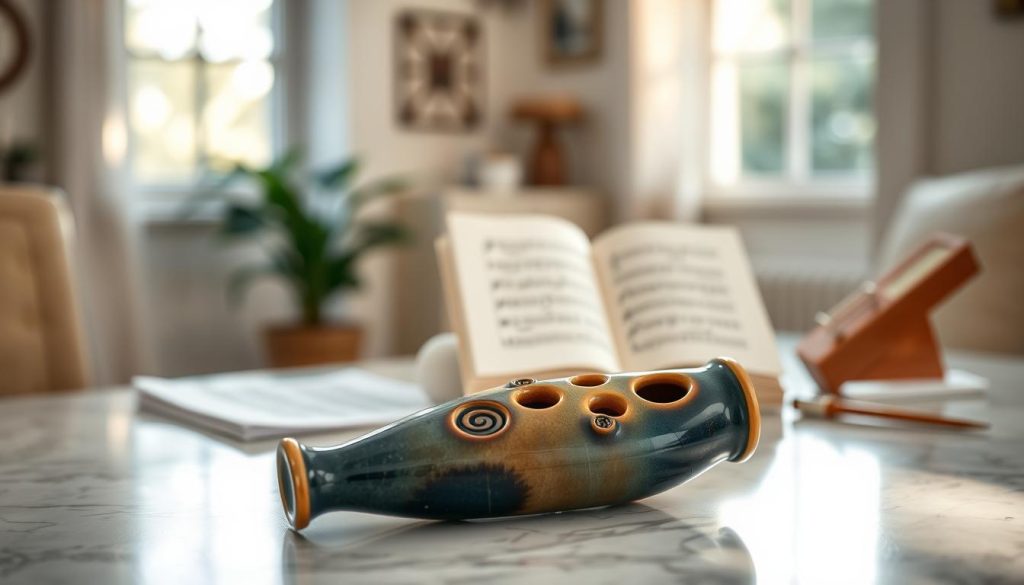
Construction materials and their effect on sound quality
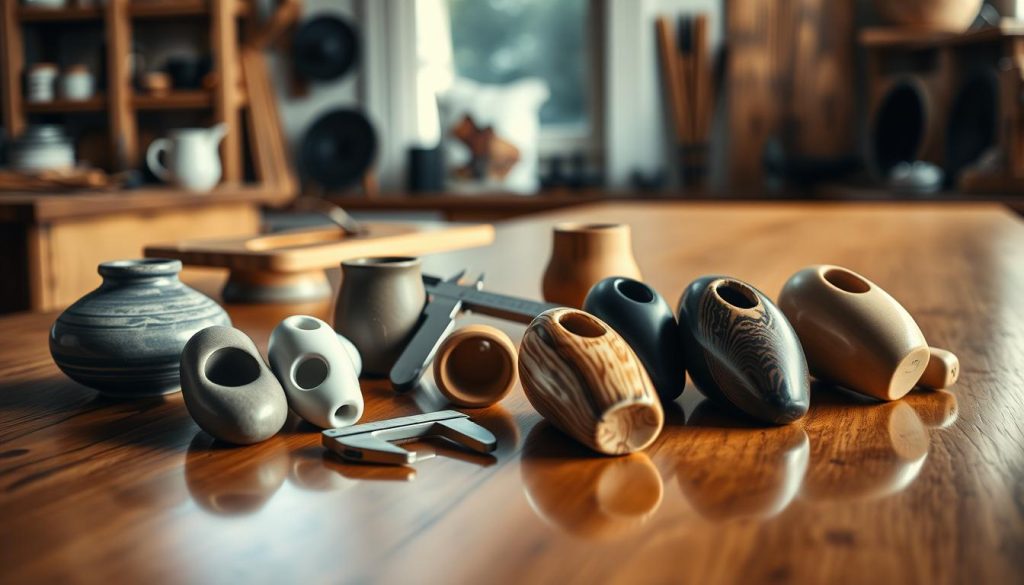
The materials used to make a wind instrument strongly influence its sound quality. Each material has properties that affect the instrument’s tone and harmonic richness.
Ceramic: warm tone and rich harmonics
Ceramic is often considered the material of choice for quality ocarinas. It offers exceptional harmonic richness and a warm, precise tone. Handmade models, such as those by STL or Musique de Terre, stand out for their distinctive colored glazes and excellent intonation.
Ceramic instruments are fragile, however, and must be handled gently. Treat them with care to avoid damage.
Plastic: durability and convenience
Plastic is another option. Its light weight and resistance to impacts make it appealing, particularly for beginners and traveling musicians. The Night by Noble model offers good value for money, although condensation can form inside it and slightly affect the high notes.
Wood and other materials: distinctive sounds and maintenance needs
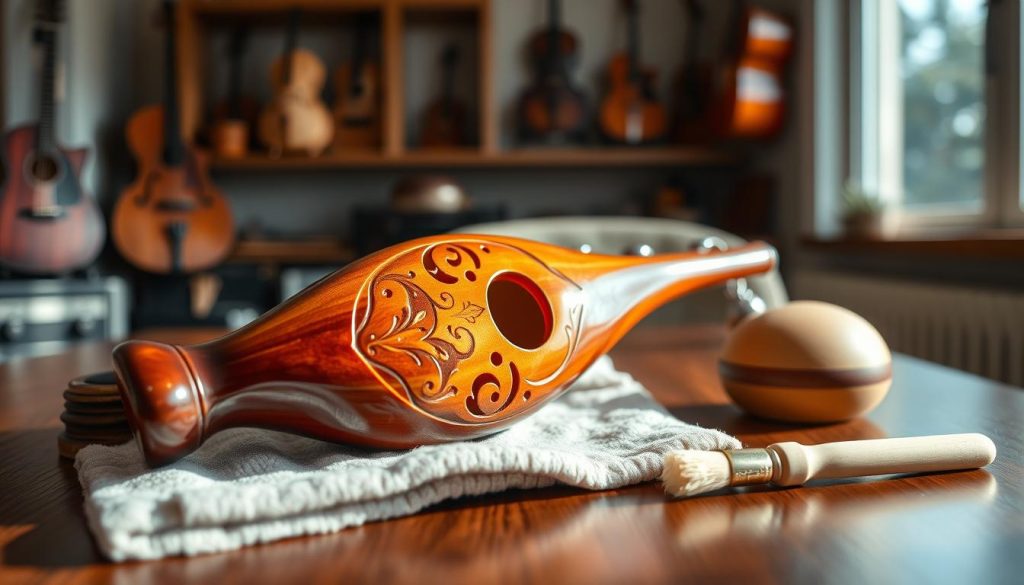
Wooden ocarinas, such as those made by Hind Ocarina, are rare and prized. They produce a warm, organic sound with natural resonance appreciated by enthusiasts. They do, however, require special care, including regular waxing to preserve their sound quality.
Compare materials according to how you plan to use the instrument. Choose ceramic if you seek a pure tone, plastic for convenient everyday use, or wood for a warm, distinctive sound.
| Material | Characteristics | Advantages | Disadvantages |
|---|---|---|---|
| Ceramic | Warm tone, rich harmonics | Excellent intonation, distinctive appearance | Fragile; requires special care |
| Plastic | Durable, lightweight | Convenient for travel, affordable | Possible condensation, less rich sound |
| Wood | Organic sound, natural resonance | Warm sound appreciated by enthusiasts | Requires special maintenance; rare |
How do you choose a double-chamber ocarina?
Choosing the right instrument can transform a beginner’s musical experience. Before selecting a model, decide what music you want to play. This will help you consider your musical ear and make an informed choice.
Technical factors: range, number of holes, fingering
For a beginner, a 12-hole ocarina in C major is recommended. This model offers a balanced range, ideal for exploring different notes. Consider the number of holes, as it affects the notes you can play.
The fingering system is also crucial. It should feel intuitive and make learning easier. A well-designed system will let you move easily from one note to another.
Practical factors: weight, comfort, tuning
Consider the instrument’s weight. A lightweight ocarina will be more comfortable during long practice sessions. Comfort matters just as much: make sure your fingers can reach the holes easily.
Always check the instrument’s tuning. Use a chromatic tuner to check the accuracy of its notes. An out-of-tune instrument can slow your progress.
Budget and recommended brands in France
Budget 40 to 80 euros for a good model. Reputable makers such as STL Ocarina and Olivier Gosselink, who has 30 years of experience, offer quality instruments. Compare available models with their construction in mind.
Before buying, test the instrument’s comfort and the intonation of the notes where the chambers’ ranges meet. This will help you choose one that suits your needs.
- Set your selection criteria according to the music you want to play.
- Choose an alto ocarina in C for its versatility.
- Check the tuning with a chromatic tuner.
- Assess the instrument’s comfort and weight.
- Compare models available on the French market.
- Look at offerings from reputable brands such as STL Ocarina.
- Set a budget suited to your level.
- Test how the notes where the chambers’ ranges meet respond before buying.
- Watch out for common pitfalls when shopping online.
- Invest in accessories such as a protective case.
Care and lifespan of a double-chamber ocarina
Regular care is essential to extending this instrument’s life. Looking after your ocarina helps preserve its sound quality and appearance. Here are some practical recommendations.
Cleaning after each session
After each session, blow gently through the instrument to remove accumulated moisture. Then wipe the mouthpiece with a clean, dry cloth. For a more thorough cleaning, use a flexible pipe cleaner to remove residue from the chambers and holes. Avoid harsh products that could damage the glaze on ceramic models.
Storage and protection from impacts and changes in climate
Store your instrument carefully. Put fragile models in a padded case to protect them from impacts. It is also important to let the instrument air-dry before storing it. Wooden ocarinas need controlled humidity and regular oiling. Plastic models, meanwhile, can be rinsed with lukewarm water.
Periodic care and essential checks
Check the holes and mouthpiece every three months for blockages or hairline cracks. This helps preserve accurate intonation. Avoid temperature changes of more than 5 °C per hour, as they can cause permanent cracks, especially in ceramic models.
Place a small silica gel packet in the case to control moisture. This helps preserve your instrument’s acoustic qualities over time. Always handle your ocarina with clean, dry hands to prevent deposits from blocking the holes.
Following these tips can extend your instrument’s life to 10 or 15 years, protecting your investment and your enjoyment of playing.
- Blow gently through the instrument after each session.
- Wipe the mouthpiece with a dry cloth.
- Use a flexible pipe cleaner for thorough cleaning.
- Store the instrument in a padded case.
- Let it air-dry before putting it away.
- Maintain suitable humidity for wooden ocarinas.
- Rinse plastic models with lukewarm water.
- Check the holes and mouthpiece every three months.
- Avoid sudden temperature changes.
- Place a silica gel packet in the case.
- Handle the instrument with clean, dry hands.
| Action | Frequency | Advice |
|---|---|---|
| Blow through the instrument | After each session | Remove moisture |
| Thorough cleaning | Every week | Use a flexible pipe cleaner |
| Check the holes | Every three months | Look for blockages and cracks |
| Storage | After each use | Use a padded case |
| Care for wood | Every month | Apply oil |
Where can you buy a quality double-chamber ocarina?
Buying a musical instrument calls for thought and care. Whether you are a beginner or an experienced musician, choosing a quality ocarina is essential to getting the most from playing it.
You can buy one from a specialist shop or an online marketplace. Each option has advantages and disadvantages.
Differences between specialist shops and online marketplaces
Specialist shops offer personalized technical advice. You can try instruments before buying, which is a considerable advantage. Online marketplaces offer a wide choice, often at lower prices. Tuning quality can vary between sellers, however.
Established brands and certifications to look for
In France, reputable makers such as Olivier Gosselink and STL Ocarina are worth considering. STL is a world leader with 15 years of expertise. Other makers, such as Sarawut Bugkhuntod, offer affordable models starting at €35. Always check the tuning certificate to ensure the instrument plays in tune.
Pitfalls to avoid and tips for a safe purchase
Avoid clearance bundles and unfamiliar brands without certification. A recent study found that 87% of ocarinas sold on low-cost marketplaces are poorly tuned. Prioritize quality over an unusually low price.
Here are some tips for buying with confidence:
- Choose a specialist shop when buying your double ocarina.
- Compare online marketplace offers while paying attention to tuning quality.
- Explore the premium selection at Instruments du Monde, a French retailer offering a wide choice of brands.
- Trust established brands such as STL Ocarina.
- Always check the tuning certificate supplied by the seller.
- Read verified customer reviews and watch demonstrations.
- Make use of favorable return policies.
- Be wary of clearance bundles and unfamiliar brands without certification.
Conclusion
This instrument offers a rewarding musical experience. Its extended range lets you explore a variety of notes and create captivating melodies. To develop your skills, consult free sheet music and join specialist forums.
Try the instrument in a shop to see how comfortable it is to play. Keep a practice journal to track your progress and stay motivated. With regular care, the instrument can last up to 15 years. Its future looks promising, with innovations that combine tradition and modernity.
Remember that regular practice and choosing a model suited to your level are the keys to success. Begin this musical journey with confidence: every note you play brings you closer to mastering this fascinating art.