
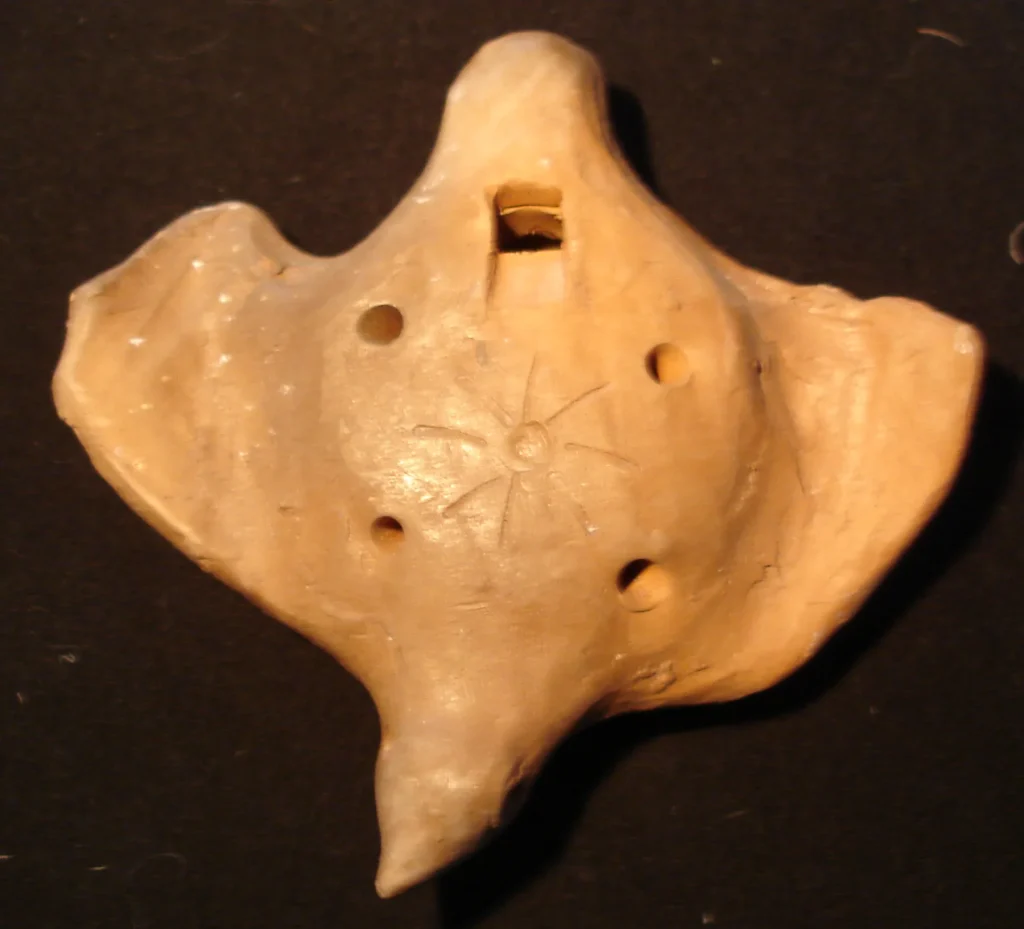
The polyphonic ocarina is a captivating wind instrument that offers a unique musical experience. It can produce two voices simultaneously, changing the way music can be created. It consists of two joined and tuned oarinas, greatly expanding its range of sounds.
The magic of this instrument lies in its “wow” effect, which draws listeners into an enchanting soundscape. Popularized by iconic works, it is enjoying renewed interest today. Demand has increased by 40% since 2015, reflecting its growing appeal.
In this article, we will explore the different facets of this fascinating instrument. We will look at how it can play interwoven melodies and introduce the two main families of double ocarinas. Get ready to discover a rich and varied musical world.
1. What is a polyphonic ocarina?
The polyphonic ocarina stands out for its ability to produce rich, varied sounds. This wind instrument has two interconnected resonance chambers that create a unique musical experience.
The shape of this instrument is elongated and differs from the traditional “goose head” profile often found in classic models. This design encourages exceptional acoustic interaction between the two chambers while increasing the number of holes and the range of possible sounds.
Definition and features of the double-chamber ocarina
This instrument can produce several notes simultaneously, making it a versatile musical tool. Unlike traditional ocarinas, which have only one chamber, the double-chamber model has a range of 1.5 to 2 octaves. This greatly expands the repertoire available to players.
History and the development of polyphony
The ocarina’s origins date back to pre-Columbian civilizations. In 1853, however, Giuseppe Donati created the first modern ocarina. The real revolution came in 1987 with Pacchioni’s invention of the double-chamber model, marking the beginning of the polyphonic era.
This development transformed a simple melodic instrument into one capable of producing complex harmonies and rich accompaniments. The materials used, primarily ceramic, give the ocarina a warm resonance. Wooden and metal versions also exist and offer brighter tones.
Advantages over traditional ocarinas
The advantages of the polyphonic ocarina are clear. It can play drones, chords and simultaneous melodies, opening up a whole new world of musical expression. By comparison, a simple model offers only one octave and a limited number of notes.
The average price of a double ocarina is around €145, while a simple model costs about €80. The instrument’s richer sound and creative possibilities justify the investment.
In short, the polyphonic ocarina is much more than a simple instrument. It lets players explore techniques and musical repertoires that are inaccessible on a single-chamber model, while remaining easy to carry and quick to learn. To learn more about musical instruments, read this article here.
2. How the polyphonic ocarina works
This instrument works according to fascinating acoustic principles. Each chamber acts as a Helmholtz resonator, producing varied, harmonious sounds. The first chamber is used for low and middle notes, while the second produces high notes.
The role of the two chambers in producing notes
The ocarina’s two chambers offer a unique listening experience. Each resonates independently, creating a harmonic effect that enriches the melody. Air flows through the instrument as the finger holes are covered or uncovered, generating distinct notes. Depending on the model, the range spans 1.5 to 2 octaves.
The hole system and polyphonic fingering
On an ATMOS model, each hand controls four holes. This gives each chamber a range of one octave. English fingering is often used and provides access to almost the entire chromatic scale. This method requires precise coordination between the fingers of both hands to play different notes simultaneously.
Using breath and the mouthpiece to control several notes
Breath plays a crucial role in mastering the ocarina. Air consumption is about 30% higher than on a simple model, so good diaphragmatic breathing is important. The mouthpiece should be held at a 45° angle to optimize airflow and keep the notes in tune.
The Pacchioni method helps unify the tone of the two chambers by maintaining constant air pressure. This helps prevent breaks in the sound between registers. Coordinating breath, mouth position and fingering is essential to make full use of this instrument’s capabilities.
| Feature | ATMOS model | CUSCO model |
|---|---|---|
| Range | 2 octaves | 1.5 octaves |
| Number of chambers | 2 | 2 |
| Fingering system | English | English |
| Air consumption | 30% higher | Standard |
3. Main polyphonic ocarina models and their features
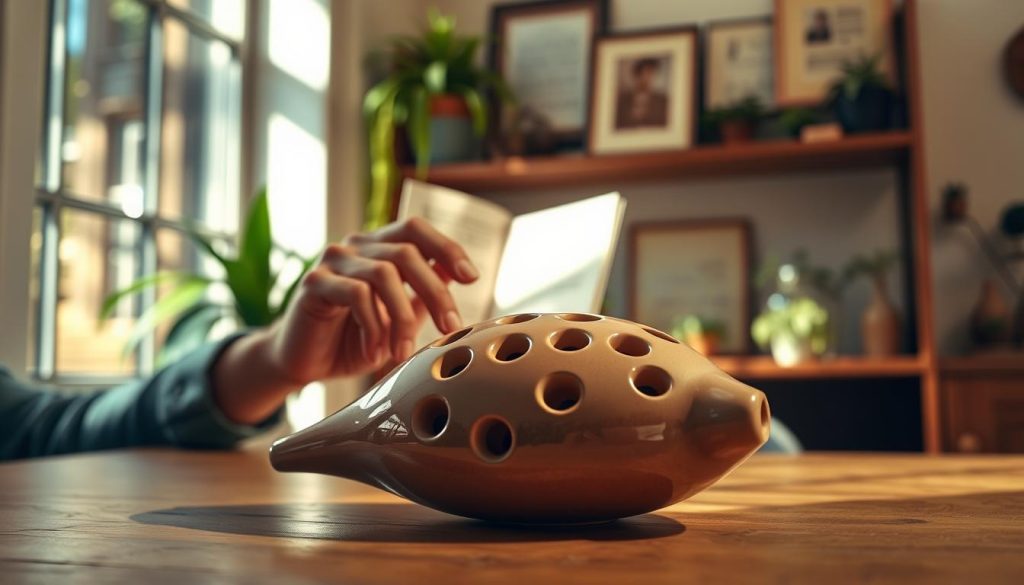
Among wind instruments, certain models stand out for their design and sound. The ATMOS model is especially popular. It consists of two identical ocarinas and offers a rewarding musical experience.
The ATMOS model: features and distinguishing characteristics
The ATMOS model is the most common. Each hand has four holes, giving it a range of one octave. This model uses English fingering, which makes the chromatic scale easier to access. It comes in four sizes:
- 8.5 cm in diameter: keys of A, B-flat, B and C; weight 290 g; price €120.
- 11 cm in diameter: keys of F, F-sharp, G and G-sharp; weight 370 g; price €140.
- 13 cm in diameter: keys of D, E-flat and E; weight 500 g; price €160.
- 18 cm in diameter: keys of B, B-flat, A and G-sharp; weight 980 g; prices start at €190.
Available colors include turquoise, white and red. Musicians can therefore personalize their instrument while retaining excellent acoustic quality.
The CUSCO model: drone and melody at the same time
The CUSCO model stands out for its distinctive design. It consists of two ocarinas in the same key but an octave apart. This creates a drone effect that enriches the melody. The artistic OISO design, representing a pair of birds, and the sculptural ELIX design are available in the keys of B, C, C-sharp and D, with prices starting at €180.
When played in unison, the CUSCO produces a particularly dynamic sound that invites players to create a bass line beneath the higher melody. This approach offers a listening experience distinct from that of the ATMOS model.
Different sizes, keys and materials
These instruments are made primarily from terracotta and ceramic, materials known for their warm resonance and sound quality. Wooden and metal versions also exist and offer other tones.
Choosing the right size and key is crucial for your musical goals and playing level. Each model offers a distinctive sound and affects how comfortably you can hold and master the instrument.
With the ATMOS and CUSCO models, musicians have a varied palette for exploring music’s possibilities. For more information about different types of instruments, read this article here.
| Feature | ATMOS model | CUSCO model |
|---|---|---|
| Range | 1 octave per hand | 1 octave apart |
| Number of chambers | 2 identical chambers | 2 chambers an octave apart |
| Fingering system | English | English |
| Materials | Terracotta, ceramic | Terracotta, ceramic |
| Color options | Turquoise, white, red | OISO and ELIX designs |
4. Techniques for playing several notes at once on a polyphonic ocarina
Exploring different ways to play this wind instrument opens up a world of musical possibilities. Each technique enriches its sound and makes playing even more engaging.
Playing drones, chords and melodies simultaneously
One fundamental technique is to use one side to play a drone, or sustained note, while the other hand plays the melody. The drone can be placed a third, fourth, fifth or octave away, creating a variety of harmonic effects.
You can also play in unison, with both hands producing the same note. This amplifies the sound and gives it an impressive acoustic presence. Different finger positions for each hand can also create chords, greatly enriching the accompaniment.
Mastering English fingering for the chromatic scale
English fingering, which uses four holes per hand, is essential for reaching almost the entire chromatic scale. It provides a technical foundation for effective playing. Finger coordination is crucial for producing distinct notes.
Players should practice scales and arpeggios regularly to develop their skill. Working on familiar pieces, such as Zelda’s Lullaby, can help them identify and correct technical problems quickly.
Hand coordination and breath control
Coordinating both hands is vital for playing different notes simultaneously. It takes precise finger movements. Regular scale practice helps develop this skill.
Breath control and mouth position are also essential. Steady air pressure keeps the notes in tune. The position of the mouthpiece should allow the air to vibrate effectively.
Beginners are advised to practice for 15 minutes a day for a month. This develops muscle memory and makes polyphonic playing more fluid.
| Technique | Description |
|---|---|
| Drone | One hand plays a sustained note while the other plays the melody. |
| Unison | Play the same note on both sides to amplify the sound. |
| Chords | Create and move between chords using different finger positions. |
| Two melodies | Play two independent melodic lines simultaneously. |
| English fingering | A four-hole-per-hand fingering system that provides access to the chromatic scale. |
| Coordination | Coordinate the fingers to produce different notes at the same time. |
| Breath control | Maintain steady air pressure to keep notes in tune. |
5. Practical tips for getting started with a polyphonic ocarina
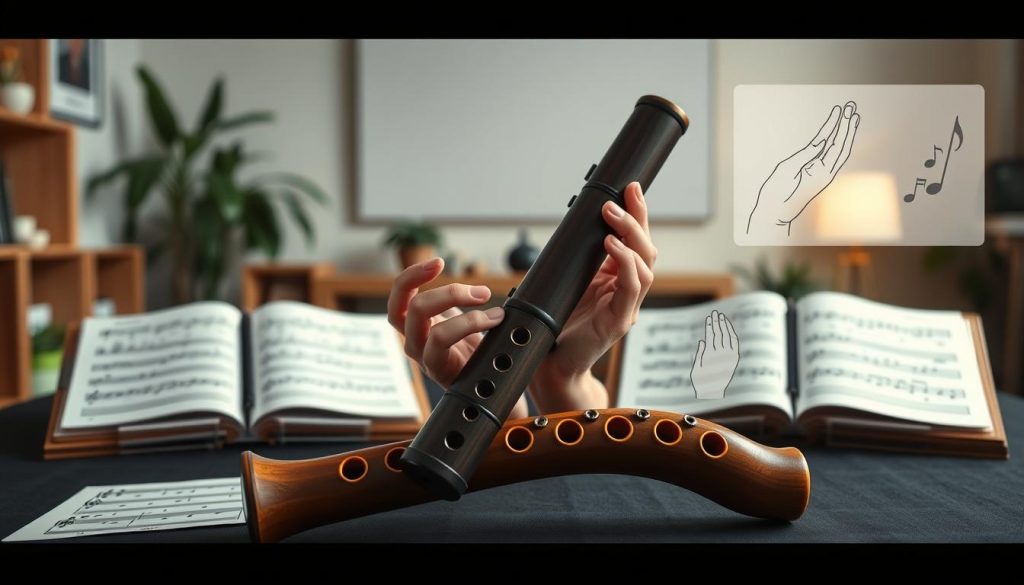
To begin learning this instrument, it is essential to choose a model suited to your level. An ideal weight is between 200 and 300 grams, providing stability without causing fatigue. There are two tuning options: 440 Hz, the modern standard, and 432 Hz, which offers a warmer sound.
Beginners are advised to avoid triple-chamber models. Their complexity can quickly become discouraging. Peruvian ocarinas, although visually appealing, are often made from lower-quality materials and are not always well tuned. They may therefore be better suited to decoration than musical practice.
Scale exercises and finger placement
Practicing scales is important for developing muscle memory. Start slowly to learn the fingering patterns before trying to play faster. Working from beginner-friendly sheet music, available online or in dedicated method books, can make learning more motivating.
Cleaning and storing the instrument
Regular care is crucial to preserving the instrument’s sound quality. Clean the holes with a cotton swab and use a diluted white vinegar solution for the inside. Dry the instrument after each use to prevent moisture and condensation problems.
Keep the ocarina in a case that helps control humidity to protect it from changes in climate. Avoid prolonged exposure to sunlight as well, because terracotta, though a fine material, is sensitive. With proper care, a quality instrument can last 10 to 15 years, making it a worthwhile investment for music enthusiasts.
Finally, practice regularly, perhaps for 15 minutes a day. This helps you improve without becoming discouraged. Keeping a practice journal can also help you measure your progress. Thanks to its intuitive design, even a beginner can quickly experience the magical “wow” effect while playing their first melodies.

6. Conclusion
This wind instrument offers a captivating musical experience. Thanks to its ingenious two-chamber design, it can create varied melodies, from classical pieces to modern compositions. To deepen your learning, explore free sheet music online and join specialist forums. There you can exchange ideas with other enthusiasts and improve your skills.
Choosing a model suited to your level is essential. Whether you choose an ATMOS for balanced polyphony or a CUSCO for drone effects, each instrument has its own characteristics. The quality of its terracotta or ceramic construction will affect its sound and durability; with proper care, it can last up to 15 years.
This instrument continues to appeal to musicians around the world thanks to its portability and ease of use. With innovations on the horizon, such as triple-chamber prototypes, its future looks promising. Visit a music shop to try one and discover the magical “wow” effect for yourself.