
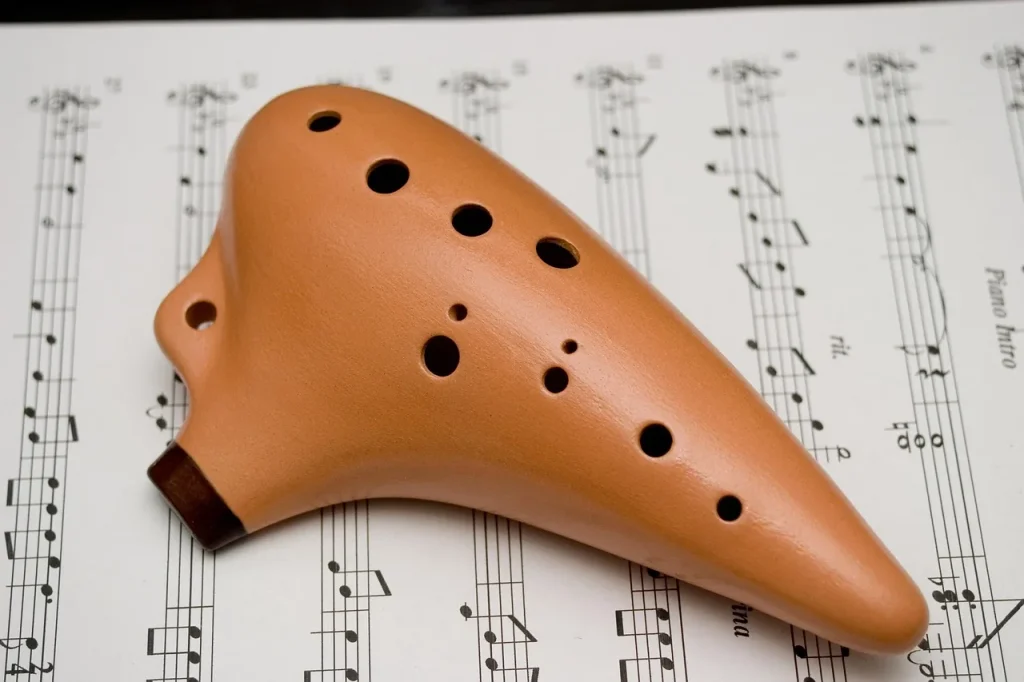
The ocarina is a fascinating wind instrument that has grown in popularity thanks to the Zelda video games. This small instrument appeals to both gamers and music lovers. But choosing a good model can be tricky, especially for beginners.
In this article, we will guide you through the decision step by step. You will learn how to choose an ocarina that suits your tastes and budget. Be wary of cheap models sold on platforms such as Amazon and Wish. They may look appealing, but they are often poorly tuned and can sound out of tune.
Fortunately, a good ocarina is affordable, especially compared with an instrument such as a piano. To play it, you cover the instrument’s holes with your fingers. Ocarinas come in different types, with 4, 6 or even 12 holes.
This guide covers the essentials: types of ocarina, range, materials, recommended brands and learning tips. Starting with a quality instrument helps you make enjoyable progress and avoid frustration.
What Is an Ocarina? Origins and How It Works
The ocarina is a wind instrument with deep roots and a history stretching back more than 12,000 years. It has evolved over time into an instrument enjoyed around the world. Traditionally shaped like an egg or a bird, its name means “little goose” in Italian.
The History and Shape of the Ocarina
Early examples of this fascinating instrument appear in several ancient civilizations, from Egypt to South America. Rudimentary models, often made of ceramic, could play only a few notes. The ocarina has developed considerably since then.
Giuseppe Donati designed the modern transverse ocarina in 1853. The design was refined in Japan, where the number of holes increased to twelve, expanding its musical possibilities. The instrument’s oval shape contributes to its resonance and sound quality.
How This Wind Instrument Produces Notes
The instrument works in a simple but ingenious way. Blowing into the mouthpiece makes the air inside its hollow chamber vibrate. By covering and uncovering the holes with their fingers, players change the pitch of the notes.
This technique makes it possible to play many melodies. Despite its apparent simplicity, the ocarina has a distinctive, captivating sound. Its gentle, airy tones make it appealing to people who want to explore music.
| Feature | Details |
|---|---|
| Origins | More than 12,000 years ago |
| Shape | Oval, often bird-shaped |
| Materials | Ceramic, porcelain, wood, plastic |
| Notes | Up to 12 holes |
| Instrument type | Wind instrument, duct flute |
In short, the ocarina is more than a simple instrument. It connects different eras and cultures while offering a rewarding musical experience. To learn more, read this article about the ocarina.
Why a Good Ocarina Matters When You Are Starting Out
Investing in a quality ocarina matters for beginners. Not all models are equal: a poor choice can hinder learning and discourage you from playing. Cheap instruments may seem attractive because of their price, but defects often make them less enjoyable to use.
The Risks of Cheap, Poorly Tuned Models
Low-priced ocarinas, often sold on platforms such as Amazon and Wish, come with notable risks. About 20% of buyers report tuning problems with these models. Roughly made holes and inconsistent tuning can make them difficult to play.
A poorly tuned instrument forces players to compensate with unsuitable breath pressure. This can create habits that are hard to correct later. Playing an instrument that sounds out of tune can also accustom the ear to incorrect pitches.
The Importance of Tuning and Sound Quality
Accurate tuning and sound quality should be your main criteria when buying an ocarina. A poor-quality instrument can spoil the pleasure of playing. An attractive appearance can hide poor construction and a lack of quality control.
Consider established brands such as STL Ocarina and Musique de Terre. They offer instruments you can rely on from the first note. Paying a little more for a quality ocarina is worthwhile if it makes learning more enjoyable and motivating.
For more information about prices and models, read this article about ocarina costs.
How Many Holes? Choosing Between 6, 10, 12 or More
The number of holes on an ocarina determines the range of notes you can play. It also affects the complexity of the fingerings you need to learn. Understanding these differences will help you make an informed choice.
6- and 8-Hole Ocarinas: Simplicity and Limitations
Six- and eight-hole ocarinas are often appreciated for their simplicity. These compact models can play a limited range, generally around 17 to 18 notes using John Taylor’s fingering system. Developed in the 1960s, this approach can help children and beginners get started.
These formats have several advantages:
- They are portable and compact.
- They often have a lower starting price.
- They can be easier for young musicians to hold.
They also have limitations. Learning them can be harder than it first appears because players must memorize many fingering combinations.
10- and 12-Hole Ocarinas: The Beginner Standard
Ten- and twelve-hole ocarinas are often considered the standard choice for beginners. With around 22 available notes, they cover about 1.5 octaves. Their progressive, intuitive fingerings make learning easier and open up a broad repertoire, including folk tunes and video game melodies.
The twelve-hole model is especially recommended because it offers:
- A logical progression: lifting a finger raises the pitch.
- Fingerings that are easy to read.
- A wide variety of music to play.
Professional musicians also use this type, so it gives you plenty of room to improve.
Multi-Chamber Ocarinas: Double, Triple and Quadruple
Double, triple and quadruple ocarinas are advanced instruments with multiple chambers. Each chamber has its own mouthpiece, extending the range to two or three octaves. These models are mainly for experienced players because they demand more breath control, coordination and memorization.
In short, a twelve-hole model is the best choice for most adult beginners. A four- or six-hole ocarina may suit a child better.
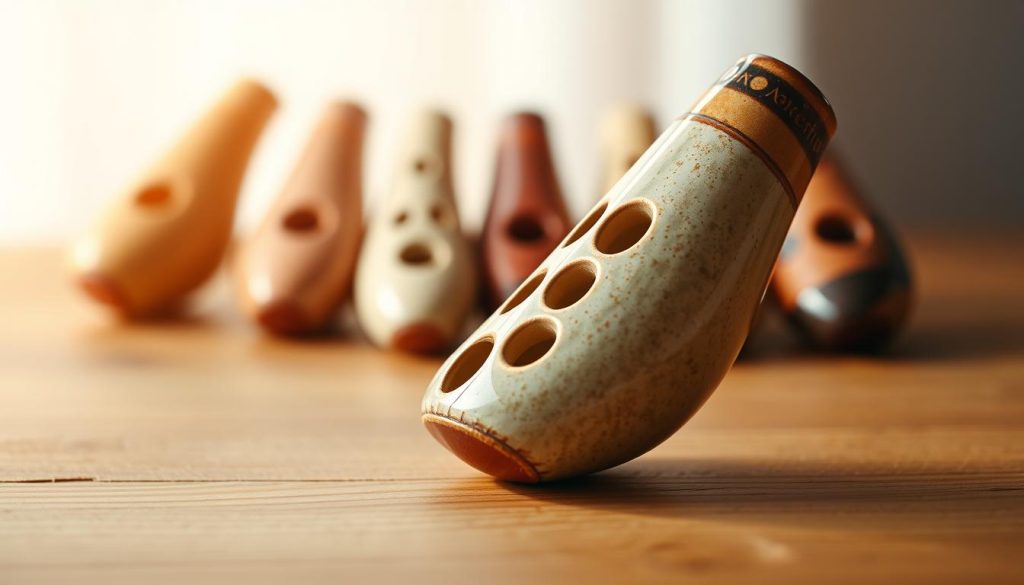
| Ocarina type | Number of holes | Available notes | Suitable for |
|---|---|---|---|
| 6-hole | 6 | 17 notes | Children, beginners |
| 8-hole | 8 | 18 notes | Children, beginners |
| 10-hole | 10 | 22 notes | Beginners, hobbyists |
| 12-hole | 12 | 22 notes | Beginners, professionals |
| Multi-chamber | 2 to 4 | More than 30 notes | Experienced musicians |
Fingering Systems and Multi-Chamber Models
Understanding fingering systems helps you make the most of a multi-chamber ocarina. They determine how you move between chambers and directly affect the playing experience.
Asian Fingering: A Continuous Range of Notes
Asian fingering is the most common system. With this approach, the second chamber continues directly from the first, maximizing the number of available notes.
A double ocarina can therefore cover two full octaves, making it suitable for a wide repertoire. However, the difference in tone between chambers is often audible and may bother players who want a consistent sound.
Pacchioni Fingering: Overlap and Consistent Tone
Invented by Giorgio Pacchioni, this fingering system prioritizes the sound quality of each chamber. The last two notes of one chamber match the first two of the next, creating an overlap that smooths the transition.
This approach makes switching chambers almost inaudible and can make the instrument more pleasant to play. However, covering two octaves with this system requires a triple ocarina, which costs more.
Which system to choose depends on your priority: the widest possible range or a more consistent tone. Beginners should first become comfortable with a standard twelve-hole ocarina before exploring multi-chamber models and their fingerings.
| Fingering system | Features | Advantages | Disadvantages |
|---|---|---|---|
| Asian | The second chamber extends the first | Maximizes the number of notes | Audible difference in tone |
| Pacchioni | Notes overlap between chambers | Smooth transitions between chambers | Requires a triple ocarina for two octaves |
Understanding Range and Tuning: Alto, Soprano, Tenor and Bass
Range is a fundamental concept for musicians. It describes the span of notes an instrument can produce. With an ocarina, your choice of range directly affects its sound and ease of play.
What Range Means and How It Affects Sound
Ocarinas come in several ranges, including bass, alto and soprano, each with its own sound. Bass ocarinas produce low, warm notes. They are usually larger and can cost more. Their gentle sound is reminiscent of Native American flutes.
The alto range is often recommended for beginners. It balances low and high notes. The labels “Tenor in C” and “Alto in C” can refer to the same type of ocarina, depending on the maker; STL Ocarina uses “Tenor.”
Soprano ocarinas produce high, piercing notes. They are smaller and often less expensive, but their sound can become shrill, especially to ears unused to it.
Common Keys: C, G, F and B-Flat
An ocarina’s tuning establishes its reference key. Common keys include C, G, F and B-flat. For example, an ocarina in C lets you play the complete scale: C, D, E, F, G, A, B, C. This is the most beginner-friendly key because it simplifies learning.
Names also vary by country. In Asia, you will often see “Alto C” or “AC,” while “C3” is used in Europe. Check the instrument’s fundamental note, particularly if you plan to play with other musicians.
Which Range Suits You?
The right range depends on your musical interests. For beginners, an alto in C is usually the best choice: it offers plenty of notes without excessive complexity. If portability matters most, consider a soprano. If you enjoy low, warm sounds, choose a bass model.
Understanding range and tuning will help you enjoy playing the ocarina. For more information, read this article about how an ocarina works.
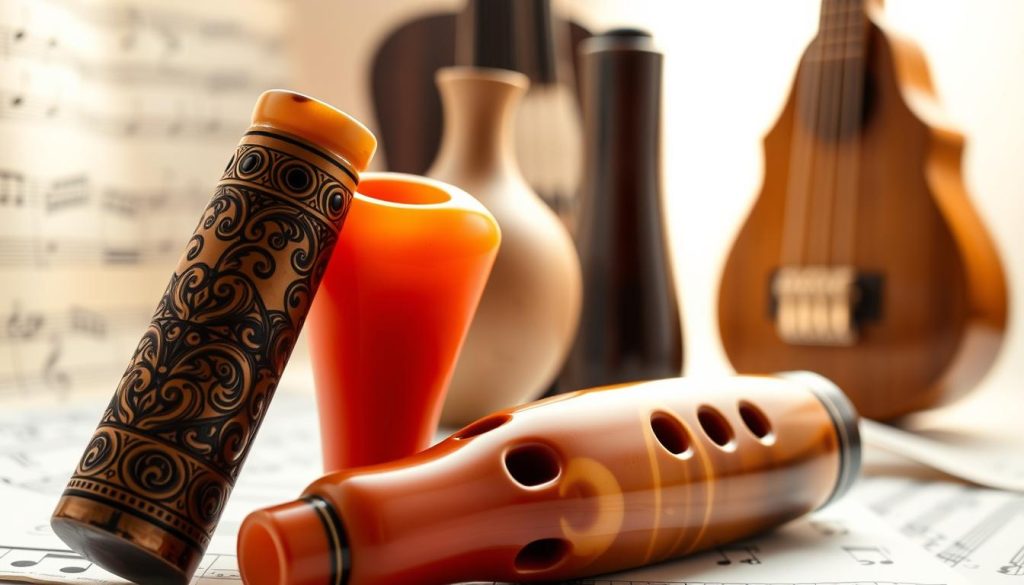
Materials and Design: Ceramic, Plastic and Wood
The materials used to make an ocarina affect its sound and durability. The three main options are ceramic, plastic and wood. Each has advantages and disadvantages worth understanding before you choose.
Advantages and Disadvantages of Ceramic Ocarinas
Ceramic is the traditional, most common material for quality ocarinas. It offers a warm tone and excellent sound projection. Glazed finishes, such as those offered by Musique de Terre and STL, also make the instrument visually appealing on stage.
Ceramic has one major drawback: its fragility. Handle these instruments carefully and carry them in a padded case to prevent damage. Fired-clay models, including those from STL, are particularly valued for their sound quality.
Why Plastic Ocarinas Suit Beginners
Plastic is a modern, sturdy option for beginners, children and travelling musicians. The Night by Noble model, known for its accurate tuning and matte finish, is a notable example. Plastic ocarinas offer good impact resistance and stable tuning, making them practical for outdoor playing.
Although their tone may be less warm than ceramic models, they often cost less. Players can concentrate on practising without worrying as much about accidental damage.
Wooden Ocarinas: Rare Instruments With a Distinctive Sound
Wooden ocarinas are less common and offer a warm, earthy sound. They are often made by specialist craftspeople, such as Charlie Hind of Hind Ocarina, and generally cost more. Wood also needs careful maintenance because it can be sensitive to moisture.
Players value these instruments for their distinctive tone, but the price may put some buyers off. For a first ocarina, a quality plastic model or a well-tuned entry-level ceramic one is often a better choice.
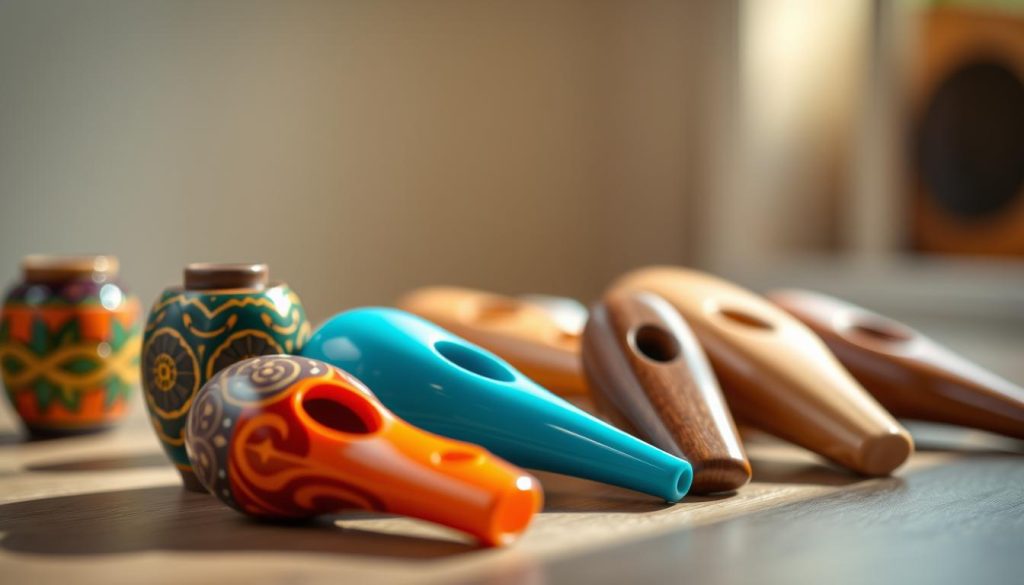
Your choice of material depends on your priorities. Consider sound quality, durability and price before investing in an instrument. For more information about materials and their effect on sound, read this article about wooden and ceramic ocarinas.
Where to Buy a Quality Ocarina: Recommended Brands and Shops
When you decide to buy an ocarina, choose a reliable seller. The following brands and shops are known for the quality of their instruments.
Leading Makers and Sellers in France and Beyond
US-based STL Ocarina is one of the world’s largest ocarina retailers. With more than 15 years of experience, it offers a varied catalogue. Alto ocarinas in C start at around €50. Delivery to France takes about two and a half weeks, and shipping is free on orders over $100.
Musique de Terre, run by Olivier Gosselink in France, is another established maker. With more than 30 years of handcrafting experience, the workshop offers quality ocarinas at reasonable prices. Its range includes eleven-hole transverse ocarinas and eight-hole bird ocarinas.
Dinda Ocarina in Thailand offers instruments handmade by Sarawut Bugkhuntod. Available on Etsy, they are relatively affordable, with an alto in C costing around €35. They are known for their gentle, pleasing sound.
If you want a premium instrument, US-based Spencer Ocarina offers models with meticulous finishes. Its prices range from $199 to $299, reflecting the quality of the craftsmanship.
Songbird Ocarina stands out for its original, creative designs, with prices around €50 to €60. France-based Ocarina World is an official Stein/Focalink retailer and offers models starting at €42 with fast delivery.
How to Avoid General Marketplaces and Cheap Models
Be cautious with general marketplaces such as Amazon, Wish and AliExpress. They often carry lower-quality models that can make playing less enjoyable. Specialist shops are more likely to provide reliable information about tuning and instrument quality.
Before buying, check the ocarina’s specifications. Confirm its key, A440 tuning, range, number of holes and weight. Contact the maker for personal advice if you need it. This will help you make an informed choice and avoid a disappointing budget model.
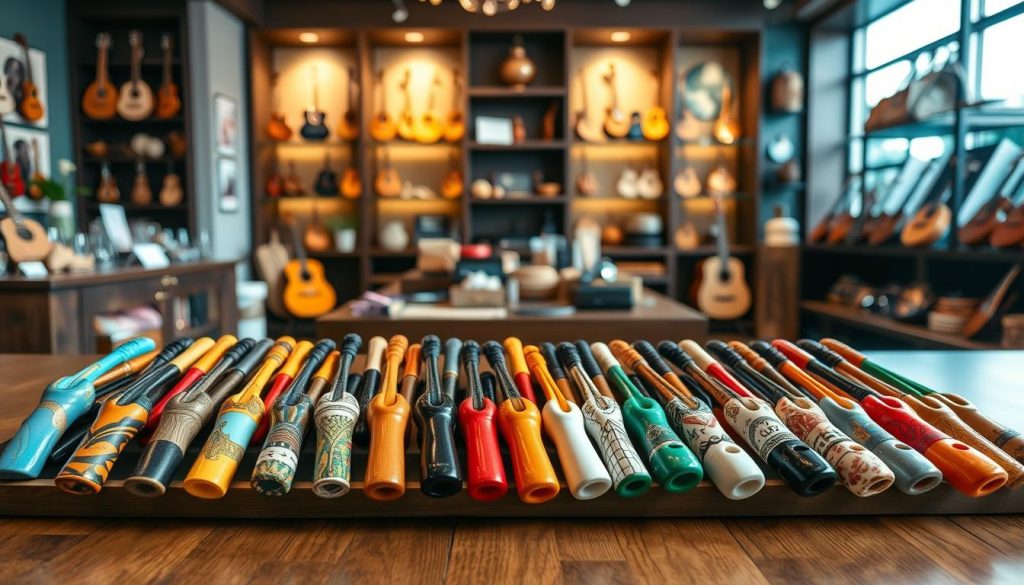
How to Choose an Ocarina for Beginners
Several factors matter when choosing an ocarina. Considering them will make learning more enjoyable and rewarding. The essentials are the number of holes, the instrument’s range and its material.
Essential Criteria: Holes, Range and Material
The number of holes directly affects the range of notes you can play. A twelve-hole model, for example, gives you access to a broad repertoire, including video game themes from Zelda. For beginners, a twelve-hole ocarina in C, also called an alto C, is recommended. It balances ease of learning with musical possibilities.
Range matters too. Ocarinas come in soprano, alto, tenor and bass ranges. Alto is often the best starting point because of its balanced sound. Materials include ceramic, plastic and wood. Plastic suits children and tighter budgets, while ceramic can offer excellent sound quality.
Match Your Choice to Age, Hand Size and Budget
Choose an instrument suited to the player’s age and hand size. A four- or six-hole ocarina may be easier for a child to handle. These compact models are light and fit smaller hands. For adult beginners, a twelve-hole ceramic or plastic ocarina is a solid option.
A budget of €35 to €60 is reasonable for a quality model. Beginner packs that include a protective case and learning materials can also make the first steps easier.
Specific Recommendations for Adults and Children
Here are some suggestions for different players:
- Adult beginner: a twelve-hole ocarina in C, made of ceramic or plastic.
- Child: an easy-to-hold six-hole plastic ocarina.
- Tight budget: a durable, affordable quality plastic ocarina.
- Discerning music lover: a handcrafted ceramic ocarina for a richer sound.
Choose an ergonomic model as well. A comfortable instrument encourages regular practice and helps you develop your technique. Check its size and how it feels in your hands.
Before buying, decide what kind of player you are and set a budget. Use the recommended brands and shops to guide your choice. For more information, read this article about what to look for in an ocarina.
| Player | Recommendation | Budget |
|---|---|---|
| Adult beginner | 12-hole ocarina in C | €35 to €60 |
| Child | 6-hole plastic ocarina | €35 to €60 |
| Tight budget | Quality plastic ocarina | €35 to €60 |
| Discerning music lover | Handcrafted ceramic ocarina | From €60 |
Tips for Getting Started and Learning to Play the Ocarina
Learning to play the ocarina can be rewarding. These practical tips will support your learning and help you make steady progress.
Posture, Breathing and Holding the Instrument
Good posture matters from the start. Whether you sit or stand, make sure you are comfortable. This supports effective breath control and helps prevent unnecessary tension.
Hold the ocarina gently but securely. Cover each hole completely with the pad of your finger rather than your fingertip. This will make the instrument easier to play.
To control your breath, blow gently and steadily with support from your diaphragm. Find the pressure that produces a clear, accurately pitched note without blowing too hard or too softly. Use your tongue to articulate notes as though saying “too” or “doo.” This gives each note a clear start.
Learning Resources and Practice Methods
For steady progress, try practising for 15 to 20 minutes each day. Start with fingering and breathing exercises, then play simple melodies. Scales and familiar tunes, such as nursery rhymes or Zelda themes, can help you play more consistently and gain confidence.
Several YouTube channels can help. OCTalk, Gina Luciani and Tristan Laurens offer useful instructional videos. STL Ocarina also has a channel with more than 300 videos covering different aspects of learning.
Using Tablature and Online Tools to Improve
Tablature can make learning much easier. Part’Ocarina is a free online tool that lets you create your own tablature by clicking on a virtual piano. You can save, print and share what you make.
Also explore printed methods and beginner packs from specialist shops. These often include sheet music and progressive exercises to guide your practice.
Caring for Your Ocarina: Protect Its Sound and Extend Its Life
Regular care helps preserve your instrument’s sound and extend its life. A few simple habits can provide years of musical enjoyment.
Cleaning and Drying After Each Session
After playing, remove any moisture that has accumulated inside the instrument. Carefully wipe the mouthpiece with a soft cloth and let the ocarina air-dry. This helps prevent mould and preserves its sound quality.
Store your ocarina in a padded case. This protects it from knocks and can extend its life, especially if it is ceramic.
Avoiding Impacts and Temperature Changes
Do not leave your instrument in extreme conditions, such as a car in direct sunlight or freezing temperatures. Temperature changes can cause cracks, particularly in ceramic models.
Plastic ocarinas are sturdier, but they still benefit from care. A quick wipe is usually enough to keep them clean.
When and How to Have Your Instrument Adjusted or Repaired
Check your instrument’s tuning at least once a month. A tuner app can help you detect any change in pitch. If you notice tiny cracks in a ceramic model, epoxy resin may provide a lasting repair.
Keep wooden models away from excessive moisture, which can damage them. These habits will help your ocarina last longer and retain its sound quality.
Conclusion
Learning a wind instrument such as the ocarina can be an exciting adventure. For a first instrument, a twelve-hole alto in C tuned to A440 is an excellent choice. It balances ease of learning with room to grow musically.
Although compact, six- and eight-hole models require you to memorize more complex fingerings. Multi-chamber models are better suited to experienced musicians. Choose a quality ocarina from an established brand such as STL Ocarina or Musique de Terre.
Choose ceramic for its rich sound or plastic for its durability. A simple approach is to identify your needs, choose a hole count, order from a specialist and check the tuning when the instrument arrives.
Get started whenever you are ready: this accessible instrument can bring years of musical enjoyment. Practise regularly with a suitable learning method to improve and stay motivated. YouTube channels and online tablature can support you along the way.
With a good ocarina and some practice, you can turn your interest in playing into a rewarding musical experience. Join the community of enthusiasts and share your progress!