
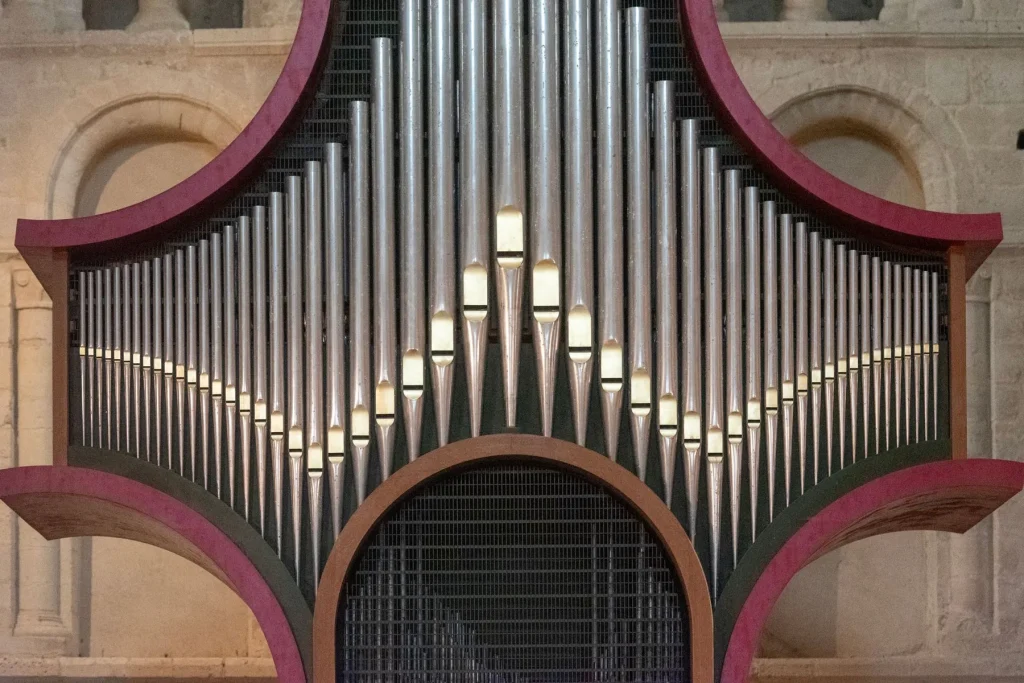
This guide introduces and explains a selection of notable chorales that illuminate the art of a major organ composer. It offers listening pointers, advice for organists, and historical context.
Stylistic context: this music is distinguished by singing clarity, supple polyphony, and restrained poetry that gives priority to the melodic line.
We also discuss its historical importance and Pachelbel’s ties to the Bach family. To learn more about his life and catalogue, consult this specialist entry: musicological study.
What this article offers: a selection of varied, embellished pieces; pointers on voices, pedals, and organ stops; and practical advice for different skill levels.
Listening goal: learn to recognize the cantus firmus, the weave of countermelodies, and the harmonic breathing characteristic of these chorales.
Why Pachelbel’s chorales still matter today
His music has endured for centuries because it makes every line immediately audible and memorable. His writing combines economy of means with melodic clarity, making the voices easy to follow.
In worship, these pieces give structure to prayer: the preludes and Magnificat fugues provide a practical repertoire for alternatim performance.
As teaching pieces, these works are ideal. Their textures remain easy to read, they use the pedals sparingly, and studying them prepares players for later repertoire.
- Style: singing lines and restrained counterpoint.
- Legacy: connections with Bach and domestic music-making, or Hausmusik.
- Performance: pieces playable on the organ or harpsichord.
“A discreet art that values proportion and musical breathing.”
| Aspect | Function | Benefit | Use |
|---|---|---|---|
| Melodic clarity | Listening | Easy to recognize | Concerts, worship, study |
| Magnificat fugues | Liturgy | Short, useful verses | Alternatim performance |
| Contrapuntal writing | Teaching | Clear form and countermelodies | Practice, analysis |
| Instrumental versatility | Domestic music-making | Adaptable to the harpsichord | Hausmusik, rehearsal |
For more on Pachelbel’s life and historical context, consult this specialist entry: biography and resources.
Johann Pachelbel’s chorales: organ gems — our essential selection
This selection brings together key works that reveal the repertoire’s expressive and technical variety. Each piece offers a model of balance between melody and counterpoint, rewarding both listening and performance.
Christ lag in Todesbanden
Two sections: a solemn, measured fugato followed by a bright Alleluia. The cantus firmus unfolds in long notes in the pedals, while jubilant countermelodies answer it on the manuals.
Warum betrübst du dich, mein Herz
A reflective melody and a clear presentation of the theme. The countersubjects deepen its intimate feeling without weighing down the texture.
An Wasserflüssen Babylon
Meditative lyricism: the inner voices have room to breathe, and the bass gives structure to the whole. The character remains sustained and balanced.
Ein’ feste Burg ist unser Gott
Concise fugal treatment, rhythmic energy, and effective musical rhetoric. Ideal for working on structure and articulation.
Herr Jesu Christ, ich weiß gar wohl
Restrained grace, delicate entries, and elegant polyphony that avoids overcrowding.
Ach Herr, mich armen Sünder
Several variations, ranging from fugal writing to other forms, all retain a distinct cantus firmus.
Vom Himmel hoch, da komm ich her
Transparent lines and a balance between registers; a light choice of stops is recommended.
Durch Adams Fall ist ganz verderbt
Dense counterpoint, pronounced harmonic tension, and a rigorously handled bass line.
Listening tips: locate the cantus firmus, often in the pedals. Begin with pieces whose outlines are easy to follow (Warum…, Vom Himmel hoch), then move to denser contrapuntal textures (Ein’ feste Burg, Durch Adams Fall).
Musikalische Sterbensgedanken (1683) — chorale variations from a tragic year
These partitas offer a musical response to personal and collective hardship. The collection brings together four sets of chorale variations composed in 1683, a year marked by the death of a loved one and by plague.
Christus, der ist mein Leben has 12 variations. Its course leads from resignation toward a peaceful light. The figuration gradually rises, and the melody slowly reasserts itself.
Alle Menschen müssen sterben comprises 8 pieces with measured ornamentation. Its decoration is understated, while the form retains a convincing clarity.
Herzlich tut mich verlangen offers 7 variations with carefully shaped cantabile writing. Subtle chromaticism creates an inward prayer without excess.
Was Gott tut, das ist wohlgetan unfolds across 9 variations. Lutheran simplicity and poetic expression predominate, with varied ideas that always serve the text.
A listening thread: notice how the cantus firmus moves between musical layers: sometimes stated plainly, sometimes transformed through shorter note values. The economy of the writing favors expression over virtuosity.

| Chorale | Number of variations | Main characteristic |
|---|---|---|
| Christus, der ist mein Leben | 12 | A dramatic progression toward light |
| Alle Menschen müssen sterben | 8 | Measured, understated ornamentation |
| Herzlich tut mich verlangen | 7 | Cantabile writing and subtle chromaticism |
| Was Gott tut, das ist wohlgetan | 9 | Lutheran simplicity and poetry |
Listening tip: start with “Was Gott tut…”, then move toward “Christus…” to hear the gradual increase in complexity.
Beyond the chorales: Magnificat fugues, toccatas, and chaconnes
Pachelbel’s output includes a wide range of short pieces and free forms that extend his sacred style. These works show writing that is simple, expressive, and suited to worship.
Magnificat fugues
There are approximately 94 to 95 fugues grouped by church mode. These often brief liturgical miniatures were conceived for alternatim performance and make little use of the pedals.
The subjects are often vivid, and the countersubjects are clear. The music aims for clarity and flow, making it ideal for punctuating sung passages.
Toccatas and chaconnes
The toccatas favor poetry and restrained virtuosity. They avoid the excesses of the North German style and retain a controlled approach to composition.
The chaconnes explore variation over a repeating bass line: the Chaconne in F minor remains a high point of the genre. The bass anchors its dramatic progression and provides its expressive foundation.
- Starting points: try a few primi toni fugues for their clarity.
- Then explore the quinti and sexti toni for their color.
- Next, listen to a toccata to hear another side of Pachelbel’s expression.
Restrained writing that combines proportion with quiet imagination.
These pieces share the chorale’s sense of musical declamation and enrich the repertoire’s instrumental palette.
Listening pointers for France: organ stops, voices, and bass
In France, listening to the organ’s different tone colors helps distinguish the voices and bring out the theme. A few practical pointers can help listeners pick out the cantus firmus and understand the balance between musical layers.

Identifying the cantus firmus
The cantus firmus often appears in long notes in the pedals. Listen for the most stable line: it supports the musical argument.
On the manuals, short imitative motifs weave around the theme. Mentally isolate the lowest voice, then follow the successive entries.
Tone colors and registration
Principles: use flutes for softness, principals and octaves for structure, and mixtures for brilliance. Reeds are used selectively: a Dulzian 16′ or Posaune 16′ strengthens the bass.
| Division | Suggested stops | Function |
|---|---|---|
| Pedal | Subbass 16′ / Oktave 8′ | Support for the theme and a firm foundation |
| Soft manual | Gedackt 8′ / Rohrflöte 4′ | Unobtrusive accompaniment |
| Clarity | Prinzipal 4′ / Prinzipal 8′ | Definition of the line |
| Brilliance | Scharff / Mixtur / Cymbel | Clear attacks and color |
Listening tip: follow the bass first, then turn to the upper voices to understand how they relate to it. This helps reveal the music’s structure and makes the chorales easier to appreciate in a French historical and acoustic setting.
For organists: choosing chorales to suit your level and instrument
Choosing a chorale begins with assessing the instrument and its acoustics. On an organ with clear pipes and a light pedal division, favor transparency; on a powerful instrument, use mixtures sparingly to avoid an overloaded sound.
From fugal chorale to chorale variations: pedal technique, articulation, and tempo determine the result. Work first on making the principal line clear, then on balancing the voices.

- Beginner path: pieces with a clearly presented cantus firmus and simple accompaniment. Goal: clarity and hand independence.
- Intermediate level: short fugues for establishing the subject’s entry, with restrained pedal use and a moderate tempo.
- Advanced level: variations and closely woven textures (for example, Ein’ feste Burg): precise articulation and sustained phrasing.
Technical advice: aim for a clear pedal foundation and avoid a blurred legato. Use non-legato articulation and emphasize the beats that define the structure. Adjust the tempo: moderate for expressive phrasing, a little faster for figurative sections.
| Element | Tip | Goal |
|---|---|---|
| Pedal | Stable foundation, connecting notes near their upper ends | Clarity of the cantus firmus |
| Articulation | Singing non-legato, clear emphasis | Definition of motifs |
| Registration | Transparency with clear foundation stops; lighter mixtures on powerful organs | Balance between voices |
Practice in short phrases, memorize the theme, and add stops in stages. Assess the acoustics: in a highly reverberant space, slow down slightly to preserve clarity.
To deepen your knowledge of North German repertoire and instruments, consult this specialist discussion of the North German Baroque organ.
Where to start with Pachelbel: playlists and recommended recordings
To begin, put together a playlist that alternates liturgical miniatures with longer cycles. This helps your ear quickly grasp the compositional techniques and tone colors.
A focus on the Magnificat: start with a few primi toni fugues (D minor) for their clarity, then compare them with pieces in secundi (G minor) and tertii/quarti toni. These short works serve alternatim performance and make little use of the pedals.

Hexachordum Apollinis and chaconnes
Hexachordum Apollinis (1699) brings together arias and variations. Start with Aria sexta “sebaldina”: its melody and eight variations offer an approachable introduction.
The chaconnes reveal how variation works over a repeating bass line. Listening to a chaconne in F minor helps you hear the ornamentation develop into a denser texture.
- Magnificat sequence: one fugue in each mode to hear their different colors.
- Short sets: well suited to educational playlists and listening in shorter sessions.
- Pairings: listen to a fugue, then an embellished chorale or a variation to hear what they share.
Selection criteria: look for a clear recording, historical instruments or close equivalents, and performers attentive to articulation and the balance between musical layers. Compare several performances to hear how registration changes your perception of the voices.
| Sequence | Goal | Typical duration |
|---|---|---|
| Primi toni fugue → chorale | Clarity and contrast | 3 to 6 min |
| Aria sexta → variations | Melody, then development | 6 to 12 min |
| Chaconne | Variation over a repeating bass line | 5 to 10 min |
Final tip: move from short pieces to complete cycles. Finish with a recap: a Magnificat fugue, an Hexachordum variation, and a chaconne will help you hear the unity of Pachelbel’s musical language.
Conclusion
This journey reveals a composer who turned brief liturgical pieces into models of clarity and meaning. His music favors singing lines and restrained counterpoint that brings out the cantus firmus.
The coherence of his work lies in its attention to the voices and the bass, which gives each piece its structure. Historically, this repertoire links the South German school with Bach’s synthesis of styles.
To explore further: listen to the toccatas, chaconnes, and other variations. In your playing, take care with registration and articulation, and choose pieces suited to your level.
In short, Pachelbel remains a master of balanced form whose expressive precision makes his music an ideal subject of study for listeners and performers.