
Goal: this article guides you through downloading sheet music legally and learning the piece step by step.
The Canon is a Baroque work written around 1680 for three violins and basso continuo. Its repeating harmonic structure makes it easy to remember and popular at weddings and concerts.
We clarify the legal issues: the original work is old, but recent arrangements may still be protected by copyright. Here you will find practical guidance on obtaining a reliable file and complying with the law in France.
The guide covers the main points of its history, where to look for sheet music, French copyright rules, how to choose a version for your instrument, and a method for learning it on the violin. By the end: you will know where to find good sheet music, which notices to check, and how to start playing.
Essential background on Pachelbel’s Canon before you begin
Published much later, this Baroque canon only found a wide audience in the twentieth century.
Composed around 1680 for three violins and basso continuo in D major, it combines an overlapping melody with a repeating bass line. This structure creates a harmonic loop and an almost hypnotic effect.
The original version is rarely heard today: you are more likely to hear transcriptions for piano, guitar, organ, or contemporary ensembles.
Its popularity grew after its appearance in Ordinary People (1980). Since then, the piece has become a wedding ceremony classic, especially in the United States.
“A simple bass line supporting subtle variations: that is the secret of its charm.”
This background lays the groundwork for finding reliable sheet music. In the rest of this article, you will learn where to download it, how to choose a version for your instrument, and how to adjust the tempo and articulation for a successful ceremony.
Pachelbel’s Canon: PDF sheet music and legal guidance
To find a good edition online, favor platforms that clearly state the work’s legal status.
Where to download sheet music: check national music libraries, public archives, and publishers that specify “public domain” or an open license.
Copyright in France: the original work is in the public domain, but recent arrangements may still be protected. Always check the arranger’s name, the year of publication, and the publisher’s notices.
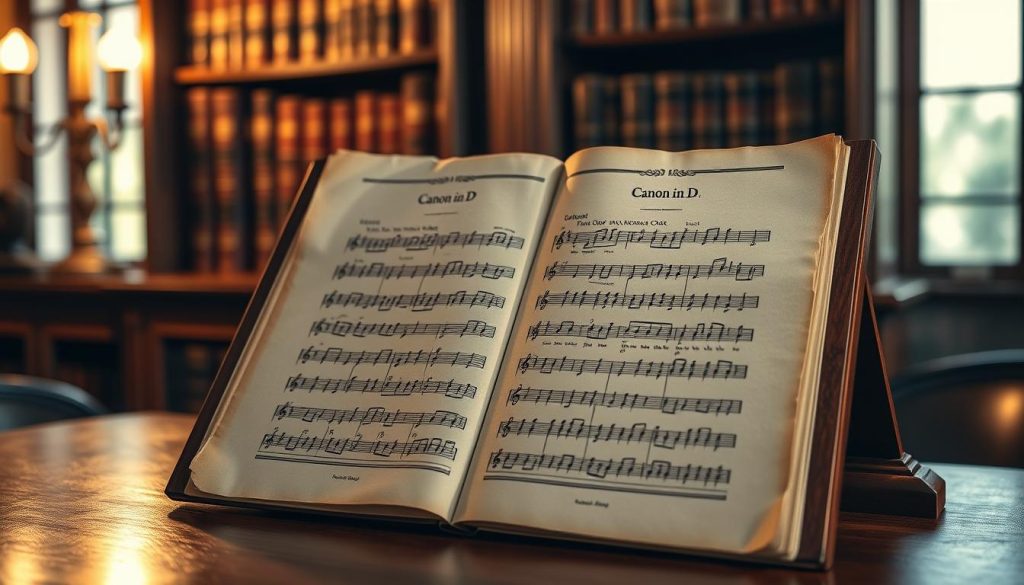
Checks before downloading: look for a clear license notice, the name of an identifiable publisher, and terms of use for concerts or recordings.
Choose a readable format (a high-resolution PDF), with clear engraving, visible measure numbers, and, if needed, fingering or ornamentation markings.
- Check the key (usually D major).
- Favor files that have been tested in print.
- Give proper credit for public uses (title, composer, arranger, and license).
To avoid disputes, always provide full credits when sharing a performance publicly.
Choosing the right version: violin, piano, organ, and other arrangements
The variety of arrangements makes it essential to choose a version suited to your musicians and venue.
Violins: solo, duo, or original ensemble
Violin soloist or trio? If you want to capture the spirit of the original, choose three violins and basso continuo.
For a soloist, compare editions that preserve the counterpoint with simplified editions. Choose readable sheet music with clear fingering and bowing markings.
Piano and other keyboards
For solo piano, distinguish full arrangements from beginner versions.
Favor an uncluttered layout and precise fingering to make practice easier.
Organ and ceremonies
For the organ, adapt the registration to the acoustics and maintain a dignified tempo.
Look for figured bass notation if you want to reconstruct the harmony in a Baroque style.
- Choose the right format (A4 or A3) for the density of the printed music.
- Arrange for tablets or page turners, especially for pieces played during a ceremony.
- Favor clear engraving, measure numbers, and a clear structure to make rehearsals easier.
“The quality of the layout influences the performance as much as the music does.”
Learn the Canon on the violin step by step
To tackle this piece on the violin, start with simple, measurable technical goals. A short plan supports steady progress and prevents overload.
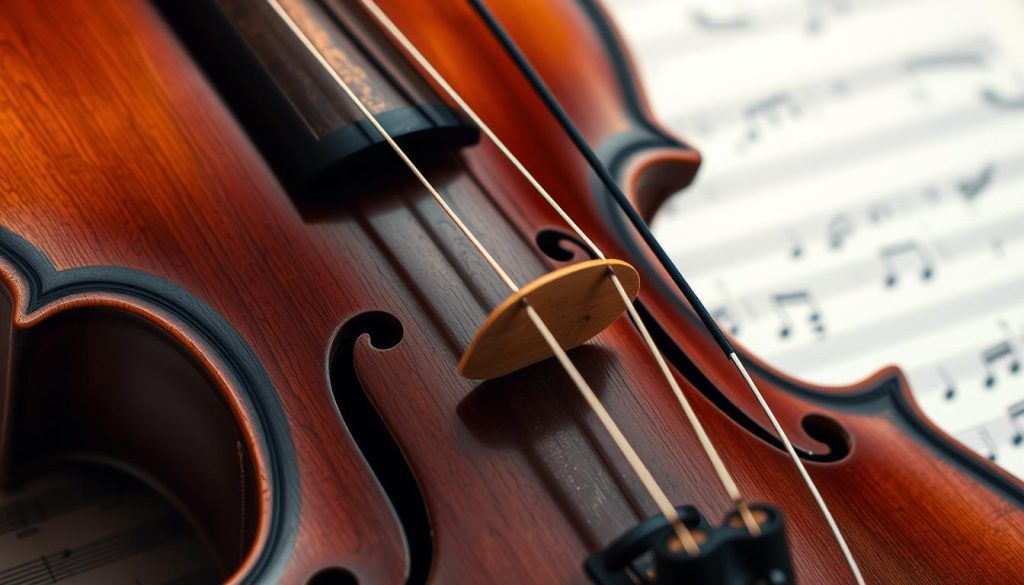
Basic technique: strengthen first position and explore third position
Strengthen first position with slow, precise exercises. Practice transitions by repeating short phrases.
Introduce third position gradually. Identify intonation reference points and practice controlled shifts.
Work on tone and intonation: open strings and even notes
Steady your tone by sustaining notes on open strings, then add the melody. Aim for an even sound and restrained vibrato.
Improve your intonation by playing evenly timed notes with a metronome and listening to the bass line to ground the harmony.
Practice with accompaniment: play-alongs, groups, and sharing versions
Use play-alongs or a piano to simulate the bass line in D major. Record your practice sessions and compare the takes.
Joining a group lets you discuss pieces and get useful feedback.
Common mistakes and tips for natural Baroque phrasing
Avoid a heavy bow stroke, mechanical accents, and excessive rubato. Aim instead for singing phrasing and clear articulation.
Use clear sheet music with bowing markings, and mark difficult fingerings. These tips make transitions easier.
“Slow practice, active listening, and focused repetition: that is the path to a natural performance.”
Understanding the structure: basso continuo, eight chords, and a repeating progression
The piece is built on eight chords that repeat. This repetition provides a stable framework for melodic variations.
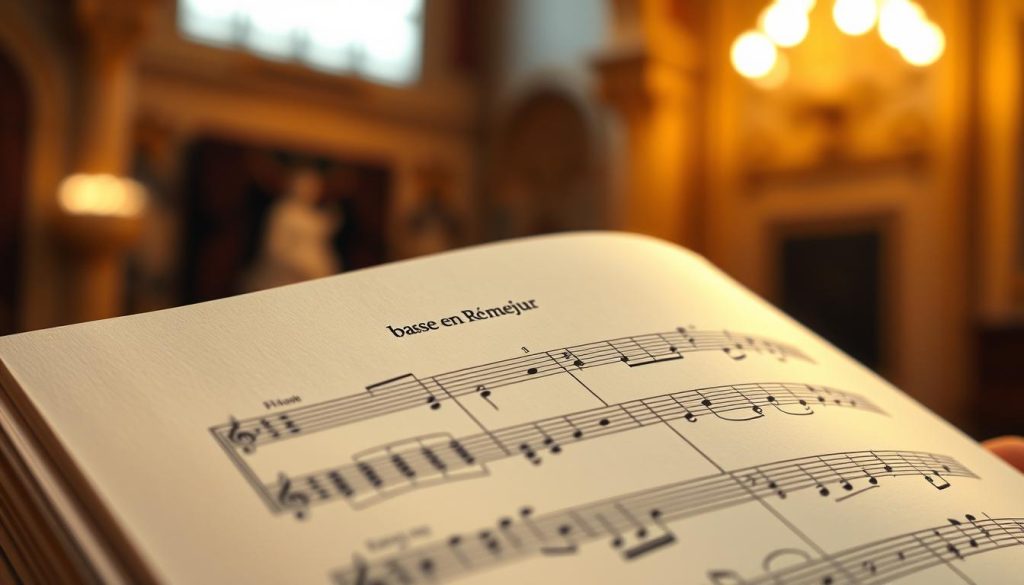
The bass line in D major: the foundation of the canon and its variations
The bass line in D major supports the contrapuntal structure. It guides the ensemble’s intonation, dynamics, and phrasing.
The essential “eight chords” and how to play them (thumb and index finger, with an exception on the eighth chord)
Practice the repeating progression while reading the sheet music slowly. Breathe at chord changes and lightly emphasize the strong beats.
- “Three-finger” exercise: use the left index finger for stability, and the right thumb and index finger for the attack.
- Exception: on the eighth chord, use the right little finger to cover the interval without breaking the flow.
- Memorize the sequence without sheet music by alternating singing and playing.
- Then extend the exercise to all 28 measures, gradually adding the upper voices.
“The same bass line can support very different moods, depending on the interpretation.”
Listen to several versions to hear how the bass line shapes the music. This practice speeds up your understanding and memorization of the harmony.
Find inspiration: from classical music to pop, rap, and techno, the Canon is everywhere
From the big screen to the dance floor, this theme appears in countless forms. It gained visibility after Ordinary People (1980) and found a place in advertising, film, and clubs.
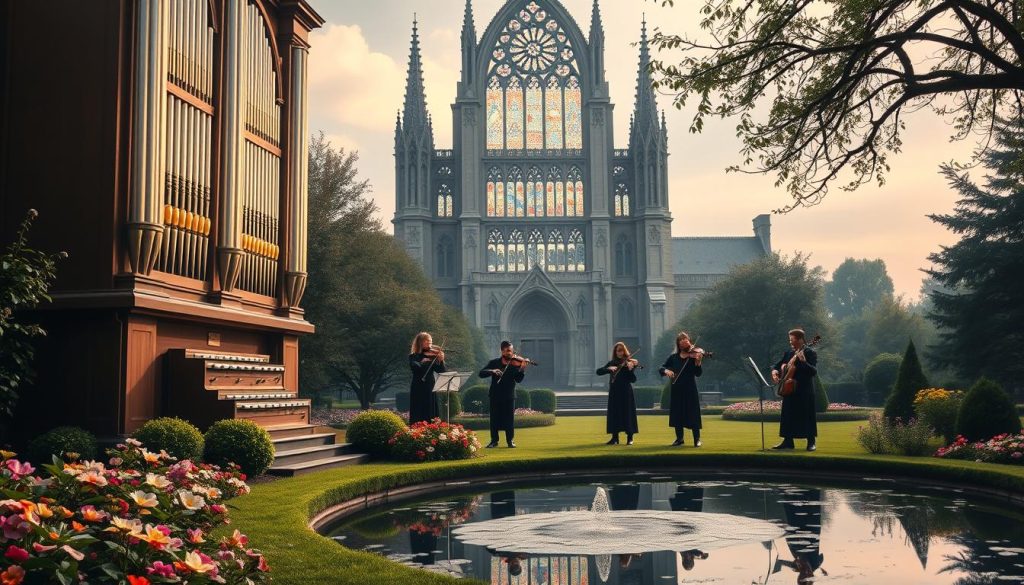
From film to advertisements and covers
There are memorable interpretations: a silky piano duet, a pop cover influenced by the Village People and later the Pet Shop Boys, a Japanese advertisement centered on a wedding, a grand organ performance, and a German rap track (Die Firma – Die Eine, 2005).
Modern variations and their harmonic connection
Many modern pieces draw on the same repeating progression in D major. Its steady pulse makes it easy to adapt for pop, rap, or techno-house.
Practical tip: listen to different versions and note any arrangement or ornamentation ideas you hear on your sheet music.
| Style | Example | Strength | What to study |
|---|---|---|---|
| Classical | Piano duet | Contrapuntal clarity | Articulation, tempo |
| Pop | Pet Shop Boys | Memorable melody | Instrumentation |
| Rap / electronic | Die Eine / Techno-house | Rhythm and bass | Handling the loop |
| Organ | Organ performance | Tonal colors, pedalboard | Independence of the voices |
“Comparing performances enriches your own interpretation.”
Listening to these versions enriches the learning process. Once you have found inspiration, return to the fundamentals: structure, technique, and choosing a version that will help you bring your interpretation of the piece to life.
Conclusion
To sum up, remember that the repeating eight-chord progression and bass line form the foundation of the piece. This simple structure supports every variation and guides expression.
Recommended next step: choose a version suited to your instrument and skill level, then download a carefully prepared score after checking the publisher’s notices and license. Choose a readable file before printing it.
For violin, strengthen first position, explore third position, work on tone with open strings, and practice intonation with evenly timed notes. Schedule rehearsals with accompaniment, record yourself, and adjust your phrasing to suit the Baroque style.
Always check the status of arrangements, the publisher, and the license before any public use. Listen to several interpretations, from Baroque performances to pop or techno adaptations, to enrich your own approach.
Keep this article as a guide: its history, practical choices, and technical steps will help you give a convincing performance of Pachelbel’s Canon. Then explore other pieces built on a repeating bass line to keep improving.