
Objective: to explain the death that occurred in March 1706 in Nuremberg and place it within the city’s religious and urban setting at the time.
Johann Pachelbel was a major figure in Baroque music. An organist and composer, he worked in several cities in central and southern Germany before joining St. Sebald’s Church.
This introduction sets out the article’s approach: to consider historical sources alongside health and institutional conditions, distinguishing established facts from the uncertainties surrounding his death. We will outline key biographical dates, his final years in Nuremberg, the available evidence and his musical legacy.
Key point: the dates and places are documented, and the central place of the city and church helps explain local remembrance, but the precise circumstances remain partly uncertain.
Essential biographical milestones: September 1653 to March 1706
To understand his life, we must return to his baptism in September 1653 and follow the stages of his career as an organist and teacher.
Birth and family background
Baptized on September 1, 1653, in Nuremberg, he was born into a family whose father worked as a wine merchant. This urban setting gave him access to local education and early musical training.
Education and teachers
His studies in Altdorf and Regensburg gave him a solid foundation. The Nuremberg school and Heinrich Schwemmer shaped his early years.
He developed his technique further with Kaspar Prentz and then with the master Johann Kaspar Kerll, whose influence can be heard in his disciplined counterpoint.
Career and family life
In demand as an organist, he held posts in Vienna (1673), Eisenach (1677), Erfurt (1678), Stuttgart (1690) and Gotha (1692). His return to St. Sebald’s in 1695 marked the beginning of a stable period.
In his private life, his first marriage ended in bereavement in 1683; he remarried in August 1684. Several of his sons became musicians, passing musical knowledge through the family.
- Timeline: September 1, 1653 – posts in Vienna, Erfurt, Stuttgart and Gotha, followed by his return to Nuremberg (1695).
- Teaching role: he trained pupils and maintained a reputation as a teacher throughout his career.
The final years in Nuremberg: St. Sebald’s, the city and the church
Settled permanently at St. Sebald’s from 1695, he served as its principal organist and became a central figure in the city’s liturgical and musical life.
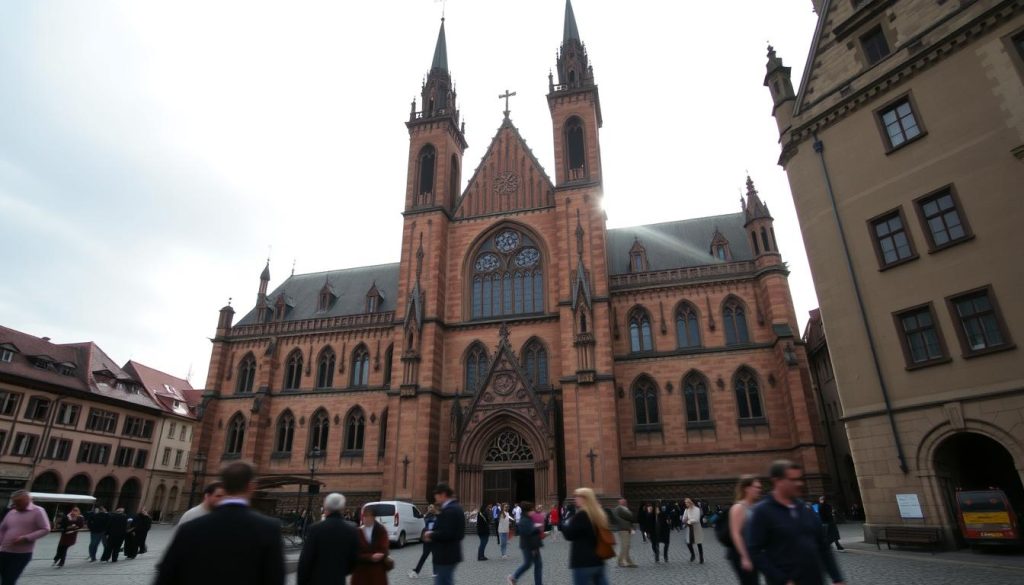
Principal organist at St. Sebald’s Church from 1695
As organist, he provided music for services, oversaw maintenance of the instrument and supplied pieces suited to the religious calendar.
His scores include preludes, fugues, chorales, a Magnificat and chaconnes, intended to support the choir and congregation.
A sought-after teacher with roots in the city
His teaching attracted many pupils. He passed on a clear style built on solid counterpoint and musical clarity.
Family and social stability in Nuremberg supported his composing and teaching. His output ranged from organ works to music for voices, showing his versatility.
- Local influence: teaching and concerts strengthened his reputation.
- Adaptation: organ pieces written for the church’s acoustics and the chapter’s expectations.
This busy period at St. Sebald’s preceded the final days of his life and left a lasting mark on the city’s musical tradition.
Johann Pachelbel’s death: causes and context
Established facts
The composer died in Nuremberg after a decade as principal organist at St. Sebald’s.
What the sources say—and leave unsaid
The archives record the date and place but do not specify the cause. Any hypotheses should therefore be treated cautiously.
Final chronology
His later career: service at the Stuttgart court (1690), departure in 1692 during the War of the League of Augsburg, a period in Gotha (1692–1695), then his permanent return to Nuremberg in 1695.
- Professional ties: close to the Bach family, he taught Johann Christoph, who would influence Johann Sebastian Bach.
- Continuity: liturgical work and teaching continued until his final days.
| Year | Place | Note |
|---|---|---|
| 1690 | Stuttgart | Service at court |
| 1692 | Gotha | Departure from court; temporary post |
| 1695‑1706 | Nuremberg (St. Sebald’s) | Principal organist; active teacher |
For more information, read the detailed biography.
Health and society in the Baroque era
The plague of 1683 struck central Germany and changed religious life. Losses within families and communities altered rituals and the place of music in parishes.
Epidemics, bereavement and liturgical practices
Churches became places of consolation. The chorale, sung by the community, supported prayer. Voices and instruments accompanied funerals and services.
Several regional composers reflected loss in their writing. Chorales and chorale variations offered meditative music. These variations formed part of an artistic response to grief.
Johann Pachelbel’s personal tragedy in 1683, when his wife and a child died, coincided with the publication of Musicalische Sterbens‑Gedancken. This connection illustrates how classical music and the organ could express grief through music.
| Element | Social effect | Musical expression |
|---|---|---|
| Plague of 1683 | Widespread communal bereavement | More funeral services |
| Parish networks | Shared support and rituals | Chorales sung in alternation |
| Composers’ response | Themes of consolation | Chorale variations and meditative pieces |
Music around his death: organ, chorales, variations and basso continuo
His final years reveal a rich repertoire of organ music written for worship and teaching. These works served both liturgy and pupils’ training.
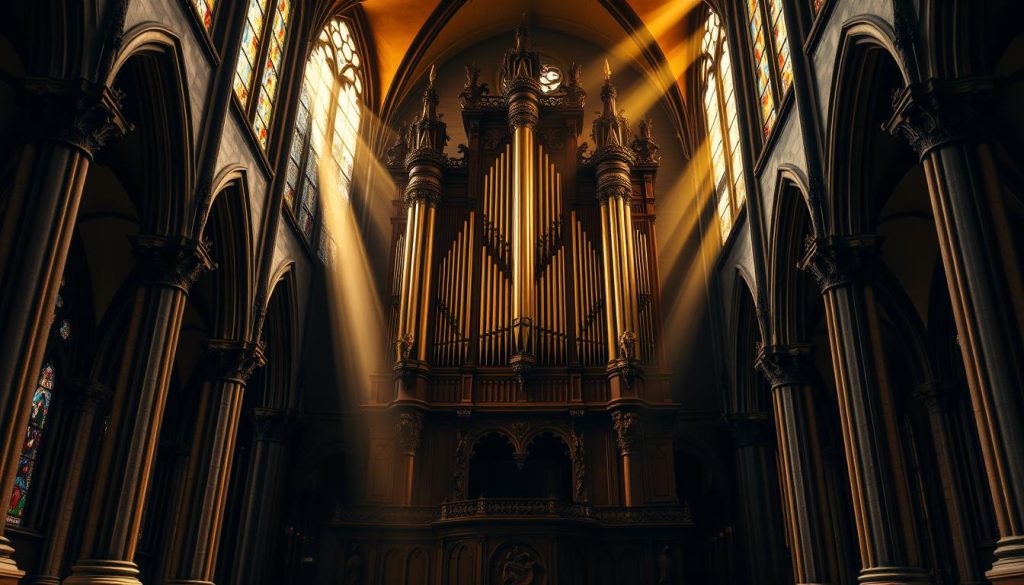
Organ works in focus
His organ music includes preludes, fugues, chorales and Magnificat verses. These pieces accompany worship, alternating with singing.
The musical lines are clear and the counterpoint disciplined. This balance supports both worship and teaching.
Canon and Gigue in D major: reception and legacy
The famous Canon and Gigue for violins with basso continuo took on a life of its own. Transcribed for harpsichord and performed by various ensembles, the work increased the composer’s fame among the wider public.
- Key publications: Musicalische Ergötzung (1691) and Hexachordum Apollinis (1699).
- Impact: models for keyboard and organ music that influenced the German school.
In short, these organ and keyboard works supported liturgical practice, strengthened local teaching and helped prepare later developments in the German classical music tradition.
Networks, influences and legacy: from Kerll to the Bach family
Italian influences and local traditions combined to shape a harmonic language adopted by several generations of musicians.
Johann Kaspar Kerll played a central role: his style, influenced by Carissimi and Gabrieli, informed the contrapuntal practice taken up by Johann Pachelbel.
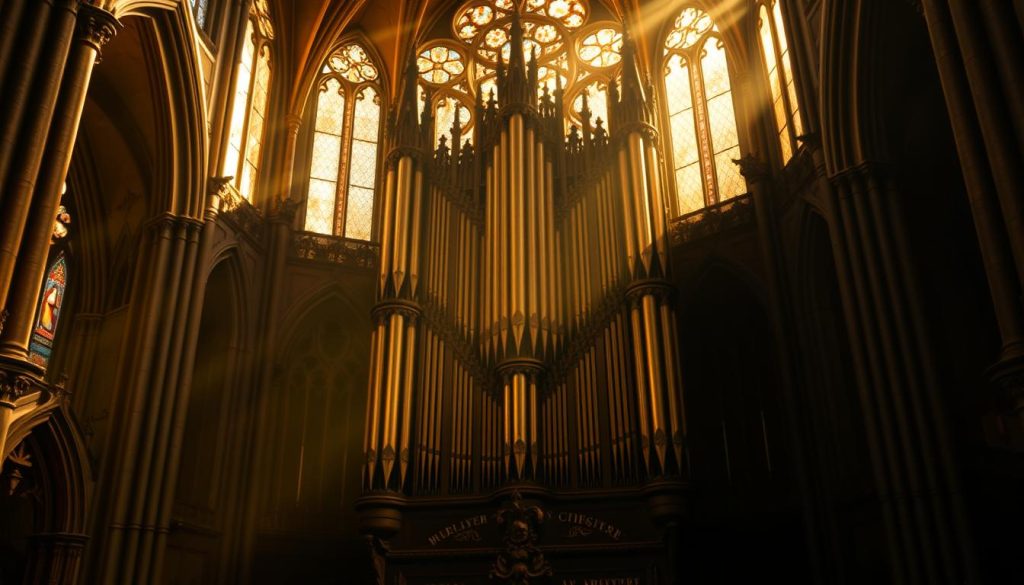
Through teaching, particularly Johann Christoph Bach in Eisenach, these methods spread within the Bach family.
Connections between the court and the church helped musicians secure commissions and move between posts. They spread a style shaped for the organ and the chorale.
- Kaspar Prentz and the line of teaching linking Johann Kaspar Kerll to Pachelbel show continuity in musical education.
- This transmission influenced composers in central Germany and prepared the synthesis later achieved by Johann Sebastian Bach.
His legacy includes chorale writing, organ teaching and an organ repertoire that became a reference point for European classical music.
Conclusion
: his music served worship while passing on knowledge of organ playing.
Baptized on September 1, 1653, and deceased in March 1706 in Nuremberg, Johann Pachelbel represents a tradition in which the organ and the chorale play central roles.
His musical language combines preludes, fugues and chorales for the keyboard. The famous Pachelbel’s Canon and Gigue in D major, written for three violins and basso continuo, have inspired many arrangements for different instruments.
His family background, with a merchant father and musician sons, helps explain the persistence of a local musical tradition. Sources remain vague about the exact circumstances of his death; this account therefore focuses on the health, social and artistic setting.
His pieces for organ and his keyboard variations continue to enrich the work of organists and ensembles. His legacy remains a major milestone in German classical music.