
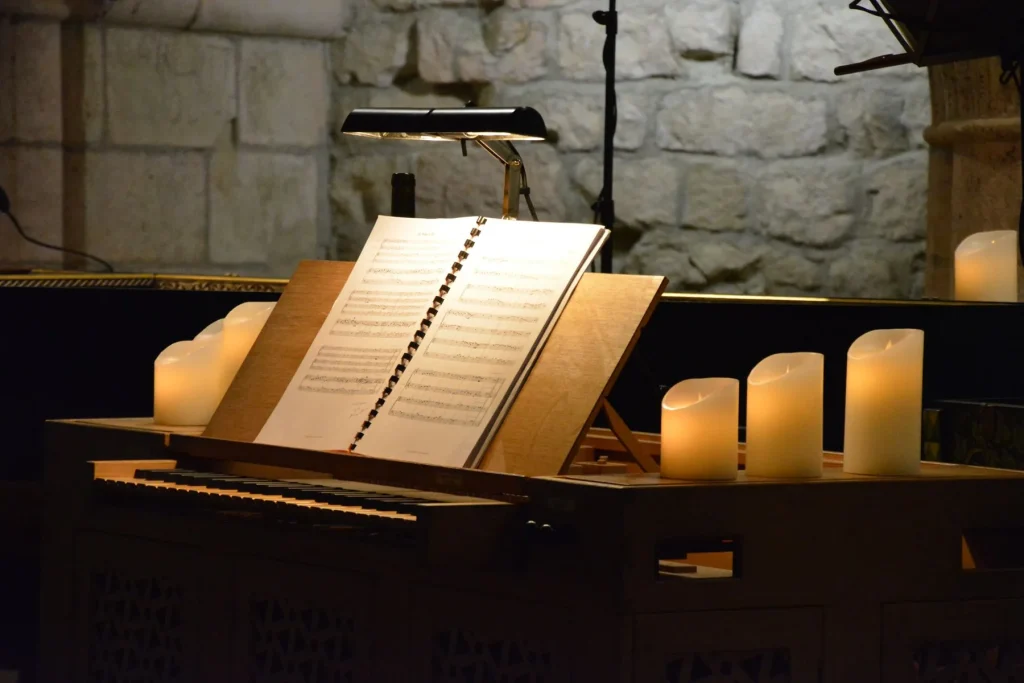
Johann Sebastian Bach is one of the greatest names in classical music. This Baroque composer holds a major place in music history. Born on March 21, 1685, in Eisenach, he invites us to explore the life and work of Johann Sebastian Bach in a world of creativity and innovation.
The musical legacy he built until his death on July 28, 1750, in Leipzig is immense. It still shapes our understanding of music. This article explores the key moments of his life, his influences, and his contributions to music.
Introduction to the Life of Johann Sebastian Bach
This concise biography of Johann Sebastian Bach presents a multitalented composer who changed Western music. Bach was born on March 31, 1685, in Eisenach, Germany.
He came from a family of musicians well known in Thuringia. This environment helped shape his musical career.
The key facts about Johann Sebastian Bach include his education. He studied and copied the works of many composers, which helped him become a great musician.
He lived in cities such as Arnstadt, Weimar, and Leipzig. There, he influenced many people and the music of later generations.
Johann Sebastian Bach’s Early Years
Johann Sebastian Bach was born in 1685 in Eisenach, into a family of musicians. His family environment shaped his youth. Orphaned at the age of nine, he was raised by his brother Johann Christoph, who introduced him to music.
Birth and Childhood in Eisenach
Bach’s family home was the starting point of his musical career. He was surrounded by instruments and a variety of music. These early years, rich in melody, shaped his musical identity.
The city of Eisenach left a deep impression on his creative mind. His childhood in Eisenach played a formative role.
Early Musical Training
Bach’s musical training began under his brother’s guidance. He learned to play the organ and to compose. These studies were crucial to his musical development.
He discovered harmony and counterpoint, knowledge essential to his later work. The lessons he received and his musical experiences refined his skills.
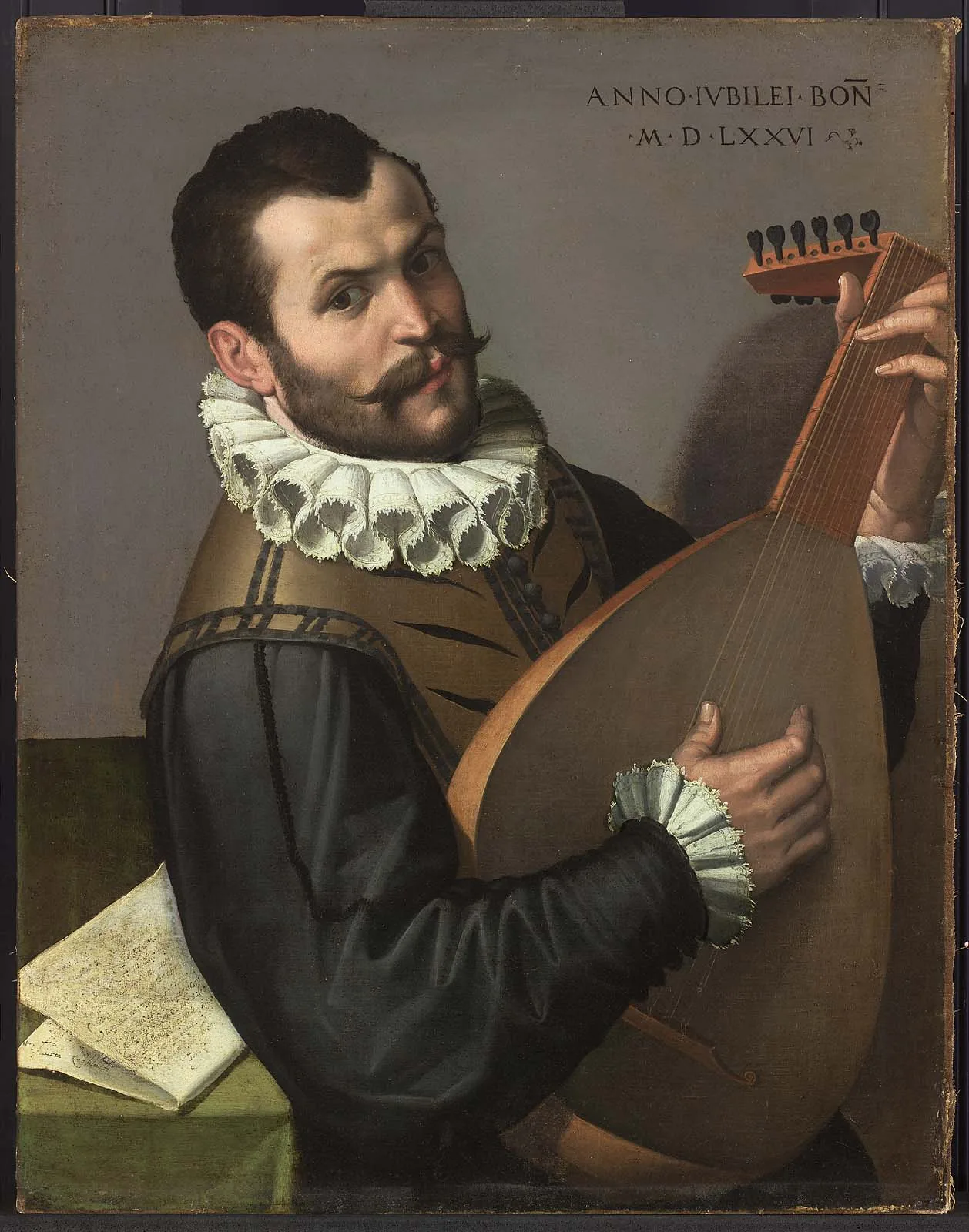
These years were fundamental for Bach. They were marked by important musical figures. To learn more, read this informative article.
Johann Sebastian Bach in Ohrdruf and Lüneburg
Johann Sebastian Bach reached important milestones during his youth. He studied in Ohrdruf and Lüneburg. These years developed his musical talent and shaped his training.
Schooling and First Steps in Music
In Ohrdruf, Bach attended a school that placed great emphasis on music. His talent was quickly recognized, as was his love of the art.
In Lüneburg, Bach joined the school choir. This experience improved his vocal skills. He also learned to compose more complex pieces.
These experiences were decisive for Bach. They prepared him to master his craft. To better understand his journey, read this article about his musical beginnings.
| School | Location | Characteristics |
|---|---|---|
| Ohrdruf school | Ohrdruf | Emphasis on musical education and nurturing talent |
| Michaelischule | Lüneburg | Access to manuscripts and an outstanding choir |
A Short and Essential Biography of Johann Sebastian Bach
The Baroque context shaped Johann Sebastian Bach’s work. This movement introduced new forms of sacred and secular music. Music was closely linked to religion at the time, particularly Catholicism, encouraging spiritual expression.
The Historical Context of the Baroque
The Baroque era offered Bach a rich and creative cultural environment. It brought together German, French, and Italian traditions. Their meeting allowed Bach to explore new musical dimensions, including counterpoint and fugue.
The influences of Vivaldi and Pachelbel can be heard in his compositions. They reflect a continually evolving artistic exchange.
Musical Influences on His Work
Johann Sebastian Bach was influenced by his era. Religious reforms changed the musical landscape and enriched his compositions. He incorporated theatrical and emotional elements into his works, creating a connection between the sacred and the secular.
The Main Stages of His Musical Career
Johann Sebastian Bach’s career had many key moments. Each stage contributed to his development and influence on music. He began as an organist in Arnstadt and Mühlhausen, where he established his reputation. He later moved into more prestigious positions.
Arnstadt, Mühlhausen, and Weimar
In Arnstadt, Bach began his career as an organist and showed remarkable talent. In Mühlhausen, he strengthened his reputation as a musician. There, he composed sacred pieces that demonstrated his growing expertise.
In Weimar, he became concertmaster, a decisive step in his career. There, he composed works that brought him wider recognition.
Köthen and Leipzig: Master of Sacred Music
He then became Kapellmeister in Köthen, where he created remarkable instrumental compositions. This period allowed him to focus on secular music. Later, he became cantor at St. Thomas Church in Leipzig.
This period marked the height of his career. He composed landmark works, including cantatas and Passions. They secured his legacy in sacred music.
Johann Sebastian Bach’s Major Works
Johann Sebastian Bach left an immense musical legacy. His major works still inspire people today. His creativity is evident in the variety of his compositions for keyboard and orchestra.
Compositions for Keyboard and Orchestra
“The Well-Tempered Clavier” is an essential Bach work. It contains preludes and fugues in every key, demonstrating his technical mastery.
The “Goldberg Variations” are a landmark work for harpsichord. They create a rich dialogue between melody and harmony. The Brandenburg Concertos (BWV 1046-1051) are equally famous. Each concerto has its own structure and instrumentation, illustrating Bach’s ability to push the musical boundaries of his time.
| Concerto | Instrumentation | Distinctive features |
|---|---|---|
| Concerto I (BWV 1046) | 2 hunting horns, 3 oboes, bassoon, violino piccolo, strings | Creative use of elements from other works |
| Concerto II (BWV 1047) | Alto recorder, clarino, oboe, violin, strings | Dynamic interaction among the soloists |
Sacred Music and Cantatas
Bach’s sacred music is an essential part of his output. Compositions such as the “St. Matthew Passion” (BWV 244) and the “Mass in B minor” (BWV 232) show his devotion, profound spirituality, and emotional richness.
His cantatas have had a great influence. They often draw on liturgical texts, connecting the music to specific religious settings. To learn more about Bach’s major works, explore this resource.
Johann Sebastian Bach’s Musical Style
Johann Sebastian Bach is celebrated for his distinctive musical style, which combines rigor and emotion. His way of bringing different influences together while maintaining a personal voice left its mark on music.
His innovations raised the standards of classical music and marked an important stage in its evolution.
Innovation and Compositional Techniques
Bach’s inventiveness is evident in his organ improvisations. He went beyond the musical structures of his time. His compositions feature rich harmonies and complex forms.
These elements still inspire many composers. His style shows his importance in music history.
He also used different scales and mastered choral composition. Bach’s musical style continues to influence classical and modern music, showing his importance in today’s musical world.
To learn more about his life and work through analyses and stories, read this engaging article.
Conclusion
This overview of Johann Sebastian Bach reveals an exceptional composer whose legacy still touches many people. He has influenced musicians and composers throughout the ages.
His music stands out for its inventiveness and technical mastery. Bach became a symbol of Baroque music. His vocal and instrumental works are admired around the world.
Bach’s life was marked by his musical genius. He played a key role in the development of Western music. His compositions set standards that continue to inspire people today.
His work remains a source of inspiration for musical innovation. His immense legacy continues to reach new generations.
Bach’s influence on classical music is undeniable. It can be heard across many musical genres. Centuries later, Bach remains an essential figure in music history.